How Long Until 2:30 PM? Real-Time Countdown, Time Calculator & Complete Guide
How Long Until 2:30 PM means the amount of time left before the clock reaches 2:30 PM. It changes based on your current local time. A countdown or time calculator shows the exact hours, minutes, and seconds remaining.
Many people search How Long Until 2:30 PM before a meeting, class, appointment, or special event. Knowing the remaining time helps you stay prepared. It also makes planning your day much easier.
You can check How Long Until 2:30 PM using a live countdown timer, your phone, or a simple clock. These tools update automatically and give accurate results. They help you manage your time and avoid being late.
How Long Until 2:30 PM Depends on the Current Time
The answer to how long until 2:30 is never the same for everyone. It changes every minute because it depends on the exact time you check. Someone looking at the clock at 8:00 AM has many hours left, while someone checking at 2:25 PM only has a few minutes to wait.
Understanding this simple fact helps avoid confusion. Instead of searching for a fixed answer, it’s more useful to think of the question as asking for the remaining time between “now” and 2:30 PM.
Why Your Current Time Changes the Answer
Time is always moving forward. Every second that passes brings you one second closer to 2:30 PM. That’s why the countdown is constantly changing.
For example:
| Current Time | Time Until 2:30 PM |
| 7:30 AM | 7 hours |
| 9:15 AM | 5 hours 15 minutes |
| 12:00 PM | 2 hours 30 minutes |
| 2:00 PM | 30 minutes |
| 2:29 PM | 1 minute |
This is why most websites use a live countdown timer instead of displaying a single answer.
Before 2:30 PM vs. After 2:30 PM
There are two possible situations.
Before 2:30 PM
If the current time is earlier than 2:30 PM, simply subtract the current time from 2:30 PM. The result tells you exactly how much time remains.
After 2:30 PM
If the clock has already passed 2:30 PM, today’s countdown has ended. The next countdown is for 2:30 PM tomorrow, meaning you’ll need to calculate the time remaining until the next day.
This approach is used by most digital clocks, online countdown timers, and time calculator tools.
How Time Zones Affect the Countdown
Another important factor is your location.
Someone in New York and someone in Los Angeles won’t reach 2:30 PM at the same moment because they’re in different time zones.
For example:
- Eastern Time (ET) reaches 2:30 PM three hours before Pacific Time (PT).
- Users in Central Time (CT) and Mountain Time (MT) also have different countdowns.
That’s why a reliable live countdown automatically detects your local time instead of showing a universal answer.
Examples of Different Current Times
Let’s look at a few everyday situations.
Imagine it’s 10:30 AM. You still have four hours before 2:30 PM. That’s enough time to finish several work tasks, attend meetings, or enjoy lunch.
Now imagine it’s 1:50 PM. Only 40 minutes remain. At this point, many people begin preparing for their next appointment, school pickup, or afternoon break.
If it’s 2:31 PM, today’s countdown is over. Your next target becomes 2:30 PM on the following day.
These simple examples show why checking the current time first is always the most important step.
Understanding Time Until 2:30 PM with Simple Time Calculation
You don’t always need an app to figure out how long until 2:30 PM. A quick calculation can often give you the answer within seconds.
Learning this basic skill is useful for work, school, travel, and everyday planning.
How to Calculate Remaining Hours and Minutes
The easiest method is to compare the current time with your target.
Suppose it’s 11:45 AM.
From 11:45 AM to 12:45 PM equals one hour.
From 12:45 PM to 1:45 PM equals another hour.
From 1:45 PM to 2:30 PM equals 45 minutes.
So the total time remaining is 2 hours and 45 minutes.
This simple process works for any time of the day.
Manual Time Difference Formula
You can also use a simple formula:
Target Time − Current Time = Remaining Time
For example:
- Target: 2:30 PM
- Current: 1:20 PM
2:30 PM − 1:20 PM = 1 hour 10 minutes
This formula is commonly used in time difference calculators, calendar apps, and scheduling software.
Using a Digital Clock or Phone
Today’s smartphones make calculating time effortless.
Both Android and iPhone devices include built-in Clock apps where you can:
- Set an alarm for 2:30 PM.
- Create a countdown timer.
- Ask your voice assistant how long remains.
- Schedule reminders before important events.
These tools update automatically, making them much more accurate than estimating manually.
Common Time Calculation Mistakes to Avoid
Many people accidentally make small mistakes when calculating time.
One common error is confusing AM and PM. Setting an alarm for 2:30 AM instead of 2:30 PM can completely change your schedule.
Another mistake is forgetting to account for daylight saving time in regions where it applies. While modern devices adjust automatically, manual calculations may not.
People also forget that if it’s already past 2:30 PM, the countdown resets for the next day.
Paying attention to these details helps you avoid missed appointments and scheduling errors.
See Also : How Long Until 2 PM? Live Countdown, Time Calculator
Why People Search “How Long Until 2:30 PM”
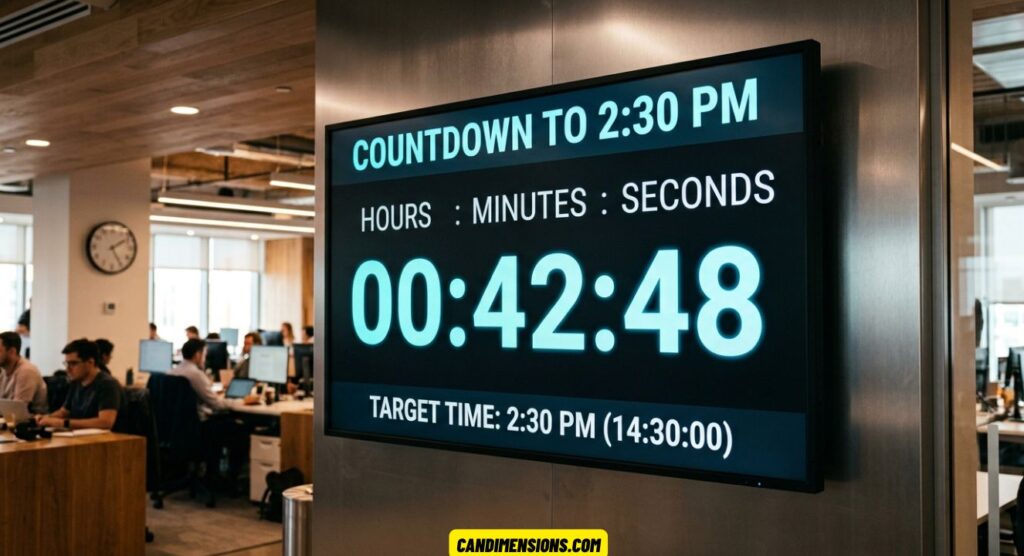
People search how long until 2:30 for many different reasons. While the question looks simple, the answer often supports real-life planning, productivity, and daily routines.
For some, 2:30 PM marks the end of an important meeting. For others, it’s the start of an event, a school dismissal, or a scheduled break.
Waiting for School Dismissal
Many schools across the United States finish classes between 2:00 PM and 3:30 PM.
Parents often search for the remaining time before pickup, while students count down the final minutes until the school day ends.
Knowing the exact countdown helps families stay on schedule and avoid arriving too early or too late.
Tracking Work Meetings and Deadlines
In many offices, important meetings are scheduled during the afternoon.
An employee preparing for a 2:30 PM meeting may want to know exactly how much time remains to finish reports, answer emails, or review presentation notes.
A visible countdown timer also reduces the chance of missing important deadlines.
Lunch Breaks and Afternoon Appointments
Many people plan their afternoons around appointments.
Examples include:
- Doctor visits
- Job interviews
- Business calls
- Online classes
- Customer meetings
Checking how long until 2:30 PM today allows people to organize their remaining tasks without constantly watching the clock.
Preparing for Online Classes or Events
Remote work and online learning have made scheduled sessions more common than ever.
Whether joining a webinar, attending a virtual class, or participating in a livestream, people often search for the remaining time before the event begins.
Instead of repeatedly checking the clock, a real-time countdown offers a simple and stress-free solution.
Countdown to 2:30 PM: Why We Love Watching Time
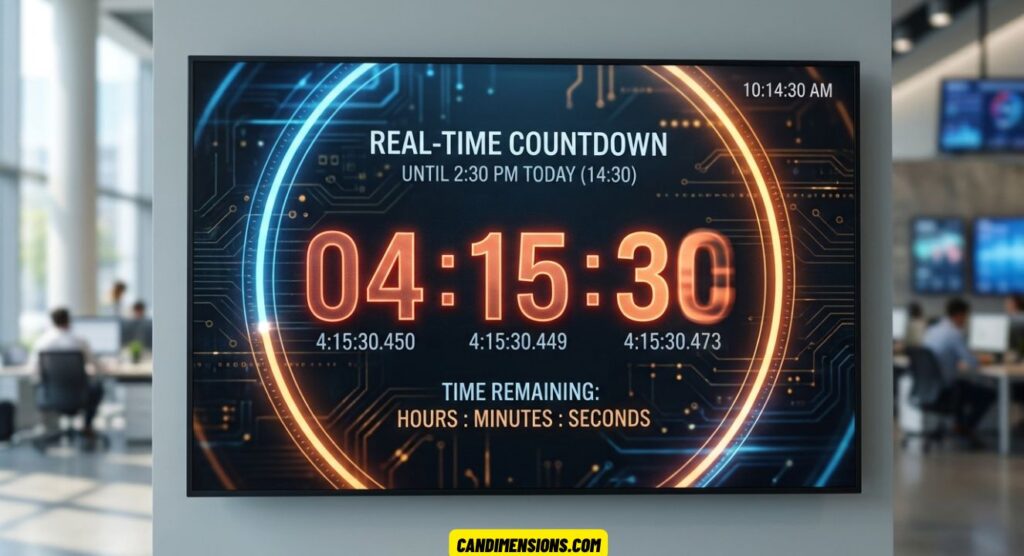
Watching a countdown may seem like a small habit, but it reflects how our brains respond to anticipation. Whether you’re waiting for a meeting, the end of school, a break, or a special event, seeing the remaining time can create a sense of progress and help you stay focused.
A live countdown timer transforms waiting into something measurable. Rather than wondering how much longer you have, you can see the exact hours, minutes, and seconds left until 2:30 PM. This reduces uncertainty and helps many people manage their day more effectively.
The Appeal of Live Countdowns
A real-time countdown provides constant updates without requiring manual calculations. Every passing second gives you a clear picture of how close you are to your goal.
This is especially useful when you’re working toward a deadline. Instead of checking the clock every few minutes, the countdown does the tracking for you, allowing you to concentrate on what matters most.
For students, professionals, and event organizers, this simple visual tool creates structure during busy afternoons.
Motivation Through Visible Progress
One reason countdowns are so popular is that they make progress visible.
When people see time decreasing, they’re often more motivated to complete tasks before the deadline arrives. This is similar to how fitness trackers encourage people to reach daily step goals or how project management apps display progress bars.
For example, if you know you have 45 minutes until 2:30 PM, you’re more likely to finish one last assignment or organize your workspace instead of starting a lengthy project.
Visible progress encourages better decision-making and improves time management.
Countdown to 2:30 PM: Why We Love Watching Time (Continued)
Building Anticipation Before an Event
Waiting becomes easier when you know exactly how much time is left. Whether you’re looking forward to lunch with friends, an important interview, or the end of your workday, a countdown creates excitement while reducing uncertainty.
Psychologists have found that people generally prefer knowing exactly when something will happen rather than facing an unknown wait. A visible countdown timer gives your brain a clear endpoint, making the waiting period feel more manageable.
For example, imagine you’re attending an online training session that begins at 2:30 PM. Seeing that only 20 minutes remain can help you finish a few quick tasks, grab a drink, and prepare without feeling rushed.
When Countdowns Reduce Stress
Not everyone enjoys watching the clock, but for many people, countdowns actually lower stress levels.
Instead of repeatedly asking, “How much longer?” you have an instant answer. This reduces unnecessary mental effort and lets you focus on the task in front of you.
However, balance is important. Constantly refreshing a countdown every few seconds can become distracting. The best approach is to check the remaining time occasionally while continuing with your work.
Best Tools for a Real-Time Countdown to 2:30 PM
If you frequently search how long until 2:30, using the right tool saves time and provides accurate results. Modern technology makes it easy to track the remaining hours, minutes, and seconds until 2:30 PM without performing manual calculations.
The best tools update automatically, adjust for your local time zone, and work across different devices.
Online Countdown Timers
Online countdown websites are among the easiest ways to find out how long remains until 2:30 PM.
Most websites automatically detect your local time and display a live countdown that updates every second. Many also allow you to bookmark specific countdowns for future use.
Advantages include:
- No calculations required
- Automatic updates every second
- Works on computers, tablets, and smartphones
- Often includes fullscreen countdown displays
The main drawback is that they require an internet connection.
Smartphone Clock Apps
Both Android and iPhone devices include powerful Clock apps that can function as countdown timers.
You can:
- Set an alarm for 2:30 PM.
- Create a timer ending at 2:30 PM.
- Receive notifications before the scheduled time.
- Repeat alarms for daily events.
These apps are convenient because they continue running even when you’re using other applications.
Smartwatch Countdown Features
Many smartwatches include built-in countdown and reminder functions.
With just a few taps—or even a voice command—you can start a countdown that vibrates when it reaches zero.
This is especially useful during meetings, workouts, presentations, or cooking, where constantly checking your phone isn’t practical.
Browser-Based Countdown Widgets
If you spend most of your day working on a computer, browser extensions and widgets provide another convenient option.
These tools can display a small live countdown in your browser window, helping you stay aware of upcoming deadlines without interrupting your workflow.
Some widgets also support multiple countdowns for different appointments throughout the day.
Voice Assistants for Quick Time Checks
Modern voice assistants make checking the remaining time incredibly simple.
Instead of opening an app, you can ask:
- “How long until 2:30 PM?”
- “Set an alarm for 2:30 PM.”
- “Remind me 15 minutes before 2:30.”
Within seconds, your device provides the answer or creates the reminder automatically.
This hands-free approach is ideal when you’re driving, cooking, or working.
See Also : How Long Until 3:00 PM? Check the Exact Time Left Instantly
How Long Until 2:30 PM Today? Practical Examples
One of the easiest ways to understand how long until 2:30 PM today is by looking at real-world examples.
Although the exact answer changes throughout the day, these scenarios show how the countdown works in everyday situations.
If It’s 8:00 AM
At 8:00 AM, you still have 6 hours and 30 minutes until 2:30 PM.
This is plenty of time to:
- Finish morning work
- Attend meetings
- Exercise
- Study
- Have lunch
Planning your day early often leads to better productivity.
If It’s 11:30 AM
When it’s 11:30 AM, exactly 3 hours remain.
Many people use this period to complete their highest-priority tasks before moving into afternoon appointments.
This is also an excellent time to review your schedule and prepare for upcoming meetings.
If It’s 1:45 PM
At 1:45 PM, only 45 minutes remain.
Instead of starting a large project, focus on smaller activities such as:
- Answering emails
- Organizing documents
- Preparing presentation materials
- Reviewing notes
Short tasks fit naturally into this remaining window.
If It’s 2:29 PM
At 2:29 PM, just one minute remains.
Although it seems insignificant, one minute is often enough to:
- Save your work
- Join an online meeting
- Settle into your seat
- Take a deep breath before an interview
Every minute counts when you’re working toward a deadline.
If It’s Already Past 2:30 PM
Suppose it’s 4:00 PM.
Today’s countdown has already ended.
Instead of calculating backward, the countdown now shifts to 2:30 PM tomorrow.
Many countdown websites automatically make this adjustment, ensuring the timer always points toward the next occurrence.
The Psychology Behind Waiting Until 2:30 PM
Waiting is a normal part of everyday life, but it doesn’t always feel the same. Sometimes 30 minutes seems to disappear quickly, while other times it feels like an hour.
The difference isn’t the clock—it’s how our brains perceive time.
Understanding this psychology can help you make waiting less frustrating and more productive.
Why Time Feels Slower When You’re Waiting
When you’re focused entirely on waiting, your brain pays extra attention to every passing minute.
This heightened awareness creates the feeling that time is moving more slowly than it actually is.
For example, waiting for an important interview at 2:30 PM often feels much longer than spending the same amount of time reading a book or completing work.
Keeping yourself engaged helps time pass more naturally.
Anticipation and Human Behavior
Humans naturally anticipate important events.
Whether it’s a vacation, a job interview, a sporting event, or the end of the school day, knowing something meaningful is approaching changes how we experience time.
Research in behavioral psychology suggests that anticipation can increase motivation while also making us more emotionally invested in the outcome.
That’s one reason countdowns are so satisfying—they make progress visible.
Staying Productive While Waiting
Instead of watching the clock, use the remaining time wisely.
Good options include:
- Completing quick assignments
- Organizing tomorrow’s schedule
- Taking a short walk
- Reviewing important notes
- Drinking water and stretching
These activities reduce stress while helping you accomplish something useful before 2:30 PM arrives.
Reducing Time Anxiety
Some people become anxious when watching countdowns.
If you notice yourself checking the clock every minute, try these strategies:
- Set one reminder instead of multiple alarms.
- Focus on a single task.
- Keep your phone out of sight while working.
- Trust your alarm to notify you when it’s time.
By shifting your attention from the countdown to meaningful activities, you’ll often find that time seems to pass much faster.
Time Management and the Afternoon Routine
Good time management isn’t just about knowing how long until 2:30—it’s about making the time before 2:30 PM count.
For many people, the early afternoon is one of the most productive parts of the day. Energy levels are still relatively high, meetings are underway, and important decisions are often made before the workday begins winding down.
Using the remaining time intentionally can improve productivity, reduce stress, and help you stay ahead of your schedule.
Time Management and the Afternoon Routine (Continued)
Planning Tasks Before 2:30 PM
A productive afternoon begins with a clear plan. Instead of jumping from one task to another, decide what you can realistically finish before 2:30 PM.
A simple method is to divide your remaining time into blocks. If you have two hours left, dedicate the first hour to focused work and the second hour to smaller tasks or preparation for upcoming meetings. This approach reduces distractions and helps you make better use of every minute.
Many productivity experts recommend tackling your most challenging work before mid-afternoon because decision-making energy tends to decrease later in the day.
Scheduling Deep Work Sessions
Deep work refers to uninterrupted periods of focused concentration. If your countdown shows that you still have an hour or more before 2:30 PM, it may be the perfect opportunity to work on projects that require creativity or problem-solving.
Turn off unnecessary notifications, close unrelated browser tabs, and set a timer for 30 to 60 minutes. You’ll often accomplish more during one focused session than several hours of distracted work.
This technique works well for students studying for exams, writers completing articles, programmers building software, and professionals preparing reports.
Managing Meetings Efficiently
Afternoon meetings are common in many workplaces. Knowing how long until 2:30 PM helps you prepare without feeling rushed.
Before the meeting begins:
- Review your agenda.
- Gather any documents you’ll need.
- Test your internet connection if it’s a virtual meeting.
- Join a few minutes early.
Arriving prepared makes meetings shorter, more productive, and less stressful.
Creating Better Afternoon Habits
Small daily habits have a surprisingly large impact over time.
Before 2:30 PM, consider building routines such as:
- Drinking enough water.
- Taking a five-minute stretch break.
- Reviewing your task list.
- Clearing your workspace.
- Responding to important emails.
These habits improve focus and help you transition smoothly into the rest of the afternoon.
Time Tracking Makes Waiting More Useful
Simply watching a countdown isn’t always the best use of your time. Combining a countdown timer with time tracking helps you understand how you spend your day and where improvements can be made.
Instead of asking only, “How long until 2:30 PM?” you can also ask, “What can I accomplish before then?”
Benefits of Tracking Your Time
Tracking your time reveals patterns that are difficult to notice otherwise.
You may discover that you spend more time on emails than expected or that your most productive hours occur between 10:00 AM and 2:00 PM.
Some key benefits include:
- Better planning.
- Increased productivity.
- Reduced procrastination.
- Improved work-life balance.
- More accurate project estimates.
Over time, these insights help you manage your schedule more effectively.
Productivity Apps That Help
Many digital tools combine time tracking, reminders, and countdown timers in one place.
Popular features include:
| Feature | Benefit |
| Countdown timer | Shows remaining time until 2:30 PM |
| Task lists | Keeps priorities organized |
| Calendar reminders | Prevents missed appointments |
| Focus timer | Encourages uninterrupted work |
| Daily reports | Shows how your time was spent |
Using just one or two of these features can significantly improve your daily routine.
Turning Waiting Time Into Productive Time
Waiting doesn’t have to mean doing nothing.
Suppose you have 25 minutes until 2:30 PM. Instead of scrolling through social media, you could:
- Read a chapter of a book.
- Reply to important emails.
- Organize your desk.
- Prepare tomorrow’s schedule.
- Learn a new skill through a short online lesson.
These small actions add up over weeks and months, making your waiting time surprisingly valuable.
Reviewing Your Daily Schedule
A few minutes before 2:30 PM is an excellent time to check your schedule.
Ask yourself:
- Have I completed today’s priorities?
- What tasks remain?
- What should I start after 2:30 PM?
- Are there any deadlines approaching?
This quick review helps you stay organized and reduces last-minute stress.
How Different People Experience the Countdown
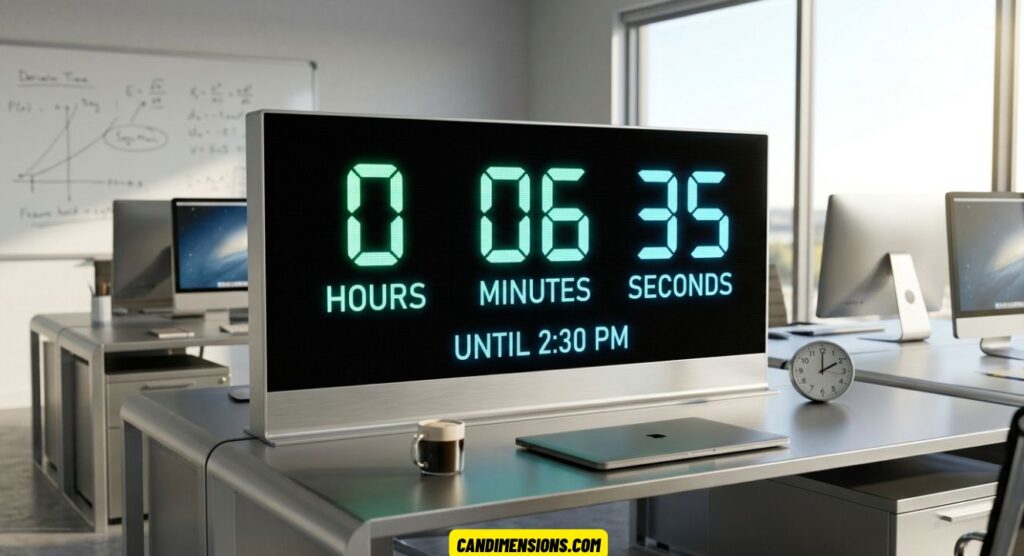
Not everyone searches how long until 2:30 for the same reason. People’s daily routines differ, which means the countdown has different meanings depending on their responsibilities and lifestyle.
Students Waiting for Classes
For many students, 2:30 PM may signal the end of a lesson, the beginning of extracurricular activities, or dismissal from school.
Knowing exactly how much time remains helps students stay focused rather than constantly checking the classroom clock.
Teachers also use countdowns during classroom activities to encourage better time management.
Office Workers and Professionals
Professionals often work with fixed schedules.
A countdown to 2:30 PM might represent:
- An important meeting.
- A project deadline.
- A client presentation.
- A performance review.
- A scheduled conference call.
Using a real-time countdown helps employees stay punctual and prepared.
Parents Managing Family Schedules
Parents often coordinate multiple activities throughout the day.
By 2:30 PM, they may be preparing to:
- Pick up children from school.
- Attend medical appointments.
- Drive to sports practice.
- Begin afternoon family routines.
A simple countdown helps families stay organized without unnecessary rushing.
Remote Workers Across Time Zones
Remote work has made time zones more important than ever.
Someone working with colleagues across the United States may have meetings scheduled according to Eastern Time, Central Time, or Pacific Time.
A live countdown automatically adjusts to local time, reducing scheduling mistakes.
Gamers and Livestream Viewers
Many online tournaments, livestreams, and gaming events begin at specific times.
Fans frequently search how long until 2:30 PM today so they don’t miss the start of a broadcast.
Instead of checking the clock repeatedly, they rely on a countdown timer to notify them when the event begins.
See Also : How Long Until 12 PM? Calculate the Exact Time Left Until Noon
South Asian Afternoon Traditions
Although this guide is written primarily for a U.S. audience, afternoon routines differ around the world. Understanding these differences shows how the importance of 2:30 PM can vary across cultures.
Afternoon Tea and Family Time
In several South Asian countries, afternoons often include tea breaks shared with family, friends, or coworkers.
These moments provide a chance to relax, discuss the day’s events, and prepare for the remainder of the afternoon.
School and Office Schedules
Schools and businesses throughout South Asia operate on schedules that differ from those in the United States.
Some schools finish earlier, while offices may include longer lunch breaks depending on local customs and climate.
As a result, 2:30 PM may represent the middle of the workday rather than its busiest period.
Cultural Differences in Daily Routines
Daily routines are shaped by climate, transportation, work culture, and family traditions.
In warmer regions, people sometimes adjust outdoor activities to avoid the hottest part of the afternoon, while urban professionals may follow schedules similar to those in North America.
These differences highlight why local time always matters when using a countdown.
Comparing South Asian and U.S. Afternoon Habits
| United States | South Asia |
| Afternoon meetings are common. | Tea breaks are often part of the afternoon routine. |
| School dismissal frequently occurs between 2 PM and 3:30 PM. | School schedules vary widely by country and region. |
| Many offices continue until 5 PM or later. | Office hours differ depending on industry and location. |
| Productivity often peaks before late afternoon. | Daily routines may adapt to local weather and customs. |
Understanding these cultural differences helps explain why people around the world search for countdowns at different times of day.
Using a Countdown Without Becoming Obsessed
A countdown timer is a helpful tool, but like any tool, it works best when used in moderation. Checking the remaining time every few minutes can reduce your focus and make the wait feel even longer.
Instead of letting the countdown control your attention, use it to support your schedule. Set your timer once, trust it to alert you, and continue working on meaningful tasks.
Avoid Constant Clock Watching
Frequently looking at the clock can make time seem to move more slowly. This happens because your brain becomes overly focused on the passing minutes.
A better approach is to decide on a task that can be completed before 2:30 PM and work on it without interruptions. When you’re fully engaged, time often passes much faster.
Set Healthy Notification Limits
Modern devices make it easy to receive reminders without constantly checking the time.
For example, you can:
- Set one reminder 15 minutes before 2:30 PM.
- Add a second reminder 5 minutes before an important meeting.
- Use one final alarm at exactly 2:30 PM.
This strategy keeps you informed without becoming distracted throughout the day.
Focus on Progress Instead of Minutes
Rather than asking, “How many minutes are left?” try asking, “What can I finish before 2:30 PM?”
This small shift in thinking encourages productivity instead of passive waiting. Even completing one meaningful task before your deadline creates a sense of accomplishment.
Balance Productivity and Patience
Not every minute needs to be filled with work. Sometimes the best use of your remaining time is taking a short walk, stretching, drinking water, or simply resting your eyes.
Healthy breaks improve concentration and often make your next task easier to complete.
Making the Most of the Time Before 2:30 PM
Knowing how long until 2:30 gives you an opportunity to use your remaining time wisely. Even short periods can become productive when you have a clear plan.
The goal isn’t to stay busy every second—it’s to make intentional choices.
Complete Small Tasks First
If less than an hour remains, avoid starting projects that require several hours to finish.
Instead, focus on quick wins, such as:
- Replying to emails.
- Organizing files.
- Reviewing documents.
- Updating your calendar.
- Cleaning your workspace.
Small accomplishments create momentum for the rest of your day.
Take a Short Break
If you’ve been working for several hours, a brief break can improve your focus.
Research consistently shows that short breaks help reduce mental fatigue and increase productivity. A five-minute walk or a few stretches can refresh your mind before your next activity begins.
Prepare for Your Next Appointment
Whether you’re attending a meeting, joining an online class, or leaving for an appointment, use the remaining time to prepare.
Gather any materials you’ll need, review your notes, and make sure your devices are charged and connected if you’re meeting virtually.
Being prepared helps you arrive on time and reduces unnecessary stress.
Organize Your Workspace
A tidy workspace often leads to a clearer mind.
Spend a few minutes putting away unnecessary papers, closing unused browser tabs, and arranging your desk. These small actions can make it easier to focus during the rest of the afternoon.
Practice Mindfulness While Waiting
Waiting doesn’t always have to involve doing more.
If you’re feeling overwhelmed, take a few slow breaths, stretch, or spend a moment away from your screen. Practicing mindfulness can improve concentration and help you approach the next part of your day with renewed energy.
Quick Comparison: Ways to Know How Long Until 2:30 PM
| Method | Accuracy | Best For | Pros | Cons |
| Live countdown timer | Excellent | Everyday use | Updates every second automatically | Requires internet on most websites |
| Phone Clock app | Excellent | Daily reminders | Built into most smartphones | Limited customization |
| Manual calculation | Good | Quick estimates | No technology required | Easy to make mistakes |
| Smartwatch timer | Excellent | On-the-go users | Hands-free reminders | Requires a compatible device |
| Voice assistant | Excellent | Fast answers | Convenient and simple | Needs voice support or internet in some cases |
Featured Snippet: How Long Until 2:30 PM?
How long until 2:30 PM?
The answer depends on your current local time. Simply subtract the current time from 2:30 PM to find the remaining hours, minutes, and seconds. If it is already past 2:30 PM, the countdown resets to 2:30 PM tomorrow. A live countdown timer or time calculator provides the most accurate real-time answer.
Frequently Asked Questions
How long until 2:30 PM from now?
The exact answer depends on your current local time. A live countdown timer automatically calculates the remaining time in hours, minutes, and seconds.
How do I calculate the time until 2:30 PM?
Subtract your current time from 2:30 PM. For example, if it’s 1:45 PM, there are 45 minutes remaining until 2:30 PM.
Is there a real-time countdown to 2:30 PM?
Yes. Many websites and smartphone apps offer a real-time countdown that updates every second based on your local time zone.
What happens if it’s already after 2:30 PM?
If the current time has passed 2:30 PM, the countdown automatically shifts to the next occurrence at 2:30 PM tomorrow
Can I set a countdown for 2:30 PM on my phone?
Absolutely. Both Android and iPhone devices include built-in Clock apps that allow you to create alarms, reminders, and countdown timers for 2:30 PM.
Conclusion
If you’ve been searching how long until 2:30, remember that the answer always depends on the current time where you are. Whether you’re waiting for a meeting, school dismissal, an appointment, or simply organizing your afternoon, knowing the remaining time helps you plan more effectively.
Instead of repeatedly checking the clock, consider using a live countdown timer, time calculator, or your smartphone’s built-in reminder tools. These solutions provide accurate, real-time updates while allowing you to stay focused on what matters most.
Most importantly, don’t think of the countdown as time to simply wait. Use the remaining minutes to complete small tasks, prepare for upcoming events, take a healthy break, or organize your schedule. By making intentional use of every hour and minute before 2:30 PM, you’ll improve your time management, reduce stress, and make each day more productive.