Magazine Page Size and Dimensions: Standard Formats in Inches, mm and Pixels
Pick up any magazine and its magazine page size — the trimmed width and height of one finished page — was chosen long before a single article was written. It decides how the cover looks on a rack, how much an issue costs to print and post, and how the pages feel in your hands.
There is no single standard size, which is where most confusion starts. In the United States the reference page is US Letter at 8.5 × 11 inches, yet most big consumer magazines actually trim slightly smaller, and in most of the world the reference page is A4 instead.
This guide gives every standard format with its size verified in inches, millimetres, centimetres and print-ready pixels — including the sizes famous magazines really use, the two places where published size charts contradict themselves, and how to measure a page yourself.
Standard Magazine Dimensions
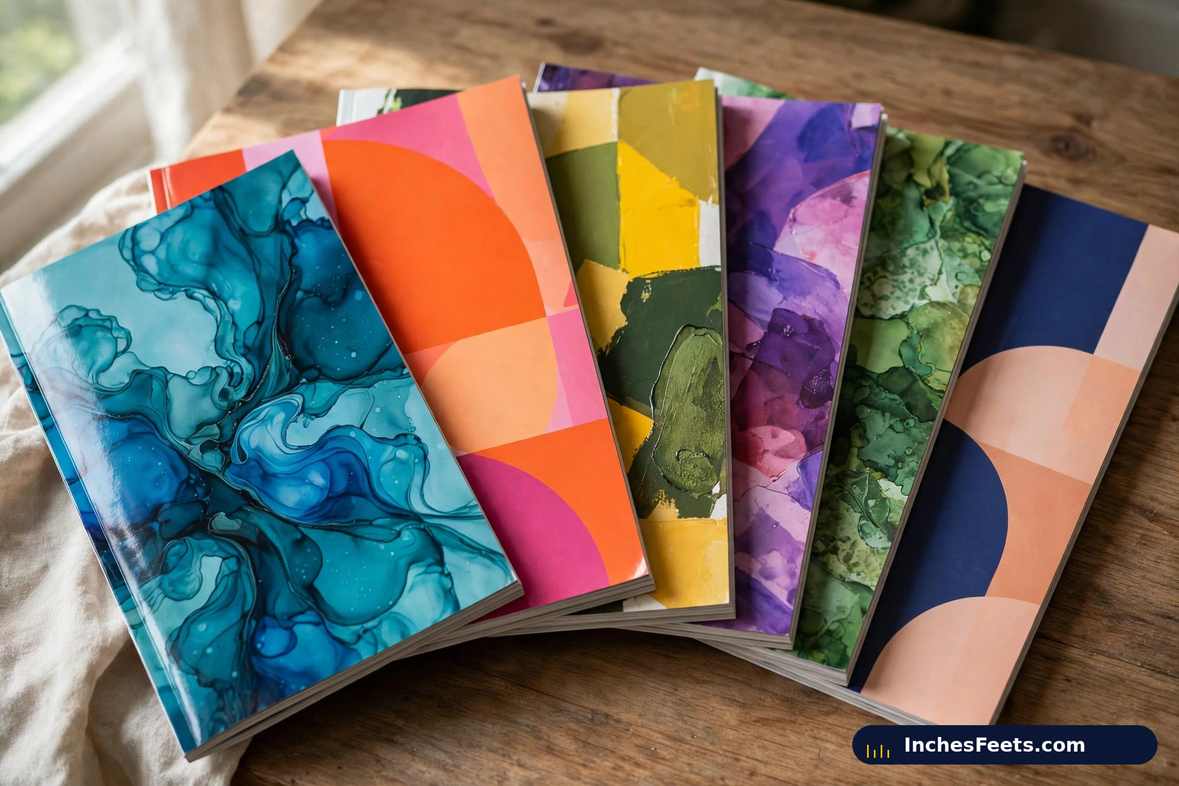
“Standard” needs one correction before the table. The competitor page this guide improves on opens by calling the perfect-bound style the most common magazine format at 8.5 × 11 inches — but perfect binding is a way of gluing pages into a spine, not a page size, and it is used at many sizes. The accurate picture has two reference points: 8.5 × 11 inches is the US Letter page that most American print templates start from, while the trim size most large US consumer magazines actually use on the newsstand is a little smaller, at 8.375 × 10.875 inches (213 × 276 mm). Both belong in any honest size chart, so both are in the table.
| Format | Size in Inches | Size in mm | Common Uses |
|---|---|---|---|
| Standard (US Letter page) | 8.5 × 11 in | 216 × 279 mm | General interest, educational and business publications; the template most US print runs start from |
| Digest | 5.5 × 8.25–8.5 in | 140 × 210–216 mm | Fiction, puzzles, short reads (Reader’s Digest class) |
| Oversized | 9 × 12 in | 229 × 305 mm | Fashion, art and photography titles |
| A4 | 8.27 × 11.69 in | 210 × 297 mm | International, corporate and academic publications |
| A5 | 5.83 × 8.27 in | 148 × 210 mm | Booklets, small publications and event programmes |
| Tabloid | 11 × 17 in | 279 × 432 mm | Newspapers, posters and large-format media |
| Custom / Indie | Varies | Varies | Zines and independent publications in any trim the printer offers |
Two rows deserve a word. The digest row shows a range because the format genuinely has two heights — the classic digest is 8¼ inches tall and today’s printer spec is 8½ — and the Digest section below explains both rather than hiding one. And “custom” is not a dodge: independent publishers really do trim to whatever a short-run printer offers, which is why zines turn up in sizes no chart lists.
Digest Size (5.5 × 8.5 inches)
The digest is the traditional small magazine: about 5.5 inches wide, designed to slip into a coat pocket or a handbag and to be read in short sittings. The format takes its name from Reader’s Digest, the pocket-sized giant that defined it, and Wikipedia’s reference for the class is approximately 5½ × 8¼ inches — about 14 × 21 cm.

So why does this section’s heading, following the competitor’s own heading, say 8.5 inches? Because both figures are real. The 8¼-inch height is the classic digest of the pulp era; the 8½-inch height (140 × 216 mm) is the digest size most print-on-demand and magazine printers spec today, and it is the figure the competitor’s own table contradicts — his table says 8¼ while his heading and FAQ say 8½, with no explanation. Some publisher trim lists put digest nearer 5⅜ × 8⅜ inches still. The practical takeaway: if you are designing a digest, confirm the exact trim with your printer, because the format name alone spans about a quarter inch of height.
Digest suits dense text — fiction, puzzles, devotionals, TV listings — where photography is secondary and low print and postage costs matter more than display.
Standard Letter Size (8.5 × 11 inches)
The standard letter page is the American default: 8.5 inches wide by a full 11 inches tall, or 216 × 279 mm. It matches the paper in every US office printer, which is why templates, ad specs and short-run printers all start here, and why it remains the most recognised magazine page size in the United States.
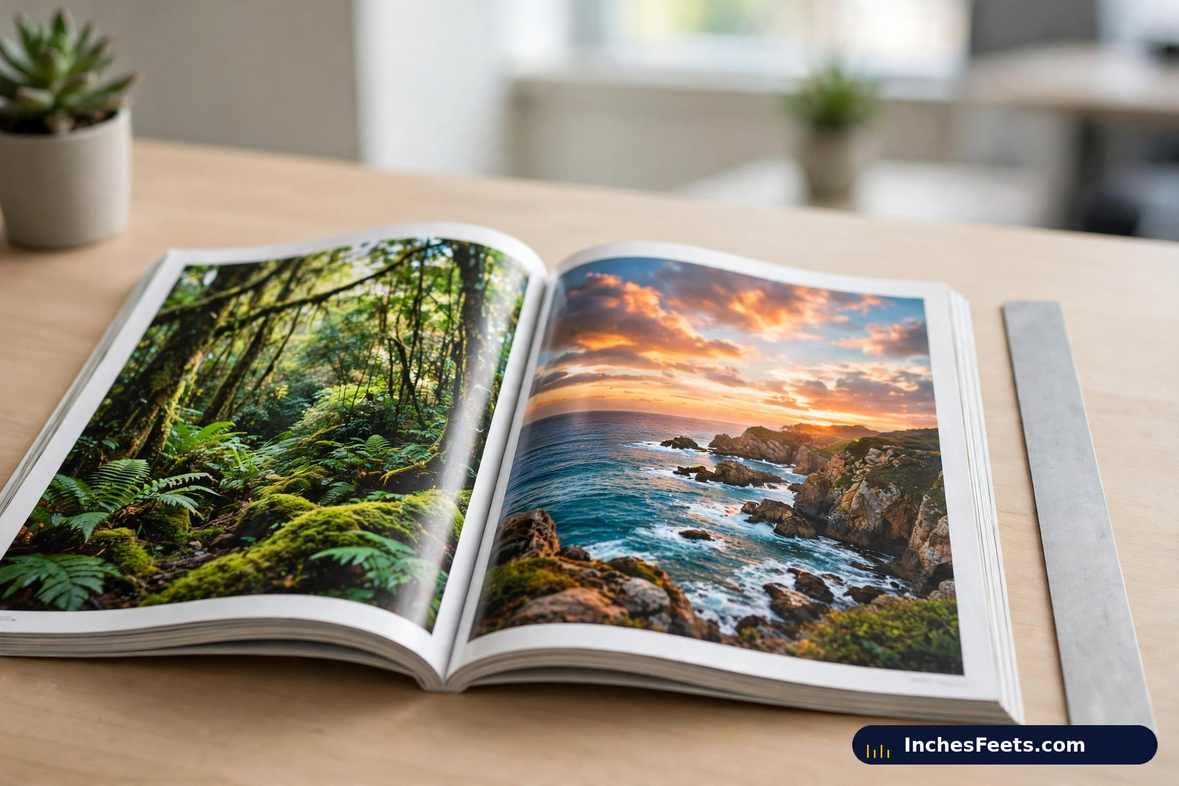
One nuance the charts usually skip: a magazine DESIGNED on a letter page is often not TRIMMED at exactly letter size. Most large US consumer titles trim to 8.375 × 10.875 inches (213 × 276 mm) — an eighth of an inch narrower and shorter — because that trim fits press and newsstand-rack standards more economically. If you are matching an existing magazine rather than a template, measure the physical copy: you will most likely find the smaller trim, not the full letter page.
Tabloid Size (11 × 17 inches)
Tabloid is the big sheet: 11 × 17 inches (279 × 432 mm), exactly two letter pages side by side. That doubled area is the point — tabloid pages carry large photographs, posters, pull-outs and bold headlines that a standard page cannot hold.
It is the format of supermarket tabloid newspapers, large-format music and sports publications, and poster-style zines. The trade-off is cost and handling: tabloid issues are pricier to print and post, awkward to shelve, and uncomfortable to read in a crowded seat, which is why mainstream consumer magazines so rarely choose it.
Magazine Dimensions in mm, cm and Pixels
Most size arguments are unit arguments, so here is every format in this guide converted on one basis: millimetres and centimetres are exact at 1 inch = 25.4 mm, and the pixel column is the print standard of 300 DPI (multiply inches by 300) that printers ask for in artwork files.
| Format | Inches | Millimetres | Centimetres | Pixels at 300 DPI |
|---|---|---|---|---|
| US Letter page | 8.5 × 11 in | 216 × 279 mm | 21.6 × 27.9 cm | 2550 × 3300 px |
| US consumer trim | 8.375 × 10.875 in | 213 × 276 mm | 21.3 × 27.6 cm | 2513 × 3263 px |
| Digest (modern spec) | 5.5 × 8.5 in | 140 × 216 mm | 14 × 21.6 cm | 1650 × 2550 px |
| A4 | 8.27 × 11.69 in | 210 × 297 mm | 21 × 29.7 cm | 2480 × 3508 px |
| A5 | 5.83 × 8.27 in | 148 × 210 mm | 14.8 × 21 cm | 1748 × 2480 px |
| Tabloid | 11 × 17 in | 279 × 432 mm | 27.9 × 43.2 cm | 3300 × 5100 px |
| Oversized | 9 × 12 in | 229 × 305 mm | 22.9 × 30.5 cm | 2700 × 3600 px |
| Square | 8 × 8 in | 203 × 203 mm | 20.3 × 20.3 cm | 2400 × 2400 px |
Read the A4 row against the Letter row and the international difference is clear at a glance: A4 is narrower (210 mm against 216 mm) and taller (297 mm against 279 mm), which is why a US template dropped onto A4 stock leaves a gap at the sides and overflows at the foot.
Specialized Magazine Sizes
Beyond the standards sit the formats chosen for a specific job: pocket titles built to travel, oversized titles built to display — the oversized fashion and art books at 9 by 12 inches from the table above — and the two formats below, which cause the most sizing confusion of all.
Pocket Size (3.5 × 5 inches)
This heading keeps the competitor’s figure because headings here are kept verbatim — but the figure itself does not survive checking, and this section exists to say so plainly. No major printer’s size guide lists a 3.5 × 5 inch magazine: pocket and mini magazines in real printer specs measure 4.125 × 5.375 inches, and the pocket format most of the world uses is the ISO size A6 at 4.13 × 5.83 inches (105 × 148 mm). Tellingly, the competitor’s own FAQ gives pocket size as “around 4 × 6 inches” — a fair rounding of A6 — directly contradicting his own 3.5 × 5 heading.
So treat “pocket size” as a class, not a measurement: small travel guides, pocket devotionals and mini comics cluster around those two documented specs, both a little over 5 inches tall. If a listing or a brief quotes you 3.5 × 5 inches, ask for the trim in millimetres before you design a single page.
A4 Size (8.27 × 11.7 inches)
A4 is the world’s magazine page: 210 × 297 mm exactly, set by the ISO 216 standard, which works out to 8.27 × 11.69 inches (the heading’s 11.7 is the rounded form). It is the standard across Europe, Asia, Australia and most other regions, and the default for corporate, academic and trade publications everywhere.

The ISO family nests neatly, which the US system does not: A5 (148 × 210 mm) is exactly half an A4 sheet, and A6 is half of A5, so one design scales across a magazine, its booklet edition and its pocket edition with no distortion. Next to US Letter, A4 is about 6 mm narrower and 18 mm taller — close enough to look interchangeable on a desk, different enough to ruin a print run if you assume they match.
Square Format (e.g., 8 × 8 inches)
Square magazines drop the rectangle entirely: 8 inches on every side (203 × 203 mm) is the size printer guides list for the format, with 10 × 10 inches as the larger option. The equal sides give covers and spreads a gallery feel that suits art, photography, music and children’s titles, where one strong image per page is the whole design.
The costs are practical rather than artistic: square issues do not fit standard racks or envelopes, postage can price them as irregular, and printers charge more for the non-standard trim. Square is a deliberate statement format — chosen because the shape itself is part of the publication’s identity.
Digital Magazine Dimensions Vs Print Formats
Print dimensions are fixed the moment the press runs; digital dimensions are negotiated with every screen the reader owns. The competitor’s comparison table makes the contrast well but lists a fixed “standard” pixel size for digital — 1024 × 768 — which is simply the screen of the original 2010 iPad, not a standard any publisher designs to today. The corrected table:

| Aspect | Print Magazines | Digital Magazines |
|---|---|---|
| Standard Size | Letter page 8.5 × 11 in or A4; most US consumer titles trim to 8.375 × 10.875 in | No fixed size — pages are built per device and app; 1024 × 768 px was the original iPad screen, not a standard |
| Resolution | 300 DPI for sharp print output | Screen resolution, typically rendered at 72–150 DPI equivalents |
| Aspect Ratio | Fixed by the chosen trim (e.g., 8.5:11) | Varies by screen — 4:3, 3:2, 16:9 and taller phone ratios |
| Flexibility | Fixed once printed; reprints needed for changes | Responsive layouts adapt to each device automatically |
| Print Area | Trim size plus a 0.125 in (3.175 mm) bleed on every side | The full screen, with margins set in software |
The practical rule: a print edition is designed once, to one exact trim; a digital edition is designed as a flexible layout whose “size” is a range. Publishers who produce both usually design the print trim first and let the digital edition reflow from it.
Trim Size, Bleed and Live Area: What the Numbers Mean
Every magazine page size in this article is a TRIM size — the dimensions of the finished page after the printed sheet is cut. Two further measurements ride on top of it, and confusing them is the commonest production error of all.
BLEED is the artwork that runs past the trim edge so no white sliver survives the cut: the print standard is 0.125 inches (3.175 mm) of extra image on every side, so a letter-size page is supplied to the printer as a file 8.75 × 11.25 inches. The LIVE AREA (or safe area) is the opposite margin — the zone inside the trim where text and logos must stay: keep everything important at least 0.25 inches (6.35 mm) in from the trim edge, and more at the spine side of a thick perfect-bound issue, where the binding swallows part of the page.
Quote a magazine’s size and you mean its trim; quote its file size and you mean trim plus bleed. Mixing the two is how covers come back an eighth of an inch short.
How to Measure a Magazine Page
To size a magazine you already own: lay it closed, front cover up, on a flat surface. Measure the WIDTH first — from the spine edge straight across to the fore-edge — then the HEIGHT, top edge to bottom edge. Magazine sizes are always quoted width × height, so a standard US title reads 8.375 × 10.875 inches, never the other way round.
Measure the cover, not an open spread: a spread is two pages, and its width is double the page width minus the spine curve. Measure to the nearest sixteenth of an inch (or the nearest millimetre), then match your figures against the tables above — a physical magazine that looks “letter size” will usually resolve to the 8.375 × 10.875 trim, a digest will land near 5.5 × 8.25 or 8.5, and an import will resolve to A4 or A5 exactly, because ISO sizes are never approximate.
Practical Considerations for Choosing a Magazine Size
- Content Type: The content largely picks the size — photography and art demand oversized or square pages, dense text sits comfortably in digest or standard, and data-heavy trade content suits A4 or letter.
- Printing Costs: Non-standard trims cost more per copy, and larger pages use more paper and ink; a standard trim on a printer’s regular press sheet is always the cheapest route.
- Reader Comfort: A magazine is held for minutes at a time — tabloid and oversized issues tire the hands and don’t travel, while digest and standard sizes read anywhere.
- Distribution: Newsstand racks, subscription envelopes and retail displays are all built around the standard trims; an unusual size can cost you the rack space itself.
- Competition: Matching your category’s shelf standard makes an issue look at home beside its rivals; breaking from it is a deliberate, noticeable statement.
- Target Audience: Commuters reward pocketable formats, collectors reward display formats, and professional readers expect the A4 or letter page their filing systems are built on.
- Design and Layout: Layout grids, image crops and ad sizes are all sold and templated against the standard trims — a custom size means custom everything.
Magazine Sizes of Famous Magazines
The fastest way to see that “standard size” is a range is to measure the famous titles — and it is also where the competitor’s chart goes wrong, filing both Time and Vogue at 8.5 × 11 inches. Neither is letter size.
TIME trims at 8 × 10.5 inches — distinctly smaller than a letter page, a compact news-magazine format it shares with titles like People and Entertainment Weekly. VOGUE is larger: the US edition’s publisher raised its trim from 8 × 10.875 to 9 × 10.875 inches in March 2016 to give fashion photography more room, and British Vogue’s own publisher specification lists a full-page trim of 210 × 285 mm. ARCHITECTURAL DIGEST, from the same publisher family, trims at 8⅜ × 10⅞ inches — exactly the dominant US consumer trim in this guide’s table. And READER’S DIGEST, true to the name it gave the format, is published at digest size.
The pattern matters more than the trivia: even the biggest magazines in the world each picked a trim for their content and their racks — none of them simply defaulted to the office paper size.
Conclusion
A magazine page size is a trim measurement — width × height of the finished page — and the honest chart has more than one “standard” on it: the US Letter page at 8.5 × 11 inches, the 8.375 × 10.875 inch trim most American consumer titles actually use, A4 at 210 × 297 mm for most of the world, and digest, pocket, tabloid, oversized and square formats around them.
Verify the size before you design to it, because published charts contradict themselves — on digest heights, on pocket sizes, even on which famous magazines use which trim. Measure the physical magazine, confirm the trim with the printer, and let the content choose the format: the same instinct that puts a novel’s worth of reading in a digest puts a poster in a tabloid and a newspaper on a broadsheet.
FAQs
What Size is a Magazine?
There is no single size. Most magazines fall between digest (about 5.5 × 8.25–8.5 inches) and tabloid (11 × 17 inches), with the US standard at a letter page of 8.5 × 11 inches — trimmed to 8.375 × 10.875 inches by most large consumer titles — and A4 (210 × 297 mm) as the international standard.
What is the Standard Magazine Size in the United States?
The reference page is US Letter, 8.5 × 11 inches (216 × 279 mm). In practice, most large US consumer magazines trim slightly smaller, to 8.375 × 10.875 inches (213 × 276 mm), which is the size to copy if you are matching a real newsstand magazine.
How does Magazine Size Affect the Design and Readability of a Publication?
Larger pages give images and headlines room and suit visual content, but cost more and tire the hands; smaller pages are cheaper, portable and text-friendly, but crowd photography and force tighter layouts. Size also decides rack fit, postage and which standard ad units a title can sell.
What are the Differences Between Pocket-Size, Digest-Size, and Standard Magazine Sizes?
Pocket magazines are the smallest class — documented specs are about 4.125 × 5.375 inches and A6 at 4.13 × 5.83 inches, roughly 4 × 6 — built for travel and short reads. Digest is the traditional small format at 5.5 inches wide by 8.25 inches tall in its classic form, or 8.5 inches in today’s printer spec. Standard is the full-size page: 8.5 × 11 inches as a letter page, 8.375 × 10.875 inches as the usual US trim.