
How Much Is 100 kg? 8 Things That Weigh 100 Kilograms
A large man who lifts, a small motorcycle, and a giant panda all land in the same place: right around 100kg. The number feels abstract until you pin it down, so here is the pin — 100 kg is exactly 220.46 pounds, and it turns up in everyday life far more often than you would think.
It is roughly one big adult man, four standard bags of cement, or the first serious target on a gym barbell. Learn a handful of honest anchors like those and you can estimate this weight anywhere, without a scale in sight.
Below you will find the exact conversions, eight things that genuinely weigh about 100 kg — every one checked against a real source — plus a quick way to picture the weight on the spot. Two famous examples, the lion and the gorilla, are corrected along the way, because both are usually quoted wrong.
What Is 100kg?
A kilogram is the base unit of mass in the metric system, and 100 kg is simply one hundred of them — a tenth of a metric tonne. It is the weight class where human bodies, gym equipment, livestock feed, and freight shipments all start to overlap, which is why the number keeps coming up.
| 100 kg | Equivalent |
|---|---|
| In Pounds (lbs) | 220.46 lbs |
| In Kilograms (kg) | 100 kg |
| In Grams (g) | 100,000 g |
| In Metric Tons (t) | 0.1 metric tons |
| In Stone (st) | 15.75 st |
For most people, the fastest mental picture is a person. The average American man weighs about 199.8 pounds (90.6 kg) in CDC survey data, so 100 kg is a man roughly ten percent heavier than that average — a large man, not a standard one, whatever older lists claim. Household machines bracket the number rather than hit it: most front-load washing machines come in lighter than 100 kg, and most big family refrigerators come in heavier.
How Much Is 100 kg?
The clean way to feel 100 kg is to stack things you already know. It is two 50 kg trade sacks. It is ten 10 kg bags of rice. It is a little over 220 pounds, which in the gym is the border between “strong beginner” and “seriously trained” on a deadlift bar.
100 kg In lbs
One kilogram equals 2.20462 pounds, so 100 kg × 2.20462 = 220.46 pounds. Round it to 220 pounds for everyday talk, but keep the exact figure for shipping, luggage, and gym maths, where the extra half pound per ten kilos quietly adds up.
Everyday Things That Weigh Exactly 100 kg
Short on time? These are the eight verified anchors used in this guide. Each one is explained, with its source, in the detailed list below it.
- Four standard 25 kg bags of cement
- A loaded Olympic barbell (20 kg bar + 80 kg of plates)
- 100 litres of water
- A small motorcycle (Honda Grom: 103–104 kg ready to ride)
- A giant Mastiff dog (large males reach 104 kg)
- A male ostrich (about 100–130 kg)
- A giant panda (average adult: 100–115 kg)
- A large female gorilla (females run 68–113 kg)
Most Common Things That Weigh 100 Kilograms
Adult Male Lion
This famous example opens most lists like this one — and it fails its fact-check. An adult male lion does not weigh 100 kg. Smithsonian’s National Zoo puts adult male lions at 150 to 250 kg, with an average near 190 kg, and even lionesses run 120 to 182 kg. A 100 kg lion would be a youngster, not the mane-wearing adult in the pictures.
Keep the lion on this page as a built-in warning instead: when a website tells you a grown male lion weighs 100 kg, it has not checked its animals. The honest 100 kg animals are further down this list.
Small Motorcycle
This one checks out — with a model name attached. Small motorcycles vary too much for a blanket claim, but Honda’s own specification sheet lists the Grom 125, the best-known mini motorcycle in the world, at a curb weight of 227 to 229 pounds (103 to 104 kg), and curb weight means ready to ride, with all fluids and a full tank of fuel.
So picture the smallest real motorcycle you can buy from a major maker, fuelled and ready to go. That is the weight of 100 kg, give or take a sandwich.

Large Dog Breeds (Great Dane / St. Bernard)
Another correction hiding inside a true idea. The American Kennel Club lists male Great Danes at 140 to 175 pounds (64 to 79 kg) and Saint Bernards at 120 to 180 pounds (54 to 82 kg) — big dogs, but neither breed ever reaches 100 kg, despite what the headings on other sites promise.
The dog that genuinely does it is the Mastiff. The AKC puts Mastiff males at 160 to 230 pounds, so a large male, at 220 pounds (100 kg) and above, is a real 100 kg dog — the heaviest common breed in the world, and the correct way to keep this example.
Four Standard Bags of Cement
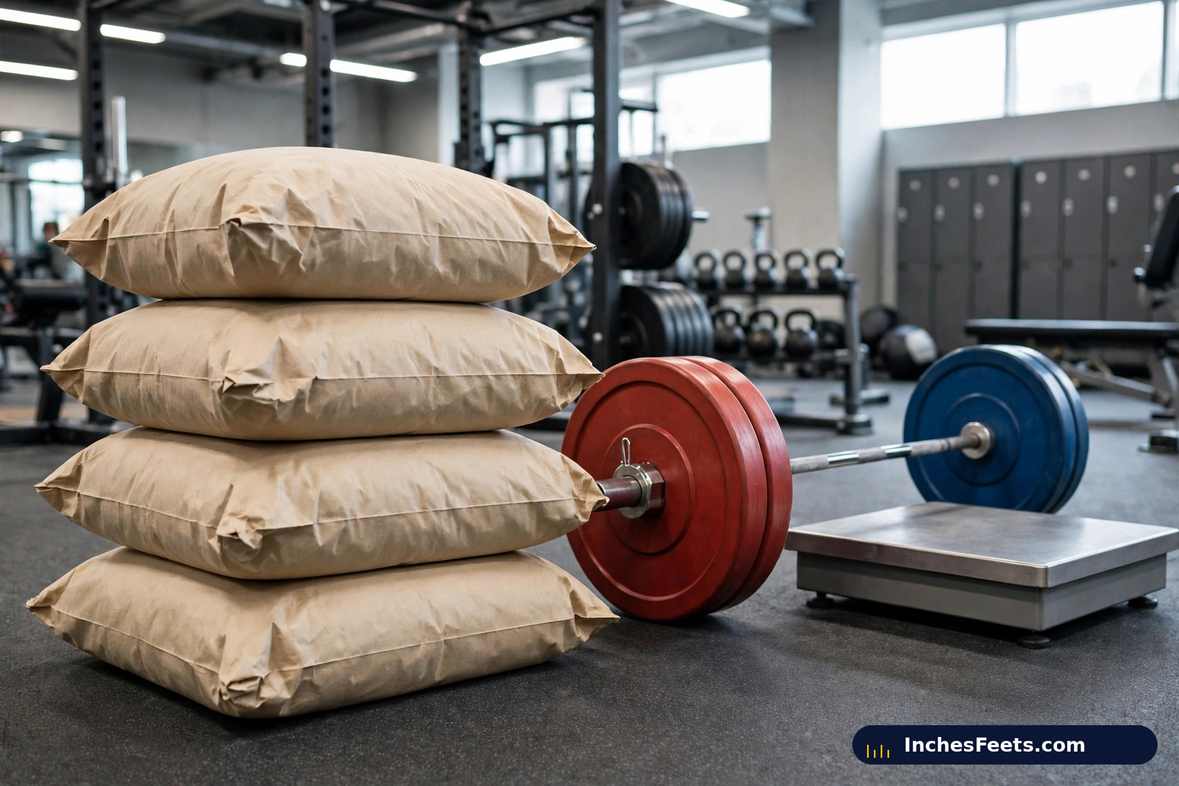
The most exact anchor on this list. The standard retail bag of cement in the UK and Europe weighs 25 kg — it is the size Blue Circle and every major brand sells — so four bags stacked by a garage wall are exactly 100 kg of powder, no rounding involved.
Work in trade sizes instead and the maths is just as clean: two 50 kg bags make the same 100 kg. One caution for American readers: a US bag of Portland cement weighs 94 pounds (42.6 kg), so two American bags give you only about 85 kg. The four-bag picture is the metric one.
A Loaded Olympic Barbell
Here is the anchor lifters actually use. A men’s Olympic bar weighs exactly 20 kg under International Weightlifting Federation rules. Load it with 40 kg of plates per side — one red 25 kg plate and one yellow 15 kg plate, following the IWF colour code — and the bar in your hands totals exactly 100 kg.
That is why 100 kg is a milestone in every gym: it is the first three-figure lift, built entirely from standard parts. If your gym works in pounds, the same milestone is loaded as 225 lb — which is secretly 102 kg, a mix-up explained in the FAQs below.

100 Litres of Water
Water is the friendliest weight in science because the metric system was built around it: one litre of water weighs almost exactly one kilogram (0.998 kg at room temperature). Measure out 100 litres and you have, for all practical purposes, exactly 100 kg.
In everyday terms that is the water inside a 100-litre aquarium, a large storage tote filled to the brim, or about 26 US gallons from a hose. It is also why a full bathtub is so deceptively heavy — an ordinary bath holds two to three times this weight in water alone.
A Male Ostrich
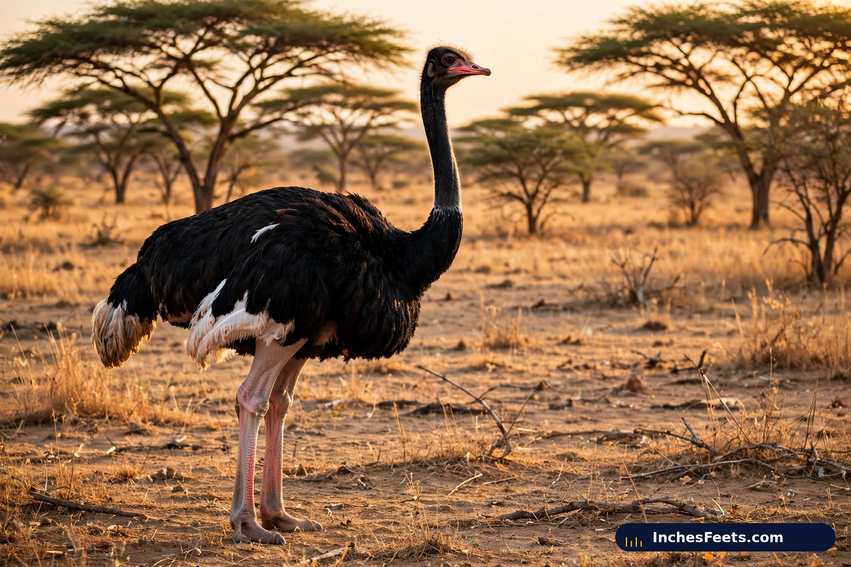
The world’s largest bird is also one of its most convenient weight anchors. San Diego Zoo’s published figures put male common ostriches at roughly 220 to 287 pounds — about 100 to 130 kg — standing up to nine feet tall, and record males have gone far beyond that.
Females run a little lighter, so be specific: it is the black-feathered male, the one doing the booming courtship display, who stands on the savanna weighing almost exactly 100 kg.
A Giant Panda
Zoos weigh pandas constantly, which makes this the best-documented animal on the list. The San Diego Zoo Wildlife Alliance fact sheet gives females at 70 to 100 kg and males at 85 to 125 kg, and the average adult giant panda is commonly put at 100 to 115 kg across zoo references.
So a typical grown panda, sitting in the bamboo eating its fortieth kilo of the day, is a 100 kg animal almost by definition. A large female lands on the number exactly; an average male sits just above it.

A Gorilla
One more correction, and this one swaps the animal rather than deleting it. You will often read that an adult male gorilla weighs about 100 kg. He does not: a silverback western lowland gorilla averages around 136 to 140 kg by Smithsonian figures and can pass 200 kg, which makes him closer to two of our units than one.
The gorilla who genuinely weighs about 100 kg is a large female. Published zoo ranges put adult females at 68 to 113 kg (150 to 250 lb), so the biggest females in a troop stand right on 100 kg — half the bulk of their silverback, and exactly the weight this page is about.
How to Visualize 100 kg Without a Scale
No scale, no problem. Build the number from things you can count: one large adult man, four bags of cement from the hardware store, ten bags of the biggest rice sacks in the supermarket, or three to four fully packed large suitcases at the airline limit.
Movement gives you a second test. One hundred kilograms is a genuine two-person lift — in workplace safety guidance, loads far below it already call for a team lift or a trolley. If one person can carry it comfortably down the street, it is not 100 kg, whatever the label says.
Things That Weigh 100 Grams
For readers whose search took a smaller turn: 100 grams is one thousandth of the weight above (0.1 kg, about 3.5 ounces). The classic examples are usually quoted with a little too much confidence, so here they are with honest numbers.
- A Medium Apple — closer to double. The USDA puts a medium apple at about 182 g; the apple that really weighs 100 g is a small one, about two and a quarter inches across.
- A Cup of Sugar — also double. A cup of granulated sugar weighs about 200 g on USDA figures, so the true 100-gram measure is half a cup.
- A Small Notebook — about right: a slim pocket notebook lands within a few grams of 100 g.
- A Pair of Socks — an ordinary pair runs lighter, roughly 30 to 60 g; only thick winter wool socks get close to 100 g.
- A Deck of Playing Cards — about right: a standard 52-card deck in its tuck box weighs roughly 90 to 100 g.
If you want the same idea at can scale, our Pringles can dimensions guide shows a full standard can holding 147 g of crisps — one and a half of these 100-gram units, in a tube.
100 kg vs 100 Pounds: What’s the Difference?
More than double. One hundred pounds is 45.36 kg, while 100 kg is 220.46 lb, so confusing the two quietly multiplies a load by 2.2 — the most common weight mistake in gyms, shipping quotes, and luggage allowances.
The mix-up survives because both numbers are round and both are common: American gyms plate-load in pounds, the rest of the world loads in kilos, and a “100” on a bar, a box, or a baggage tag means two very different lifts depending on which side of the Atlantic printed it. When the load matters, check the unit before you check anything else.
When an Exact 100 kg Matters
Most days, “about a hundred kilos” is close enough. Sometimes it is not. Freight and parcel pricing steps up in weight bands, so a shipment at 99 kg and one at 101 kg can be billed in different bands entirely. Elevators, hoists, and workshop benches carry rated limits where the printed number is a hard ceiling, not a suggestion.
Precision matters at the other end of the scale too: veterinary and livestock doses are calculated per kilogram of body weight, and several strength sports have historically run a 100 kg bodyweight class, where an athlete at 100.4 kg competes in a different field from one at 99.8 kg. Exact is exact for a reason.
Conclusion
One hundred kilograms is 220.46 pounds, a tenth of a tonne, and — once you anchor it to real things — an easy weight to feel: four bags of cement, a small motorcycle, an average panda, a loaded bar. The famous lion never belonged on the list, and the gorilla only makes it as a female, which is exactly why every example here was checked instead of copied.
Keep the anchors that fit your life and the unit discipline that keeps them honest: check whether a number is kilos or pounds before you trust it, and when you train, respect the loaded barbell — a true 100 kg is a milestone precisely because it does not come up off the floor for free.
FAQs
What Weighs 100 Grams?
Small everyday things: a small apple, half a cup of granulated sugar, a slim pocket notebook, or a deck of playing cards in its box. Each is detailed, with corrected figures, in the 100 grams section above.
How Heavy is 100 kg?
100 kg is 220.46 pounds — about one large adult man, a small motorcycle, or a giant panda. It is firmly a two-person lift; most people cannot pick it up alone safely.
Why is 225 lbs considered 100kg?
It isn’t, exactly: 100 kg is 220.46 lb, and 225 lb is really 102.06 kg. But 225 lb is the standard load in American gyms — a 45 lb bar with two 45 lb plates per side — so lifters use it as the stand-in for the 100 kg lift, and the two numbers have merged in gym talk.
What Household Item Weighs 100 Grams?
A small apple is the classic answer, along with half a cup of sugar or a deck of cards in its box. A truly medium apple is heavier than the myth — about 182 g on USDA figures.