How Long Is 40 Cm? 17 Common Things That Are 40 Cm Long
If you need 40 cm in units you can picture, here is the exact answer first: 40 cm is 15.748 inches — 1.31234 feet, or about 1 foot 3¾ inches — the width of a narrow bookcase, the body of a full-size viola, and the blade circle of a standard pedestal fan.
Forty centimetres is a manufacturer’s measurement: cushion pads, bath mats, placemats, and bookcase widths are all built to it. It is also a size people routinely get wrong, because several famous comparisons — the yoga mat, the newborn baby, the pair of A4 sheets — do not actually measure 40 cm, as this page shows.
This guide gives you the exact conversions first, then walks through seventeen things whose sizes are checked against manufacturer specifications, official standards, and published size charts — and corrects the popular comparisons, including several on the page this one replaces, that quietly get 40 cm wrong.
Everyday Things That Are Exactly 40 Cm
If you only remember a short list, make it this one. Every entry below is 40 cm by a manufacturer’s specification, an official standard, or a published product size — not by eyeballing:
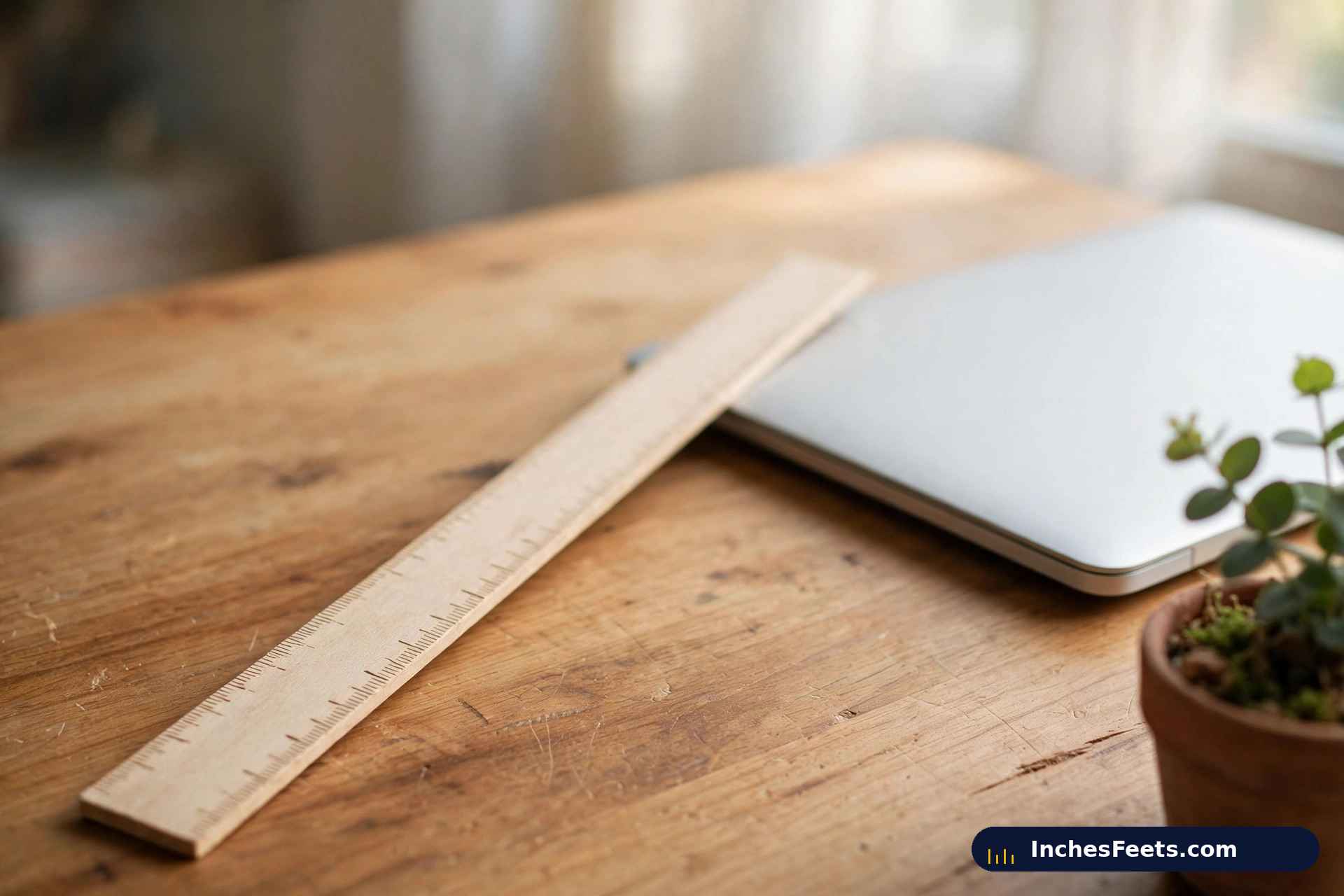
- A 40 cm ruler — the long classroom and drafting size, sold as a standard product alongside the common 30 cm school ruler.
- A handle-free beechwood rolling pin — Tuuli’s pin is specified at exactly 40 cm long and 4 cm across.
- A narrow BILLY bookcase — IKEA’s smallest BILLY is 40 × 28 × 202 cm, so its width is this page’s measurement exactly.
- A 40 × 40 cm cushion — IKEA’s square cushion format, sold across its cushion range at exactly 40 cm a side.
- A standard bath mat’s short side — IKEA’s FINTSEN bath mat measures 40 × 60 cm.
- A standard placemat’s long side — dining placemats are a standard 40 × 30 cm product size.
Four comparisons you will see elsewhere need correcting straight away. A standard yoga mat is not 40 cm wide: it is 61 cm wide and about 173 cm long. Two A4 sheets side by side make 42 cm, not 40 — an A4 sheet is 21 cm wide by the ISO 216 standard. A newborn baby is not a 40 cm comparison either: the WHO median length at birth is about 50 cm. And despite what older lists claim, there is no standard 40 cm desk-lamp arm — lamp arms are sold by reach, and the reaches run far longer.
How Long Is 40 Cm?
Forty centimetres is roughly the distance from your wrist to a point a hand’s breadth past your elbow — which is why the old body-based guesses overshoot it. The elbow-to-fingertip measure, the ancient cubit, runs about 45 to 46 cm on an average adult (Merriam-Webster gives the cubit as about 18 inches), so your forearm is close to 40 cm but not on it: the honest body anchor is forearm-plus-palm territory, and even that varies by person. Treat body comparisons as a rough picture, never a measurement.
Against furniture, 40 cm is the width of the narrow bookcase that fills a hallway gap, the diameter of the pizza a family orders on a Friday, and the side of the cushion on the sofa. It is a working size — big enough to span a placemat setting or a cutting board’s short side, small enough to fit inside a carry-on suitcase, which is why so many manufactured goods are built to it.
How Much Is 40 Cm?
40 Cm conversion chart:
| Unit of Measurement | Equivalent of 40 Cm |
|---|---|
| Meters | 0.4 m |
| Millimeters | 400 mm |
| Inches | 15.748 inches |
| Feet | 1.31234 feet |
| Yards | 0.4374 yards |
| Decimeters | 4 dm |
| Kilometers | 0.0004 km |
Note the inches figure: 40 cm is 15.748 inches — not the round “15.75 inches” quoted on many pages, which is a rounding (15.75 inches is actually 40.005 cm, half a millimetre over). The feet figure is worth a glance too: 1.31234 feet reads awkwardly, which is why feet-and-inches is the friendlier form — 40 cm is 1 foot plus 3.748 inches, call it 1 foot 3¾ inches.
17 Common Things That Are 40 Cm Long
Here is the full set. Each counted entry is checked against a manufacturer specification, an official standard, or a published size chart. Four of the comparisons on the page this article replaces turn out to be wrong at this size, and they are corrected in place rather than quietly dropped — which is why this list counts only the entries that check out.
Newborn Baby Arm Span
This one does not check out — by the competitor page’s own numbers. Its text puts a newborn’s arm span at 45 to 50 cm and then lists the baby as a 40 cm example anyway, which cannot both be true. The reference data sides with the larger figure: the World Health Organization’s growth standards put the median length of a newborn at 49.9 cm for boys and 49.1 cm for girls, and a young child’s arm span tracks roughly equal to body length — so a newborn’s span is around 50 cm, a full ten centimetres longer than this page’s measurement. Not counted in the 17.
Medium-sized Laptop
Counted — on a corrected basis, because “medium” is doing quiet damage in this claim. Most laptops are nowhere near 40 cm wide: a 13- to 15-inch machine typically measures 30 to 36 cm across. The laptops that genuinely reach this size are the big 17.3-inch models — ASUS lists its Vivobook 17 (X1704) at 39.93 cm wide in its official specifications (39.93 × 25.43 × 1.99 cm), seven-hundredths of a centimetre short of 40. So the example survives, but only at the top of the size range: picture the largest mainstream laptop, not a medium one.
Rolling Pin
Counted — exactly, on a named product. Rolling pins as a class run all over the map — handled pins reach 40 to 50 cm and beyond — so a range is not a measurement. The specific article is the handle-free beechwood pin: Tuuli, the Finnish maker, specifies its beechwood rolling pin at exactly 40 cm long with a 4 cm diameter, a one-piece French-style pin you push with your palms. If a recipe’s “40 cm of counter space” is your benchmark, this pin laid across it is the benchmark itself.
Small Shelf Or Wall Bracket
Counted — on a corrected basis, because the original claim was a range, not a size: “20 to 60 cm” describes a catalogue, not a shelf. The verified version is that 40 cm is a standard floating-shelf width in its own right. VASAGLE’s floating shelves (model LWS042K01) are sold at exactly 40 cm wide, and other makers list the same 40 cm step in their floating-shelf ladders. A small shelf is a 40 cm object when it is the standard 40 cm shelf — the bracket underneath it, adjustable and sold by the pair, has no standard size at all.
Travel Pillow
Counted — as the standard product size. Travel pillows are one of the few soft goods with a settled standard: the usual rectangular travel pillow measures 12 × 16 inches, which is 30 × 40 cm, and memory-foam neck pillows are specified the same way — DERBAL’s travel neck pillow, to take one manufacturer’s spec sheet, is listed at 40 × 30 × 15 cm. So the long side of the pillow in your carry-on is this page’s measurement, even though the U-shaped pillows vary more.
Two A4 Papers Side By Side
This one does not check out — and the page it comes from admits the real number while listing it anyway. An A4 sheet is fixed by the ISO 216 standard at 210 × 297 mm — 21.0 cm wide. Two sheets side by side along their long edges therefore span 2 × 21 = 42 cm, two centimetres too wide, exactly as the original text concedes in passing. Paper sizes are the one comparison on this page with no manufacturing tolerance to hide in: the standard is the size. Not counted in the 17.
Desk Lamp Arm
This one does not check out either, because there is no standard arm length to check it against. Desk lamps are sold by reach, and the reaches run long: classic architect lamps reach 28 inches (about 71 cm) or more, and spring-balanced arms are made of two segments that each approach this page’s measurement on their own. The one place “400 mm” does appear on a lamp spec sheet — Archilight’s Archdesk 40 lists it — it is the length of the light bar, the head, not the arm. A range of “30 to 60 cm” for an arm is a guess spread across a product category. Not counted in the 17.
Large Cutting Board
Counted — on the short side, exactly. Professional cutting boards are made to a gastronorm-style format, and the large board in that system measures 600 × 400 mm: Bartscher’s PRO cutting board datasheet gives a cutting surface of 600 × 400 mm on a board 600 × 400 × 20 mm overall. So the board’s long side is 60 cm, but its working width — the side that faces you at the counter — is this page’s measurement to the millimetre. Home boards in the same 60 × 40 format are sold by the major kitchen retailers on the same basis.

A Standard Ruler
Counted — on a corrected basis, because the heading is only half true. The standard ruler on a school desk is 30 cm, and no correction is needed there — but 40 cm is the other standard size, the long classroom, drafting, and whiteboard ruler sold by stationery makers as a regular product (STAMM’s transparent ruler, to take one, is a 40 cm article). So a “standard ruler” is 40 cm when it is the long standard — and this one has the rare virtue of measuring itself: the tool and the measurement are the same object.
Kitchen Utensils
Counted — on a corrected basis, because the everyday versions fall short. Most spoons and spatulas in a home drawer run 30 to 35 cm, and calling them “around forty” flatters them. The utensils that genuinely reach this size are the professional long-handled ones made for deep stockpots: ECOSALL’s long-handle slotted wooden spoon, European-made, is a 16-inch utensil — 40.64 cm — sold precisely so a cook’s hand stays clear of a big pot’s steam. Count the pro spoon, not the drawer average.
Yoga Mats
This one does not check out in either direction. A standard yoga mat is 61 cm wide and about 173 cm long — the international standard format quoted across manufacturers’ size guides (173 × 61 cm). Forty centimetres is neither its width nor anything close to its length; the claim appears to confuse the mat with its rolled diameter or its carry strap. A rolled mat’s diameter, for the record, is roughly 12 to 15 cm depending on thickness — also not 40. Not counted in the 17.
Kitchen Knife
Counted — on a corrected basis, because only the large knives get here. A typical 8-inch chef’s knife measures about 33 to 35 cm overall, blade and handle together, and stops well short. The big-handled professional models are the ones that arrive: Dalstrong’s 8-inch Gladiator Series chef knife is specified at a total length of 16 inches — 40.64 cm — in published specification tables. So “a kitchen knife” is a 40 cm object only at the top of the range; the honest picture is the largest chef’s knife in the block, not the average one.
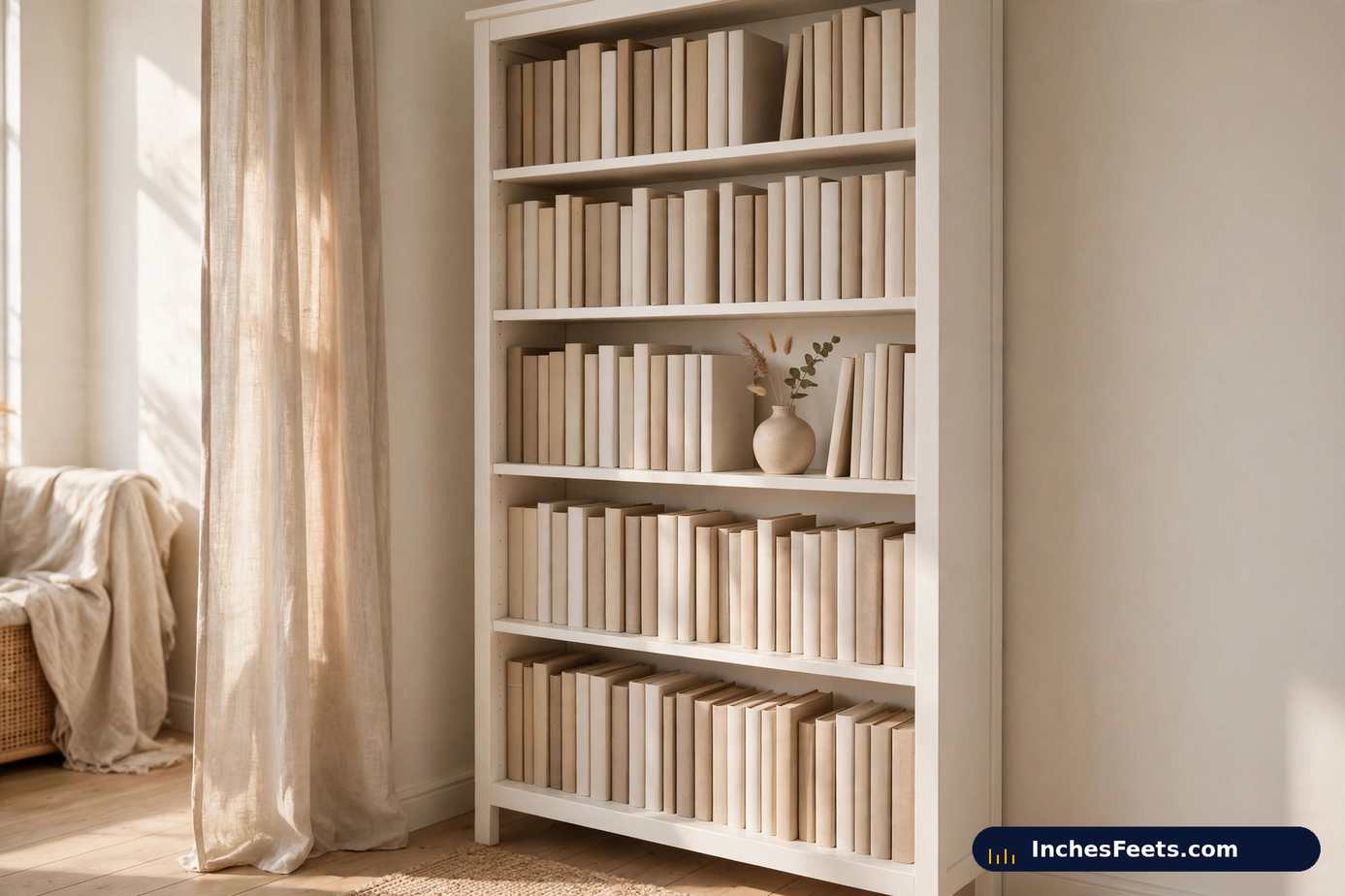
A Narrow BILLY Bookcase
Counted — exactly, by the manufacturer’s own dimension line. IKEA’s BILLY bookcase, in the range since 1979, comes in a narrow model listed at 40 × 28 × 202 cm: 40 cm wide, 28 cm deep, 202 cm tall. The width is printed in the product name itself, which makes this the easiest verification on the page — and a genuinely useful anchor, because the narrow BILLY is the bookcase people slide into hallway gaps and alcoves, so a great many homes contain this exact 40 cm already.
A 40 × 40 Cm Cushion
Counted — exactly, as a standard manufactured size. Square cushions are made to a ladder of standard sizes, and 40 × 40 cm is the small standard: IKEA sells the format across its cushion range — its JORDKASTANJ cushion is listed at 40 × 40 cm (16 × 16 inches) — and cushion covers and inner pads are made to the same 40 cm square so the parts interchange. Two of this page’s measurements, side by side on the sofa, in the object you lean on every evening.
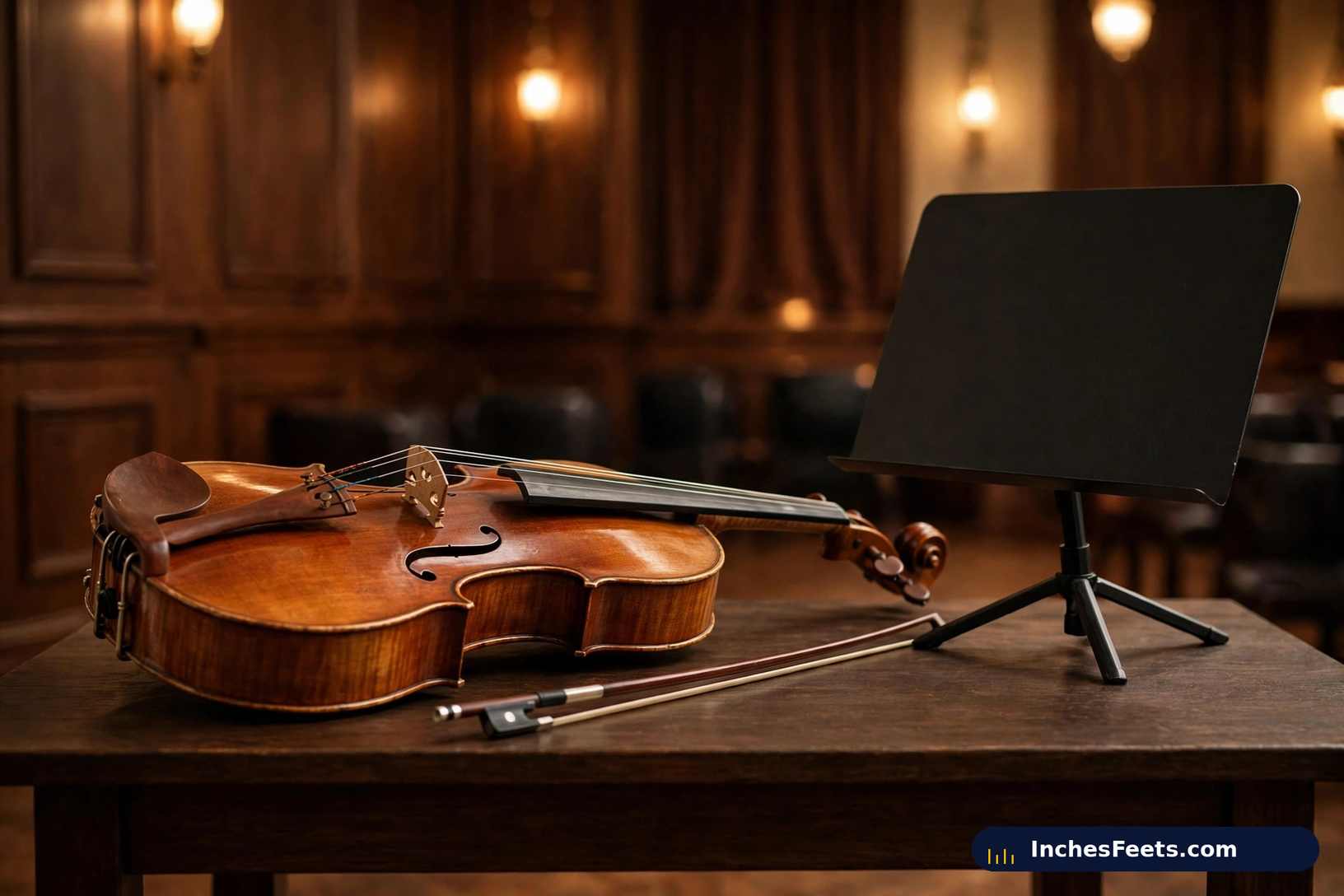
A Full-Size Viola
Counted — by the instrument’s own sizing system. Violas are sized by body length in inches, and the standard full size for an adult player is the 16-inch viola — a body length of exactly 16 inches, which is 40.64 cm (size charts put most adults on 15.5- to 16.5-inch instruments, and reference works give the average full-size viola body at about 41 cm). The viola has no single fixed standard the way the violin does, but the 16-inch class is its centre of gravity: this page’s measurement, in spruce and maple, is the alto voice of the string family.
A Standard Concrete Block
Counted — as the block itself actually measures, with the trade’s small print disclosed. The standard concrete block (a concrete masonry unit) is named 8 × 8 × 16 inches, but that is its nominal size, which includes the mortar joint: under the ASTM C90 system the block itself is made ⅜ inch smaller each way, so its actual length is 15⅝ inches — 39.69 cm, a third of a centimetre short of 40. Laid in a wall with its ⅜-inch joint, it occupies exactly 16 inches (40.64 cm) of the wall’s length. Either way you read it — block alone or block in the wall — it brackets this page’s measurement within a few millimetres.
A 16-Inch Pizza
Counted — exactly, by the chains’ own size charts. Pizzas are sized by diameter, and the extra-large on the big chains’ menus — Domino’s and Papa John’s both — is the 16-inch pizza: 16 inches across is 40.64 cm. It is the one entry on this page most readers have personally held at arm’s length, usually cut into twelve slices, and it makes a better mental ruler than most: anything the width of a family pizza is, to within two-thirds of a centimetre, 40 cm.
A 16-Inch Necklace Chain
Counted — as the jewellery trade’s standard short length. Necklace chains are sold in standard lengths, and the short standard — the choker length in jewellers’ length guides — is 16 inches, 40.64 cm, sitting at the base of the neck. The next standard up, 18 inches, is the collarbone “princess” length. So the shortest chain in the standard ladder is this page’s measurement worn as jewellery, clasp included, since chain lengths are measured end to end.
A 16-Inch Pedestal Fan
Counted — as the standard fan size, in both its names. Pedestal fans are sized by blade diameter, and the standard household size is sold as the 16-inch fan in imperial markets and the 40 cm fan in metric ones — Lloytron’s manual for its 16-inch Staycool pedestal fan gives the diameter as “approx. 16″ (40 cm)”, and Australian retailers sell the same class outright as a “40 cm pedestal fan” (Excelair’s EPF40, its blades “approximately 40 cm in diameter”). Sixteen inches is strictly 40.64 cm; the fan industry rounds its own label to this page’s number.

A Standard Bath Mat
Counted — exactly, on the short side. Bath mats are made to standard sizes, and the small standard is 40 × 60 cm: IKEA’s FINTSEN bath mat is specified at a width of 40 cm and a length of 60 cm in the maker’s own measurements. It is the mat in front of most showers and tubs — which means the short edge of the thing you step onto every morning is a daily, barefoot encounter with this page’s measurement.
A Standard Placemat
Counted — exactly, as the standard table size. Rectangular placemats are a standardised product, and the standard is 40 × 30 cm — the size listed across makers’ sets (Boao’s placemats, Argon Tableware’s marble mats, and leather sets alike are all specified 40 × 30). The long side leaves room for a dinner plate, cutlery, and a glass in a row, which is exactly why the size settled where it did. Set a table and you have laid out this page’s measurement six times over.
How to Visualize 40 Cm Without a Ruler
Build it from lengths you may already know. Two lengths of 8 inches laid end to end make 16 inches — 40.64 cm — a whisker over, close enough to settle any argument about a shelf or a cushion. Eight repeats of 2 inches get you to the same 16 inches by smaller steps. Or start from the bigger guide: 20 inches is 50.8 cm, and 40 cm is a little under four-fifths of it — picture a 20-inch span and cut a fifth off the end.
Your own body gives a rougher check: 40 cm is about the distance from the crook of your elbow to your wrist, plus a finger or two — noticeably less than the full elbow-to-fingertip cubit, which runs about 45 cm. It is a rough instrument and varies with your arms, but it will separate 40 cm from 30 and 50 at a glance, which is what most estimates actually need.
The manufactured world helps too. Stand in a kitchen and you are surrounded by it: the placemat under the plate, the short side of the big cutting board, the pro spoon in the jar by the stove. Stand in a living room and it is the narrow bookcase and the cushion. Forty centimetres is the size mass production keeps choosing, which is why it is easier to find than to estimate.
40 Cm vs 30 Cm and 50 Cm: How It Compares
Ten centimetres either way changes the category of almost everything at this scale. At 30 cm you have the school ruler, the A4 sheet’s long side (29.7 cm), and the standard pizza’s smaller sibling. At 50 cm you have the newborn baby’s length, the cushion’s big sibling (50 × 50 is the next cushion standard up), and half a metre exactly. Forty sits between them as the in-between standard: too long for the desk drawer, exactly right for the shelf, the mat, and the bookcase gap.
The standards ladders step unevenly through these numbers, which is why each has its own territory. Cushions climb 40, 50, 65. Shelves and bookcases are built in 40 and 80 cm widths. Fan sizes jump from 30 to 40 and stop. So 30, 40, and 50 cm are not three points on one scale so much as three different product worlds that happen to share a tape measure.
How to Measure 40 Cm Accurately
The honest tool is the long ruler or the tape: a 40 cm ruler costs little, and a tape measure removes all doubt. Measure from the zero end, not the ruler’s physical tip — many rulers carry a blank margin before the zero mark, and measuring from the edge silently adds several millimetres to everything.
Paper is the best improvised gauge, because its size is a standard rather than an estimate. An A4 sheet is 29.7 cm long: lay one down, mark its end, and add a hand’s breadth of about 10 cm and you are at 40 within a few millimetres. A 40 × 30 cm placemat or a 40 cm shelf, if one is in the room, is better still — a manufactured 40 beats an estimated one.
Phone measuring apps are the last resort. They are convenient and roughly right, but “roughly” at this size can mean a centimetre or more of error — fine for choosing a picture frame, not fine for cutting a shelf board. When the cut matters, measure twice with something physical.
Conclusion
Forty centimetres is 15.748 inches, 1.31234 feet, and 400 millimetres — and once you know where to look, it is a measurement with a spec sheet behind it: the bookcase’s width by IKEA’s dimension line, the block by the ASTM standard, the pizza by the chains’ size charts, the bath mat and placemat by the makers’ standard sizes. The honest list matters because the internet’s favourite comparisons at this size include a yoga mat nearly twice the claimed width, a pair of A4 sheets two centimetres too wide, and a baby who overshoots the mark by ten.
Keep two anchors and you will rarely guess wrong: picture the narrow bookcase for anything standing, and the family pizza for anything flat. And if you want the measurement you can hear, the viola — its standard 16-inch body is 40.64 cm of spruce and maple — is this page’s ruler with strings on it.
FAQs
What is 40 cm?
A length of 40 centimetres: exactly 15.748 inches, 1.31234 feet, or 0.4 metres. It is the width of a narrow bookcase and the long side of a standard placemat.
How Tall is 40 cm?
About 1 foot 3¾ inches — roughly knee height on an adult, the height of a small side table’s lower shelf, or a standard cushion stood on its edge.
How Big is 40 cm?
Bigger than a school ruler (30 cm), smaller than a newborn baby (about 50 cm). Picture a 16-inch pizza across, a 40 × 40 cushion, or two-thirds of a bath mat’s long side.