How Long Is 2 Inches? 9 Everyday Objects That Show the Size
2 inches is exactly 5.08 centimeters (50.8 millimeters), and the fastest way to picture it is the short edge of a business card or the length of an AA battery. Whenever a product listing, a sewing pattern or a box of nails mentions 2 inches, that small, card-edge length is the size it means.
Two inches turns up everywhere once you start looking for it: battery compartments, hair pins, paper clips, matchboxes and finish nails all live right around this size. The trouble is that many size lists online get their examples wrong, calling objects “2 inches” that actually measure half that, or half again as much.
Below, you will see what 2 inches looks like on a ruler, meet a set of everyday objects whose sizes were checked against real manufacturer specs and official standards, get honest corrections to the comparisons people repeat most, and learn quick ways to estimate the length with no ruler at all.
How Long is 2 Inches?
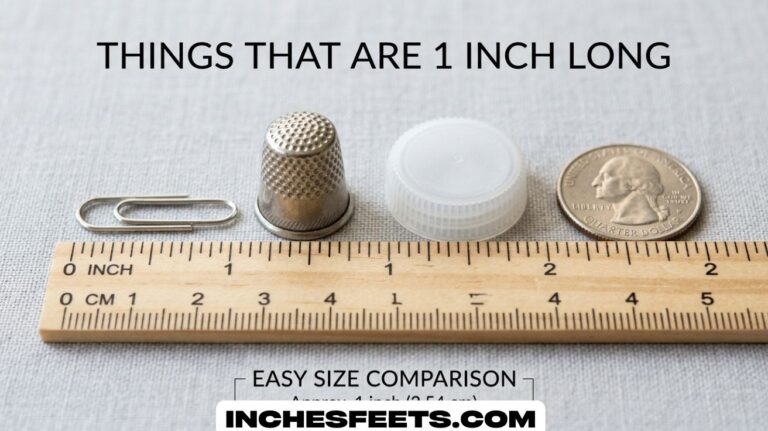
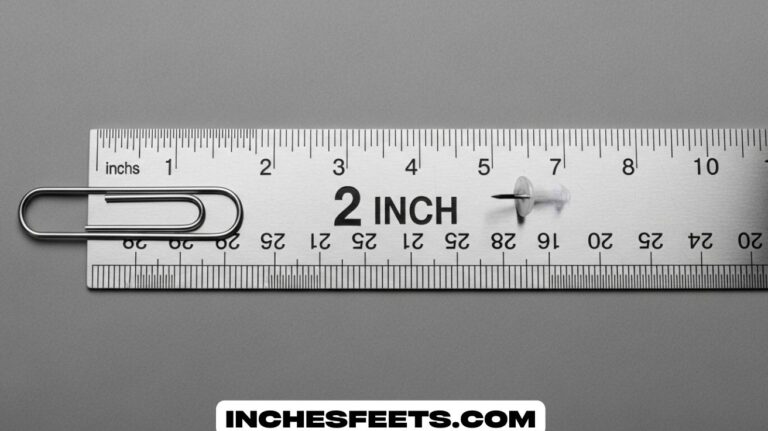
Two inches is a length of exactly 5.08 centimeters. On a standard ruler it runs from the 0 line to the 2 line, and if you count the smallest ticks, that span holds 32 sixteenths of an inch. On the metric edge of the same ruler, it ends just past the 5-centimeter mark, which is why “a little over 5 cm” is a good mental shortcut.
A reliable way to feel the size is to think of a US quarter. A quarter is 0.955 inches across (US Mint specification), so 2 inches is a shade more than two quarters laid side by side. It is much smaller than the width of a smartphone and much bigger than a shirt button, and the sections below pin it down with objects you can actually pick up and check.
Everyday Objects That Are Exactly 2 Inches
Plenty of lists round loosely. These anchors do not: each one was checked against a standard or a manufacturer’s specification, and each lands on or within a few hundredths of an inch of 2 inches.
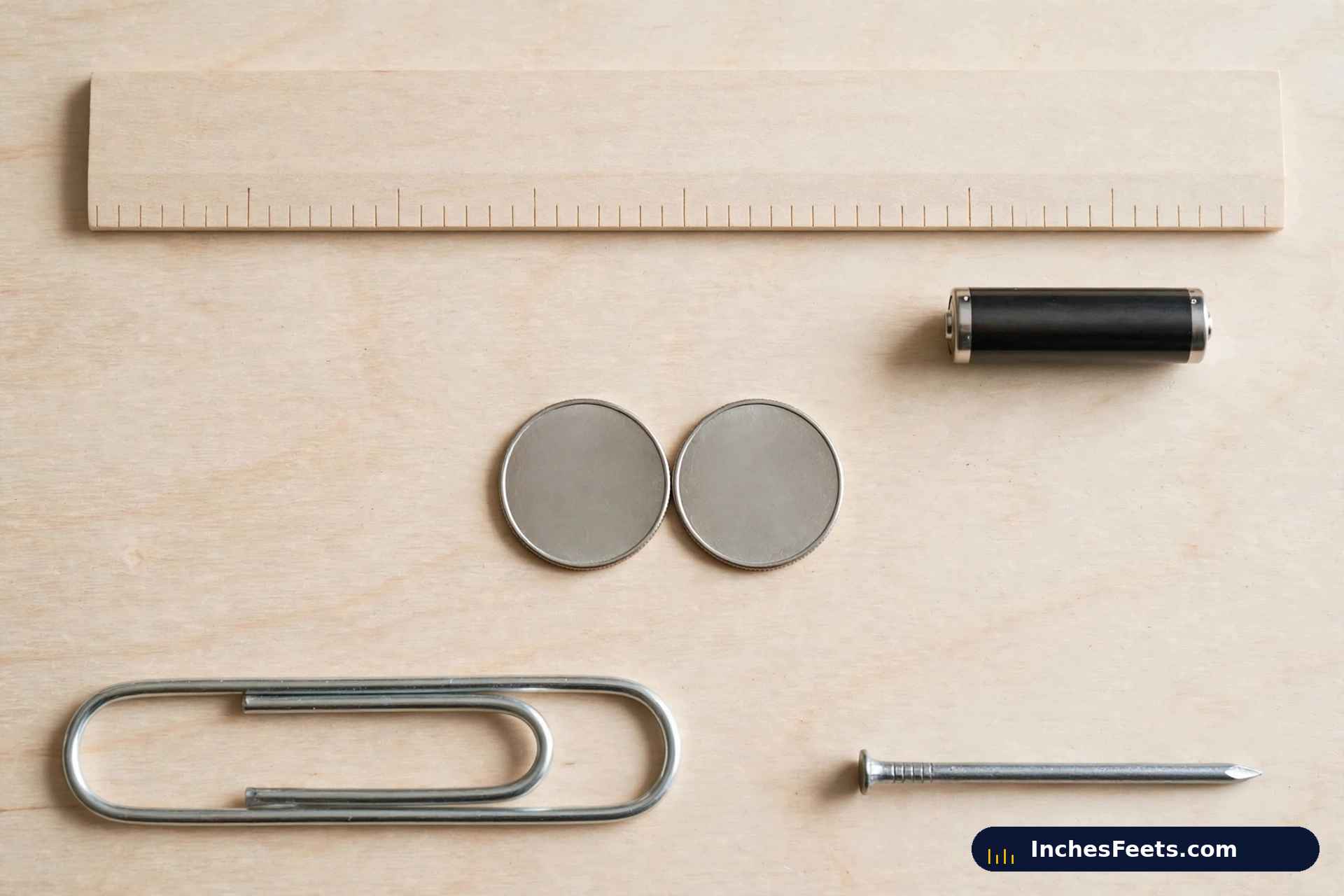
- AA battery (length): 50.5 mm long under the IEC 60086 standard for LR6 cells — that is 1.99 inches, effectively 2.
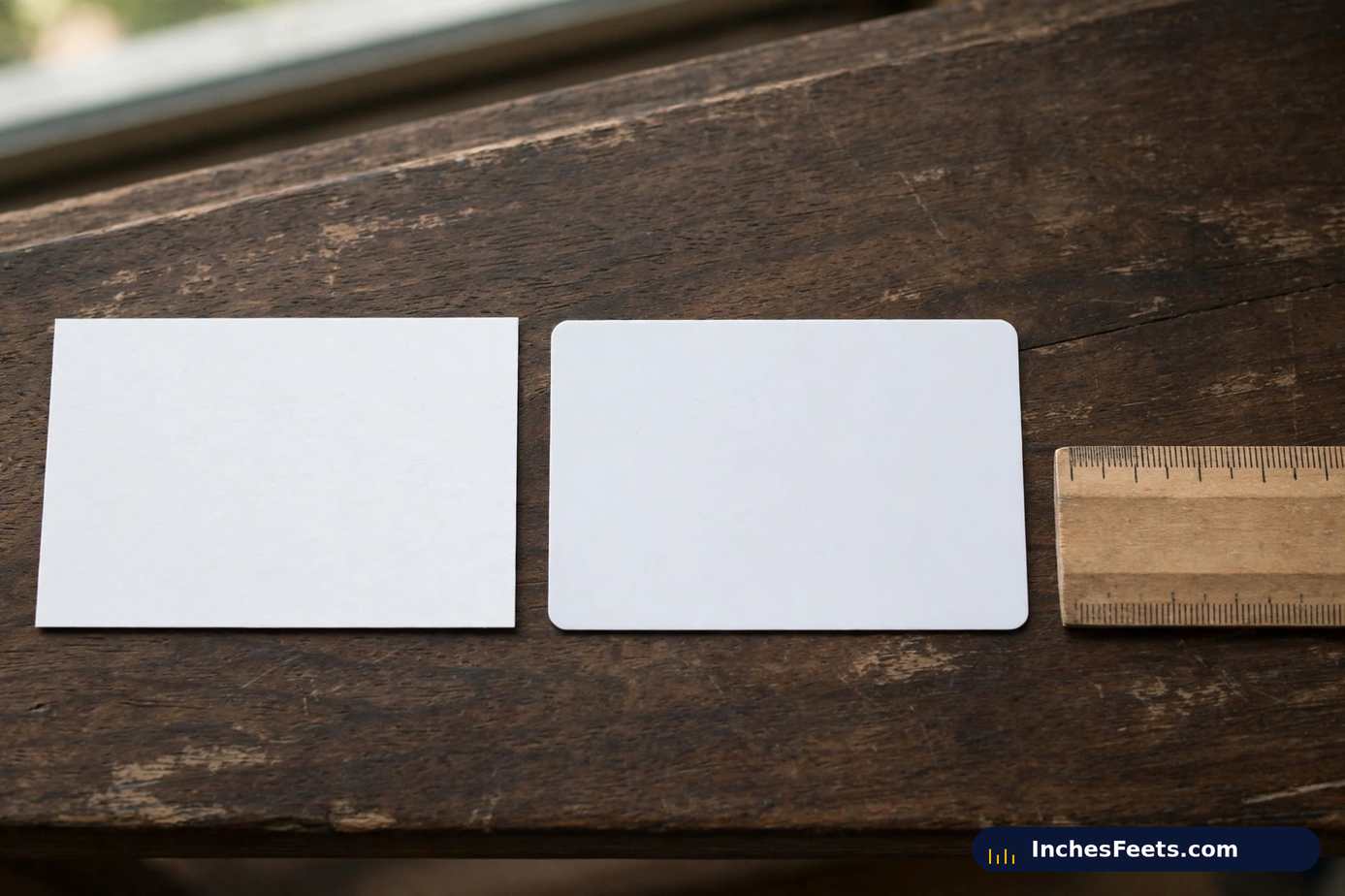
- Business card (short edge): the US standard card is 3.5 × 2 inches (88.9 × 50.8 mm), so its short edge is exactly 2 inches.
- 6d common nail: in the penny sizing system (ASTM F1667), a 6d nail is exactly 2 inches long.
- Jumbo paperclip: the jumbo or giant paperclip size is 2 inches (50.8 mm) — not the regular office clip, as explained below.
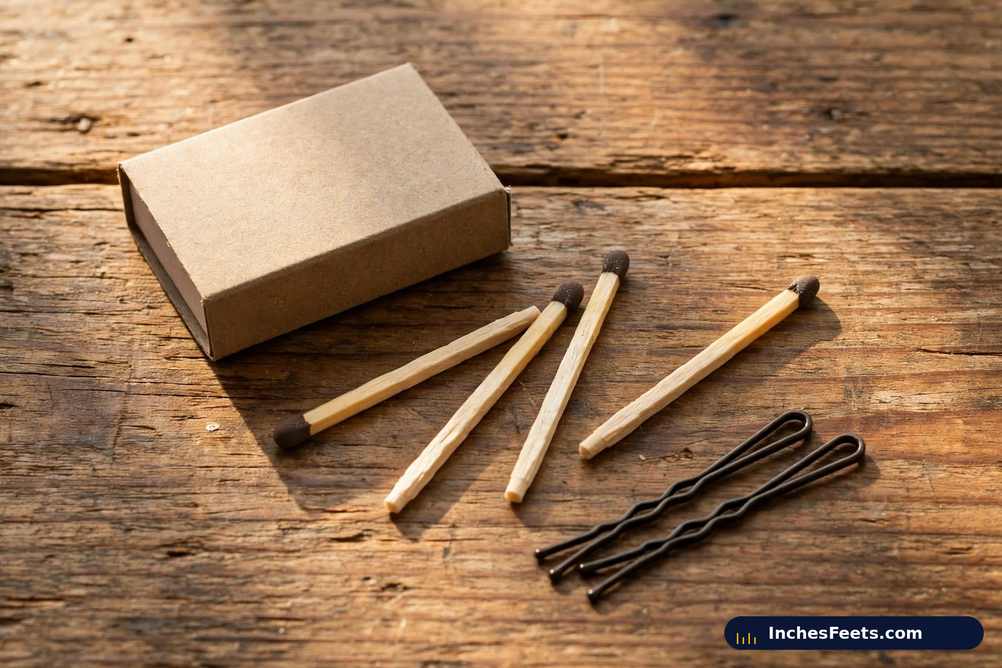
- Bobby pin: standard bobby pins are made and sold at 2 inches (5 cm) long.
- Small matchbox (long side): a standard small matchbox measures 50.5 mm along its long side, about 1.99 inches.
Two near-anchors complete the picture: two US quarters side by side span 1.91 inches, just under 2, and the width of a credit card is 2.125 inches, just over. Between those two, you can bracket 2 inches almost anywhere.
9 Common Things That Are 2 Inches Long
This is the classic list of objects people reach for when they want to show 2 inches — kept here in its usual order, but with each item checked. Some pass cleanly. A few are repeated all over the internet and are simply wrong, and those are corrected honestly rather than passed along.
A Standard Paperclip
Here is the first correction: a regular No. 1 paperclip is only about 1 to 1⅜ inches long, depending on the maker — nowhere near 2 inches. The paperclip that genuinely measures 2 inches is the jumbo (giant) size, which office-supply size charts list at exactly 2 inches (50.8 mm). So keep a jumbo clip in your desk drawer as a measuring stand-in, and do not trust the small one to do the job.
A Matchstick
A standard wooden matchstick runs about 2 to 2¼ inches long, so as a rough visual it earns its place on this list — small safety matches are shorter. The more precise reference is the box it came from: a standard small matchbox is 50.5 mm (about 1.99 inches) along its long side, a figure that stays consistent from brand to brand.
A USB Flash Drive
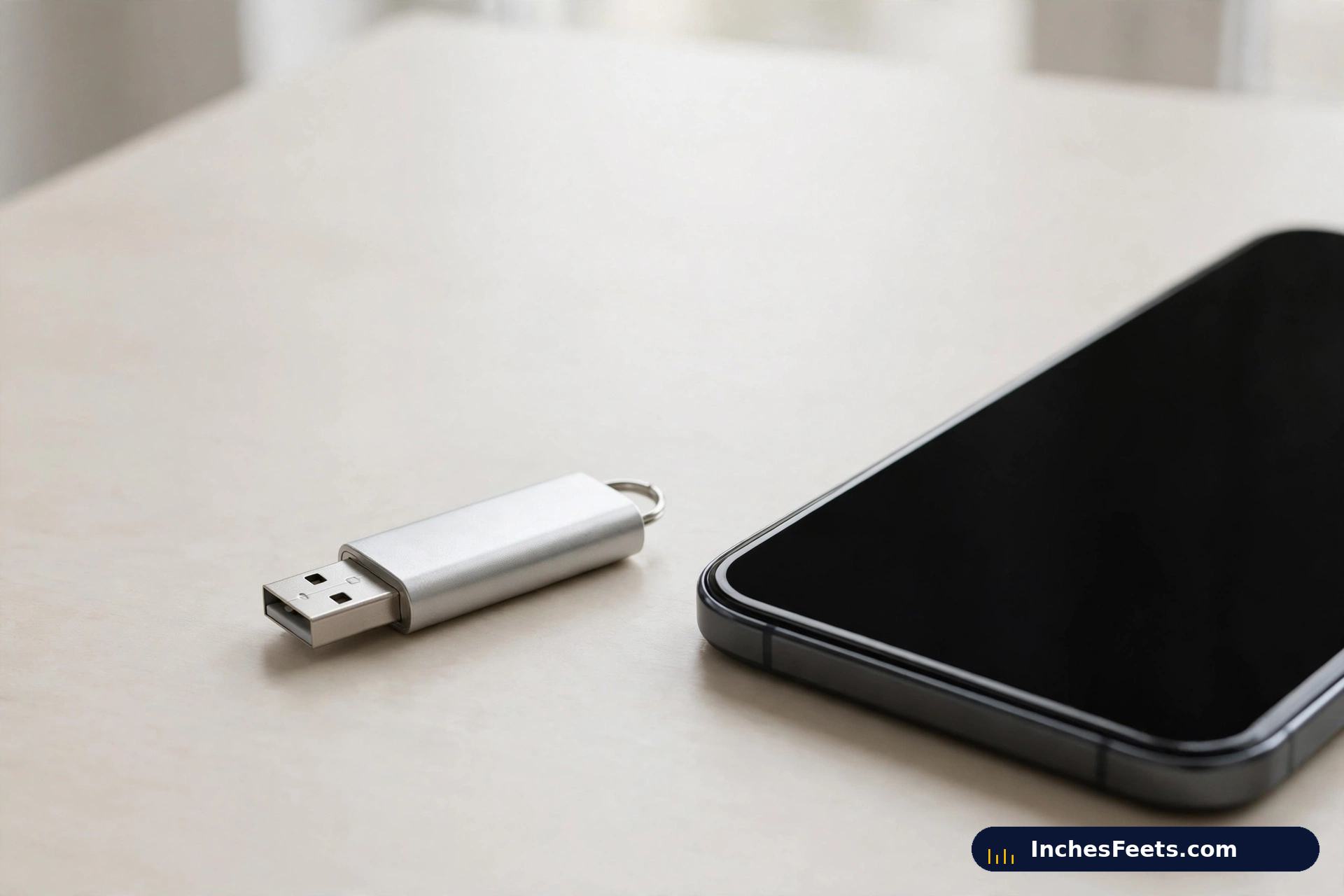
Flash drives have no standard size, so treat this one as “often close” rather than exact. Manufacturers list lengths from about 1.2 inches for mini models to about 2.4 inches for classic full-size drives. SanDisk, for example, specifies its Ultra Dual Drive at 1.75 inches long — just under 2. A drive is a decent pocket estimate, but check the spec sheet before you rely on one.
A Button
This is the list’s biggest myth. A standard dress-shirt button is 16–18 ligne, which converts to roughly 0.40–0.45 inches across — about a quarter of the claimed size. Even the largest ordinary coat buttons top out around 40 ligne, exactly 1 inch. A 2-inch button does exist, but only as an oversized decorative or craft piece; no standard garment button comes close. Never use a shirt button to estimate 2 inches.
A Piece of Chewing Gum
A stick of gum is longer than most people think. The US federal specification for chewing gum (CID A-A-20175C) allows a stick to run up to 3.00 inches long, and the sticks in a standard pack sit closer to that end of the range than to 2 inches. A gum stick is a fair reference for “a bit under 3 inches,” not for 2.
Standard Smartphone Width
A smartphone is a comparison, not a match. Most phones are about 2.5 to 3 inches wide, so 2 inches is noticeably narrower than the phone in your hand — picture the phone’s width with roughly a quarter to a third taken away. Used that way, as a “less than this” anchor, the phone is genuinely helpful.
Pencil Eraser
The little cap eraser on the end of a pencil is well under an inch, so it is no help here. Block erasers are the real reference, and they bracket 2 inches neatly: Pentel lists its small Hi-Polymer block at 1.75 inches long and its large block at 2⅝ inches. A mid-size classroom block eraser sits right around the 2-inch mark, which makes it one of the better school-desk estimates.
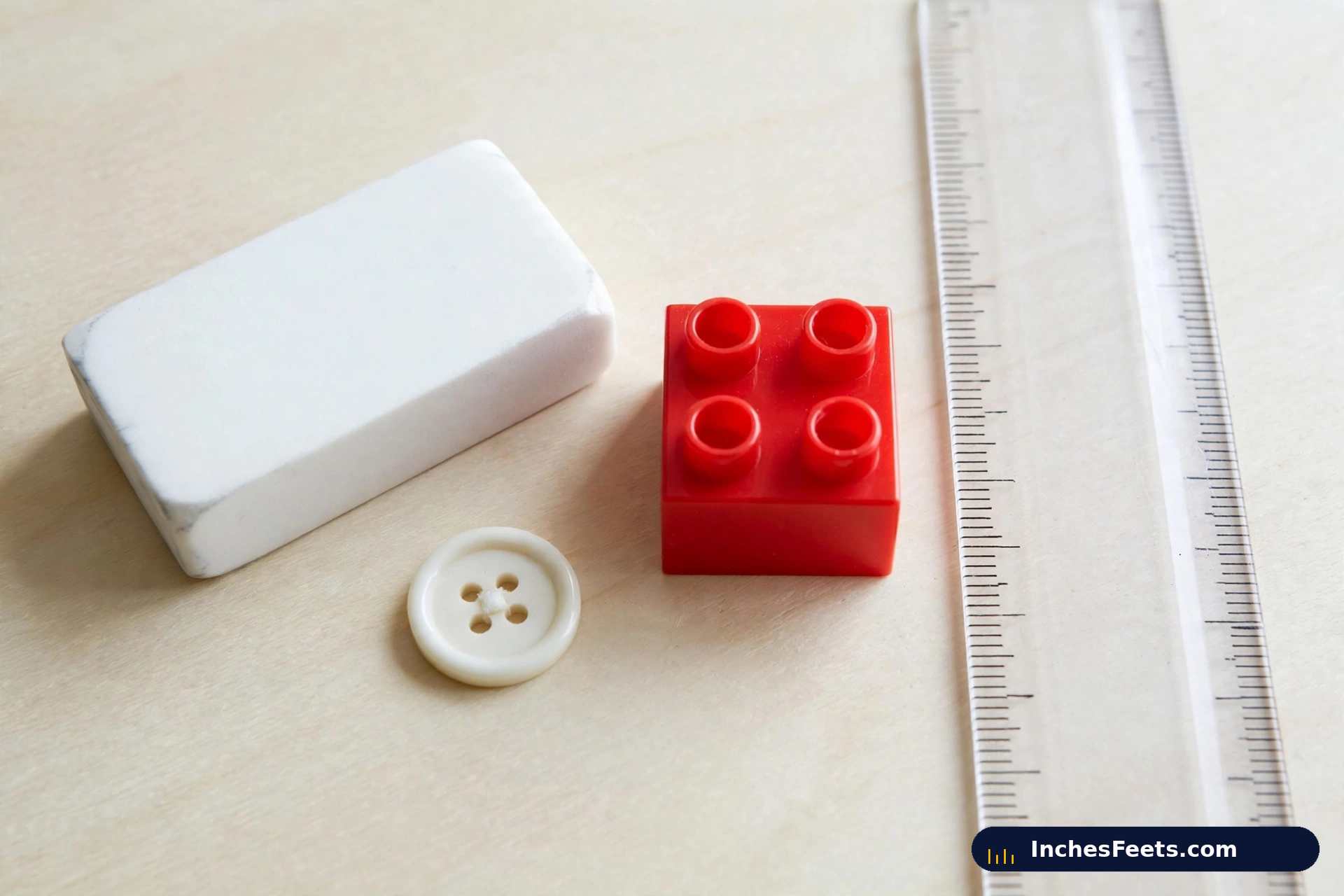
Lego Brick (2×2)
This one fails the check completely. A LEGO 2×2 brick measures 15.8 mm per side — just 0.62 inches. Even a DUPLO 2×2 brick, the toddler-sized version, is only 31.8 mm (1.25 inches) per side. What does work: line up three standard 2×2 bricks and you get 47.4 mm, about 1.87 inches — close to 2, and a fun way for kids to build the measurement themselves.
A Nail
“A nail is 2 inches” is only true for one specific nail — but for that one, it is exactly true. Nail lengths follow the penny system: a 6d common nail is precisely 2 inches long (ASTM F1667), with each penny step adding a quarter inch (an 8d is 2½ inches, a 10d is 3). If you remember one hardware fact from this page, make it “6d equals 2 inches.”
How to Visualize 2 Inches Without a Ruler
Three pocket references cover almost any situation. First, the two-quarters trick: a quarter is 0.955 inches wide, so two of them side by side give you 1.91 inches — a hair under 2, and close enough for almost any quick estimate. Second, a credit or debit card: its width (the short side) is 2.125 inches, a hair over 2, and its length is 3.37 inches, so 2 inches is about 60% of the card’s long side. Third, a business card: its short edge is exactly 2 inches, the single most accurate no-ruler reference most people own.
Combine the first two and you can bracket the size tightly: longer than two quarters, shorter than a credit card’s width. Once small sizes start to click, the same object-based method works a step up — our guide to measuring 5 inches long shows the same trick with bigger everyday items.
How Long is 2 Inches in Different Measurements?
One inch is exactly 2.54 centimeters by definition, so every conversion below is exact arithmetic, not estimation.
| Unit | 2 Inches Equals |
|---|---|
| Centimeters | 5.08 cm |
| Millimeters | 50.8 mm |
| Feet | 0.1667 ft |
| Meters | 0.0508 m |
| Yards | 0.0556 yd |
| Kilometers | 0.0000508 km |
The two conversions worth memorizing are 5.08 cm and 50.8 mm — between them they cover almost every metric listing you will meet.
2 Inches vs 3 Inches: What’s the Difference?
Three inches is exactly 7.62 cm — half again as long as 2 inches, which is a bigger jump than it sounds at this scale. In your wallet, the difference is easy to feel: a credit card is 3.37 inches long, so its long side is a little over 3 inches, while its short side, at 2.125 inches, sits just over 2. Hold the card both ways and you are holding the comparison.
In the hardware aisle the ladder is just as clean: a 6d nail is 2 inches, an 8d is 2½ inches, and a 10d is 3 inches. If a gap, hem or part measures closer to the card’s long side than its short side, you are looking at 3 inches, not 2.
When an Exact 2 Inches Matters
Estimates are fine for picturing a size, but some jobs punish a wrong guess. Sewing is one: a 2-inch hem allowance or fabric border that comes out at 1½ inches changes how a garment hangs. Hardware is another: penny sizes exist precisely because a 6d nail and an 8d nail do different jobs, and a quarter inch of length can decide whether a nail holds or splits the board.
Printing is a third: US business cards are cut at 3.5 × 2 inches, so artwork, logos and text must be planned around an exact 2-inch short edge. And battery compartments are built to the AA cell’s standard 50.5 mm length — close to 2 inches, but engineered to its own tolerance. In all four cases, measure with a ruler or caliper rather than trusting an object, and use the objects on this page to sanity-check the result.
Conclusion
Two inches is 5.08 centimeters — the short edge of a business card, the length of an AA battery, a 6d nail, a jumbo paperclip or a bobby pin, and a shade more than two quarters side by side. Just as useful is knowing what it is not: not a shirt button, not a 2×2 Lego brick, and not a stick of gum. Once those anchors settle, you will start spotting the size everywhere — and the same visual method scales up, as our guide to how long is 8 inches shows for the next sizes.
Keep a ruler in a drawer for the jobs that need precision, and keep these objects in mind for everything else, and 2 inches will never be a guess again.
FAQs About 2 Inches
What Objects are about 2 inches Long?
The verified stand-ins are an AA battery (1.99 inches long), a jumbo paperclip, a 6d nail, a standard bobby pin and the long side of a small matchbox — all right at 2 inches. Two quarters side by side (1.91 inches) and a credit card’s width (2.125 inches) bracket it from just below and just above.
How Long are 2 Inches on a Ruler?
On a ruler, 2 inches is the span from the 0 line to the 2 line — 32 of the smallest sixteenth ticks. On the centimeter edge of the same ruler, the same length runs just past the 5 cm mark, ending at 5.08 cm.
How Much is Two Inches?
Two inches is 5.08 centimeters, or 50.8 millimeters — about the length of an AA battery or two US quarters side by side. It is often compared to a golf ball, but that comparison is off: a regulation golf ball is only 1.68 inches across, noticeably less than 2 inches.