How Much Is 40 KG? 16 Things That Weigh 40 Kilograms
If you are wondering what weighs 40kg in everyday terms, here is the direct answer: 40 kilograms is exactly 88.1849 pounds — 1,410.96 ounces, or 40,000 grams. In the real world it is the weight of a large German Shepherd at the very top of its breed standard, a pre-filled four-foot punching bag, or a single heavy kettlebell standing on the gym floor.
Forty kilograms is a serious lift: heavy enough that most people would rather drag it than carry it, yet light enough to sit at the top of the one-person range. It is also a weight the internet describes very loosely — several of the most repeated “40 kg” examples turn out, on checking, to be out by a factor of two, four, or more.
This guide gives you 16 things that genuinely weigh 40 kilograms, each checked against a maker’s specification, an official standard or reference data. Just as usefully, it keeps the popular claims that fail the check — the piano, the baby elephant, the washing machine — and prints their real weights beside them.

How Much Is 40 kg?
Forty kilograms is a mass, not a mystery: it is 40,000 grams, and converted exactly it comes to 88.1849 pounds, 1,410.96 ounces or 6.2989 stone. Two claims often attached to it need correcting straight away. It is not, as the competitor’s intro puts it, the weight of “a small adult”: 40 kg sits below the healthy weight range for all but the very smallest adults, and the honest human comparison is a child of about twelve, whose reference medians land almost exactly on it (he has his own section below). And the comparison needs no embroidery — eighty 500-gram bags of flour do add up to 40 kg of flour, but a stack of eighty small bags is arithmetic, not an object; the standard bulk flour sack is 25 kg.
The full conversion table sits below, printed exactly. For the things themselves — the dogs, dumbbells, appliances and gym iron that honestly land on this weight — read on.
| Unit | Equivalent of 40 Kilograms |
|---|---|
| Grams (g) | 40,000 g |
| Pounds (lb) | 88.1849 lb |
| Ounces (oz) | 1,410.96 oz |
| Milligrams (mg) | 40,000,000 mg |
| Metric tonnes (t) | 0.04 t |
| Stones (st) | 6.2989 st |
40 KG at a Glance: The Verified List
- A large dog (a German Shepherd — the FCI breed standard tops out at exactly 40 kg for males)
- A full-size punching bag (pre-filled four-foot bags are sold at exactly 40 kg)
- A small refrigerator (Danby’s 7.4 cu ft apartment fridge — 40.50 kg on the maker’s own spec sheet)
- 40 litres of water (exactly 40 kg by definition)
- Two 20 kg Olympic weight plates (exactly 40 kg by specification)
- A 40 kg kettlebell (a standard heavy size, sold singly)
- A single 40 kg dumbbell (Technogym’s Hexagon Dumbbell, sold individually at 40 kg)
- A weighted vest at full load (Force Fitness’s plate upgrade sets take its vest to a 40 kg maximum)
- A blacksmith’s anvil (VEVOR’s 88 lb cast steel anvil — maker’s net weight 40 kg)
- A fire-resistant home safe (SentrySafe’s SFW123GDC — 39.32 kg in the maker’s manual)
- A 9.9 hp outboard motor (Yamaha’s F9.9JMHS — exactly 40.0 kg on Yamaha’s own spec sheet)
- An adult cheetah (the San Diego Zoo Wildlife Alliance fact sheet brackets adults at 39–65 kg)
- A twelve-year-old child (reference medians sit at 39.9–41.5 kg at age twelve)
- A full quarter-barrel keg (about 87 lb full, which is 39.46 kg)
- Two full water-cooler bottles (about 19.5–20 kg each — the pair that overshoots 30 kg lands here)
- A 90 lb bag of concrete mix (Sakrete’s own data sheet prints the bag as 40.8 kg)
Every item on this list is checked in its own section below. The claims that did not survive checking stay in the article too, with their real weights printed beside them — knowing that an upright piano overshoots by well over a hundred kilos is nearly as useful as the list itself.
Things That Weigh 40 Kg
A Large Dog Food Bag
This one fails on the products themselves. Dog food is simply not sold in a standard 40 kg bag: the largest standard bags on the market are the 20 kg breeder and bulk bags — Farmina’s Team Breeder line and Calibra’s Breeder Line both top out at 20 kg, and packaging guides put the whole breeder/bulk class at roughly 18–25 kg. Forty kilograms of dog food is real enough, but it is two of the biggest breeder bags side by side, not one bag.
Not counted: no standard 40 kg dog food bag exists to verify. Corrected figure printed above.
A Piano
This is the competitor’s largest error. A standard upright piano does not weigh “around 40 kilograms” — uprights run from about 150 to 270 kg, with even small studio uprights at 150–190 kg and a Yamaha U1 at roughly 210 kg. The piano family never comes near this page: the claim is out by a factor of four to five, and no piano section on this page can be rescued by a smaller model, because even spinets run 136–181 kg.
Not counted: a real upright piano weighs 150–270 kg. Corrected figures printed above.
A Large Dog
Dogs are the friendliest way to picture this weight, but the breed matters. The example that genuinely works is the German Shepherd: the FCI breed standard puts males at 30–40 kg, so a large male in standard condition tops out at exactly this page’s weight, and the AKC’s figures (males 65–90 lb, females 50–70 lb) bracket the same top end. The Rottweiler, often named alongside it, does not belong here: AKC males run 95–135 lb — 43 to 61 kg — so even the lightest standard Rottweiler overshoots.
Counted: as corrected — on the German Shepherd basis. The FCI standard band reaches exactly 40 kg at the top for males; the Rottweiler pairing is wrong and is corrected above.

Full-Size Punching Bag
Here the competitor’s loose range (27–45 kg) can be replaced by named products. Pre-filled four-foot punching bags are sold at exactly this page’s weight: adidas lists its 120 cm Speed Punch Bag at 40 kg, Exigo’s Elite Leather 4 ft pre-filled bag is specified at 40 kg, and Leone 1947 sells a model it simply calls the Basic 40Kg. A full-size filled bag hanging in a gym is, in other words, a genuine 40 kg object — one reason they are hung, not carried.
Counted: exact — named pre-filled bags are manufactured and sold at 40 kg.
Large Sack Of Potatoes
Potatoes move in standardised sacks, and 40 kg is not one of the standard sizes. Mesh-bag makers and produce trade guides list the standard potato sacks at 25 kg and 50 kg, and Kenya’s Irish Potato Regulations 2019 set the 50 kg sack as the standard packaging unit. A sack filled to 40 kg is physically possible, but there is no standard 40 kg sack of potatoes to verify — the claim borrows the shape of a standard that does not exist.
Not counted: standard potato sacks are 25 kg and 50 kg. Corrected figures printed above.
Standard Washing Machine (compact)
The competitor gives compact washing machines a 40–60 kg range, and for the machines the heading actually pictures, even that range is far too light. The 24-inch compact front-loaders sold by Bosch, LG and Whirlpool carry net weights of 160–182 lb on their own specification sheets — about 73 to 83 kg — because a front-loader’s concrete counterweight is most of the machine. Small portable twin-tubs, at the other extreme, weigh a fraction of 40 kg. No standard washing machine, compact or otherwise, sits on this page’s weight.
Not counted: 24-inch compact front-loaders weigh about 73–83 kg net. Corrected figures printed above.
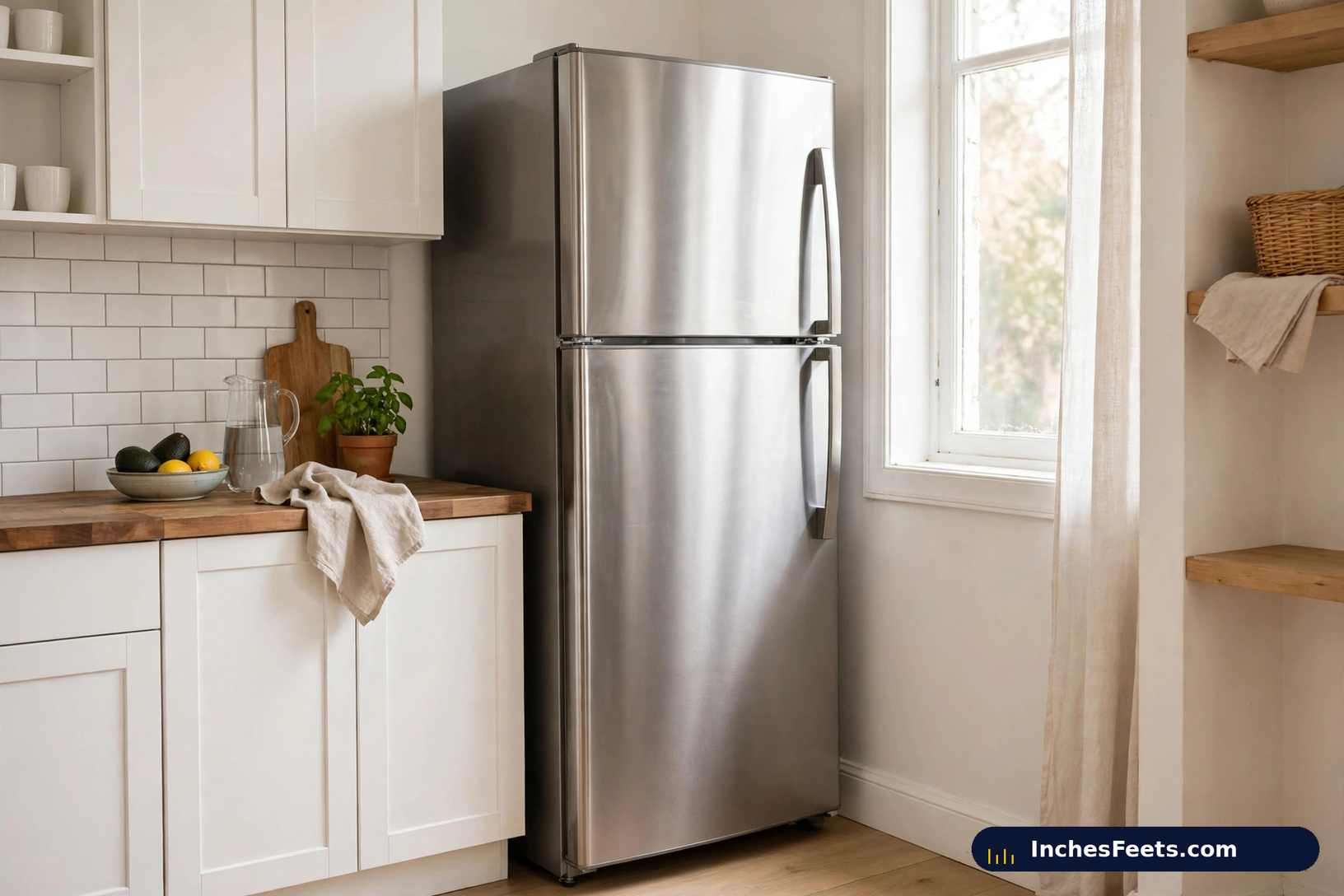
Small Refrigerator
“Small refrigerator” covers a wide spread of weights, and most compact fridges fall well short — the familiar 4.4 cu ft class runs from about 24.5 to 29.8 kg. But the apartment-size class above it does land here. Danby’s own specification sheet for its 7.4 cu ft apartment refrigerator, model DPF074V1SLDB-6, lists the product weight at 89.29 lb — 40.50 kg — close enough to this page’s figure, on a named model with the exact number disclosed, to count honestly.
Counted: FLAGGED — on the named-model basis: Danby DPF074V1SLDB-6, maker specification 89.29 lb = 40.50 kg (+0.50 kg, disclosed). The generic claim only holds at the apartment-size end of the small-fridge class.
40 Liter Water Container (filled)
Water is the anchor every other weight on this page quietly depends on, because the kilogram was built around it: one litre of water weighs one kilogram (999.97 grams at 4 °C — effectively exact). So a 40-litre container filled with water is carrying exactly 40 kg of water. The filled can itself reads about a kilo or two higher on a scale, for the plastic — the honest way to state it is that the water is exactly this page’s weight, and the container is the packaging.
Counted: exact — on the water basis (1 litre of water = 1 kg); the container’s own kilo or two is disclosed above.

A Gym Weight Plate
One standard plate is 20 kg — the red Olympic plate of the IWF size ladder — and plates are manufactured to their stated nominal weight. Put two of them together, on a bar or on the floor, and the arithmetic is the whole story: 20 + 20 = 40 kg. It is the same clean logic as the dumbbell count on our 30 kg page, one size up: gym iron is the most honest weight in this article because it is made, marked and sold to be exactly what it says.
Counted: exact — two standard 20 kg Olympic plates, by specification.
An Adult Alpaca
The competitor gives adult alpacas a range starting at 40 kg, and the floor is below the real one. Zoo and farm authorities put adult alpacas at about 48–90 kg (106–198 lb) — a healthy adult simply does not come down to this page’s weight. A growing juvenile passes through 40 kg on its way up, but a youngster on its way somewhere else is not “an adult alpaca,” and the claim as printed does not survive.
Not counted: adult alpacas weigh about 48–90 kg. Corrected figures printed above.
A Baby Elephant
The competitor says a baby elephant “can weigh up to fourty kg at birth,” and the real figure is not close. The San Diego Zoo Wildlife Alliance puts a newborn African elephant calf at 90–120 kg — more than double this page’s weight, before the calf has taken its first drink. It is a memorable error because the truth is more striking than the claim: the largest land animal starts life heavier than two grown adults’ worth of this page. (The competitor’s section also carries a shopping link injected into the text; it is not reproduced here.)
Not counted: elephant calves weigh 90–120 kg at birth. Corrected figure printed above.
A 40 KG Kettlebell
Kettlebells are cast and sold by nominal weight, in standard steps — and 40 kg is a standard heavy size. Life Fitness’s cast-iron kettlebell range includes a 40 kg bell (marked 40KG/88LB), and REP Fitness and Fringe Sport both sell single 40 kg kettlebells. Pick one up and there is no estimation to argue about: the product is manufactured to be this page’s weight. It is a strong lifter’s bell — most people meet 40 kg first as a deadlift, not a swing.
Counted: exact — a standard manufactured size, sold singly at 40 kg.
A Single 40 KG Dumbbell
Different from the plate count above: this is one single heavy dumbbell. Premium dumbbells are sold individually at the heavy end, and Technogym’s Hexagon Dumbbell range — sold one at a time — includes a 40 kg size, listed by the manufacturer at exactly 40 kg. One dumbbell, one hand (if you are strong enough), the whole of this page’s weight.
Counted: exact — a standard single product, manufacturer-listed at 40 kg.
A 40 KG Weighted Vest
Weighted vests are sold by their loaded weight, and the honest 40 kg version is a maximum-load configuration. Force Fitness’s adjustable vests are sold in sizes up to 20 kg, and the maker’s own plate upgrade sets take the same vest up to a documented 40 kg maximum. Fully loaded to that maximum, the vest is this page’s weight worn on your shoulders — serious training equipment by any measure, and the basis is stated plainly rather than rounded into a standard size.
Counted: FLAGGED — on the maker’s documented maximum-load configuration: Force Fitness vest plus its upgrade plate sets, 40 kg at full load (disclosed).
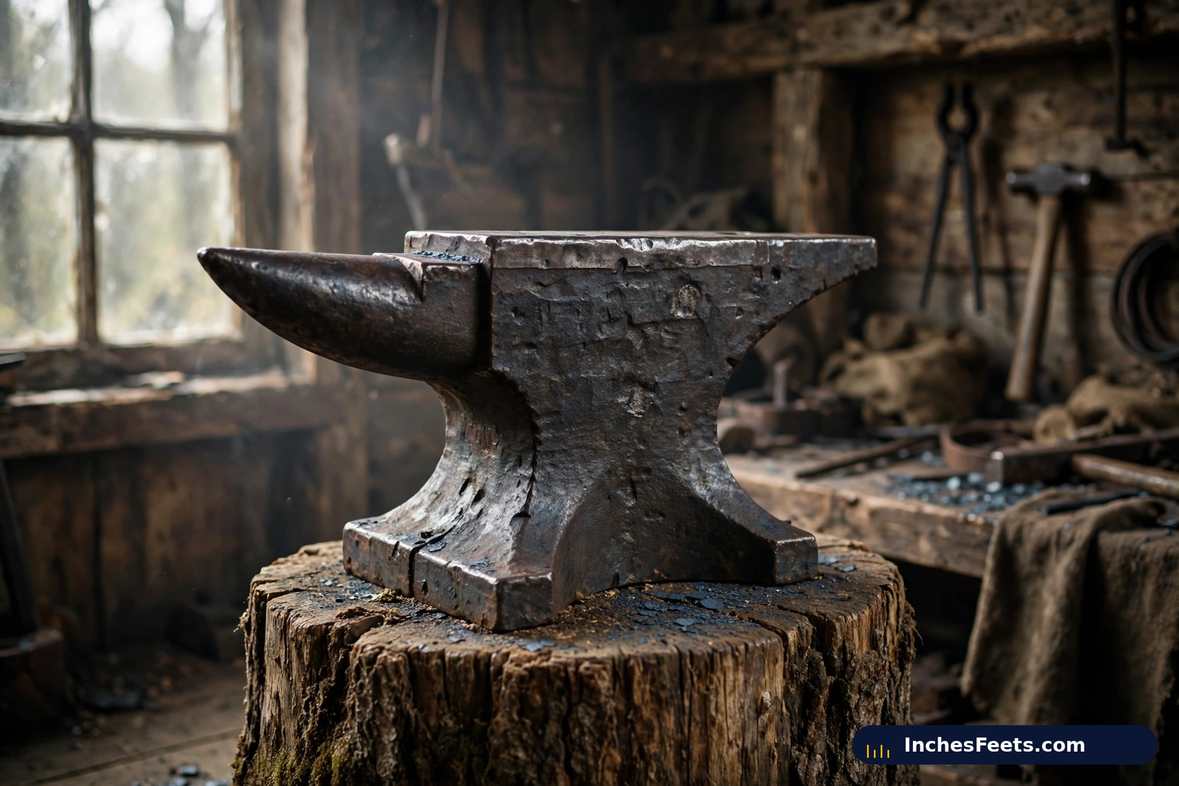
A Blacksmith’s Anvil
Anvils are sold by weight because weight is the point — mass is what absorbs the hammer blows. The popular 88 lb size lands exactly here: VEVOR’s own manual for its cast steel single-horn anvils lists models at “Net weight 40kg/88 lbs.” It is one of the oldest tool designs in the world, still specified the way it always was: by how much iron you get. (Our 30 kg page carries the same maker’s 66 lb anvil; this is its bigger brother.)
Counted: exact — maker-stated net weight 40 kg (VEVOR 88 lb cast steel anvil, per the maker’s manual).
A Fire-Resistant Home Safe
A small fire safe is mostly steel and fireboard, and the weight adds up quickly. SentrySafe’s fire- and water-resistant safe, model SFW123GDC, is listed in the maker’s own manual at 86.69 lb — 39.32 kg — close enough to this page’s figure, on a named model with the exact number disclosed, to count honestly. Some retail listings round the same safe up to 90 lb; the manual figure is the one that governs, and the small shortfall is printed here rather than smoothed over.
Counted: FLAGGED — on the named-model basis: SentrySafe SFW123GDC, manual figure 86.69 lb = 39.32 kg (−0.68 kg, disclosed).
A 9.9 HP Outboard Motor
A portable outboard is a machine two people carry down a dock, and the classic 9.9 hp class sits exactly on this page. Yamaha’s own spec sheet for its F9.9J portable lists the short-shaft manual-start model, the F9.9JMHS, at exactly 40.0 kg with propeller fitted (its long-shaft sibling is 41.0 kg). No rounding is involved: the manufacturer prints 40.0, which is as clean a verification as this page has.
Counted: exact — Yamaha’s published specification for the F9.9JMHS is 40.0 kg with propeller.
An Adult Cheetah
The cheetah is built for speed, and its weight surprises people: the San Diego Zoo Wildlife Alliance’s fact sheet brackets adult cheetahs at 39–65 kg (86–143 lb). Forty kilograms therefore sits inside the documented adult range, at its light end — a small adult, typically a female, weighs this page’s weight exactly. It follows the same documented-range logic as the German Shepherd above: the band is printed, and the count stands on the band.
Counted: as corrected — on the documented-range basis: SDZWA adult range 39–65 kg, with 40 kg inside it at the light end (disclosed).
A Twelve-Year-Old Child
This is the corrected version of the most repeated claim about 40 kg. It is not a small adult — it is a child of about twelve. WHO-based reference tables put the median twelve-year-old boy at 39.92 kg and the median girl at 41.5 kg, and CDC growth-chart percentiles tell the same story (about 89 lb for boys, 92 lb for girls at the 50th percentile). The average twelve-year-old, in other words, stands almost exactly on this page’s weight.
Counted: FLAGGED — on the reference-median basis: WHO/CDC medians at age twelve bracket 40 kg (39.92 kg boys, 41.5 kg girls); exact medians disclosed above.
A Full Quarter-Barrel Keg
The quarter barrel — the pony keg — is the standard small keg: 7.75 gallons of beer in a stainless shell. The shell weighs about 22 lb empty, the beer about 65 lb, and the brewing industry’s standard full weight is about 87 lb, which converts to 39.46 kg. It is why a pony keg is a one-person lift and a full half-barrel, at roughly double, is not.
Counted: FLAGGED — on the industry-standard figure: a full quarter-barrel keg at about 87 lb = 39.46 kg (−0.54 kg, disclosed).
Two Full Water-Cooler Bottles
This pair has already appeared on this site — as a correction. A standard water-cooler bottle holds 5 gallons (18.9 litres), so the water alone is about 18.9 kg; with the polycarbonate bottle, a full one weighs roughly 19.5 to 20 kg (42–44 lb), which matches what bottlers publish. Two full bottles therefore come to about 39–40 kg: on our 30 kg page they overshoot by a third, and here they are the honest comparison, landing on this page’s weight.
Counted: FLAGGED — on the bottler-figure basis: two full 5-gallon bottles at about 19.5–20 kg each, about 39–40 kg the pair (disclosed).
A 90 lb Bag of Concrete Mix
Bagged concrete mix is sold by labelled weight, and the big US bag is a 90-pounder. Sakrete’s own data sheet for its High Strength Concrete Mix lists the packaging plainly: a “90 lb. bag (40.8 kg).” That is close enough to this page’s figure, on the maker’s own printed conversion, to count honestly — and it is the bag generations of fence-post and footing jobs have been carried in from the truck, one at a time, at very nearly this weight.
Counted: FLAGGED — on the maker’s labelled basis: Sakrete 90 lb bag, printed by Sakrete as 40.8 kg (+0.80 kg, disclosed).
How to Visualize 40 KG
Start in the gym, where the weight is honest: picture a single 40 kg kettlebell sitting on the mat — a ball of iron about the size of a large melon, with a handle — or two red 20 kg plates leaning against the rack. Or picture a large German Shepherd standing patiently on the vet’s scale, which is how most people who own one first learn what the top of this weight feels like on the end of a lead.
Then use the comparisons around it. Forty kilograms is exactly twice 20 kilograms — a weight this site has walked through object by object — and it is a little over 88 pounds, or just under 6.3 stone. One strong adult can lift 40 kg off the floor and carry it a few steps; almost nobody carries it far, and nobody carries it in one hand. If you can picture loading a full pony keg into a car boot by yourself, you have the weight exactly right.
40 KG Compared With Other Weights
Against the bigger benchmarks, 40 kg is a useful fraction. It is 40 percent of 100 kilograms — the heavyweight benchmark this site uses for adult-sized comparisons — and it is ten kilos more than 30 kilograms, the full Labrador-and-rice-sack weight from the previous page in this series. Going the other way, it is a lot of small weights: 40 kg is 1,410.96 ounces, which means it takes about 141 of the 10-ounce weights from our ounce guide to balance one 40 kg object.
In the units most people meet day to day: 88.1849 pounds, 6.2989 stone, 40,000 grams, or 0.04 of a metric tonne. And in the kitchen’s own unit, it is forty litre-bottles of water lined up on the counter — the definition come to life.
How to Measure 40 KG Accurately
The simplest accurate method is a bathroom scale and subtraction: weigh yourself, then weigh yourself holding the object, and take the difference. It works for anything you can safely lift — a packed bag, a dog that will sit still in your arms — and a decent scale is accurate to a few hundred grams, which is plenty at this size. For bags and gym gear, a hanging luggage scale rated to 50 kg is cheap and reads directly.
Two calibration tricks are worth knowing. First, water: a container filled with exactly 40 litres of water is a 40 kg reference (add the container’s own weight, weighed empty). Second, gym iron: dumbbells, kettlebells and plates are manufactured to their stated weights within a few percent, so a marked 20 kg plate is a fair check on a doubtful scale. What not to trust: package and shipping weights on spec sheets — Danby’s fridge above is 40.50 kg out of the box and 43.36 kg in it — and any figure that does not say which unit it was measured in, because pounds wearing a kilogram costume is how half the wrong examples on the internet are born.
Conclusion
Forty kilograms is 88.1849 pounds of everyday reality: a German Shepherd at the top of its standard, a pre-filled punching bag, two red plates, a kettlebell, an anvil, and a small Yamaha outboard that its maker specifies to the decimal. It is also a weight surrounded by confident mistakes — a piano out by a factor of four, an alpaca that starts nine kilos higher, and a washing machine whose concrete heart makes it nearly twice as heavy as claimed.
Checked properly, the honest list is a good one, and its biggest correction is also its most charming: the baby of the largest land animal on earth, the African elephant, does not weigh “up to” 40 kg at birth — it starts life at 90 kilos and up, more than double everything on this page.
FAQs
What is 40 kg?
40 kg is a metric unit of mass equal to exactly 88.1849 pounds, 1,410.96 ounces or 40,000 grams. In everyday terms it is the weight of a large German Shepherd, a pre-filled four-foot punching bag, or a single 40 kg kettlebell — a serious one-person lift.
How to Convert 40 kg into lbs?
Multiply kilograms by 2.20462. For this page’s weight: 40 × 2.20462 = 88.1849 lb (often rounded to 88.18 lb). The method is all there is to it — the only errors come from rounding the factor too early.
What is 40 Kilos in Pounds?
Exactly 88.1849 pounds. The competitor’s FAQ prints 88.1848, which is the same calculation carried out with the rounded 2.20462 factor and truncated a digit early; to two decimal places both answers agree at 88.18 lb.