How Much Is 25 KG? 14 Things That Weigh 25 Kilograms
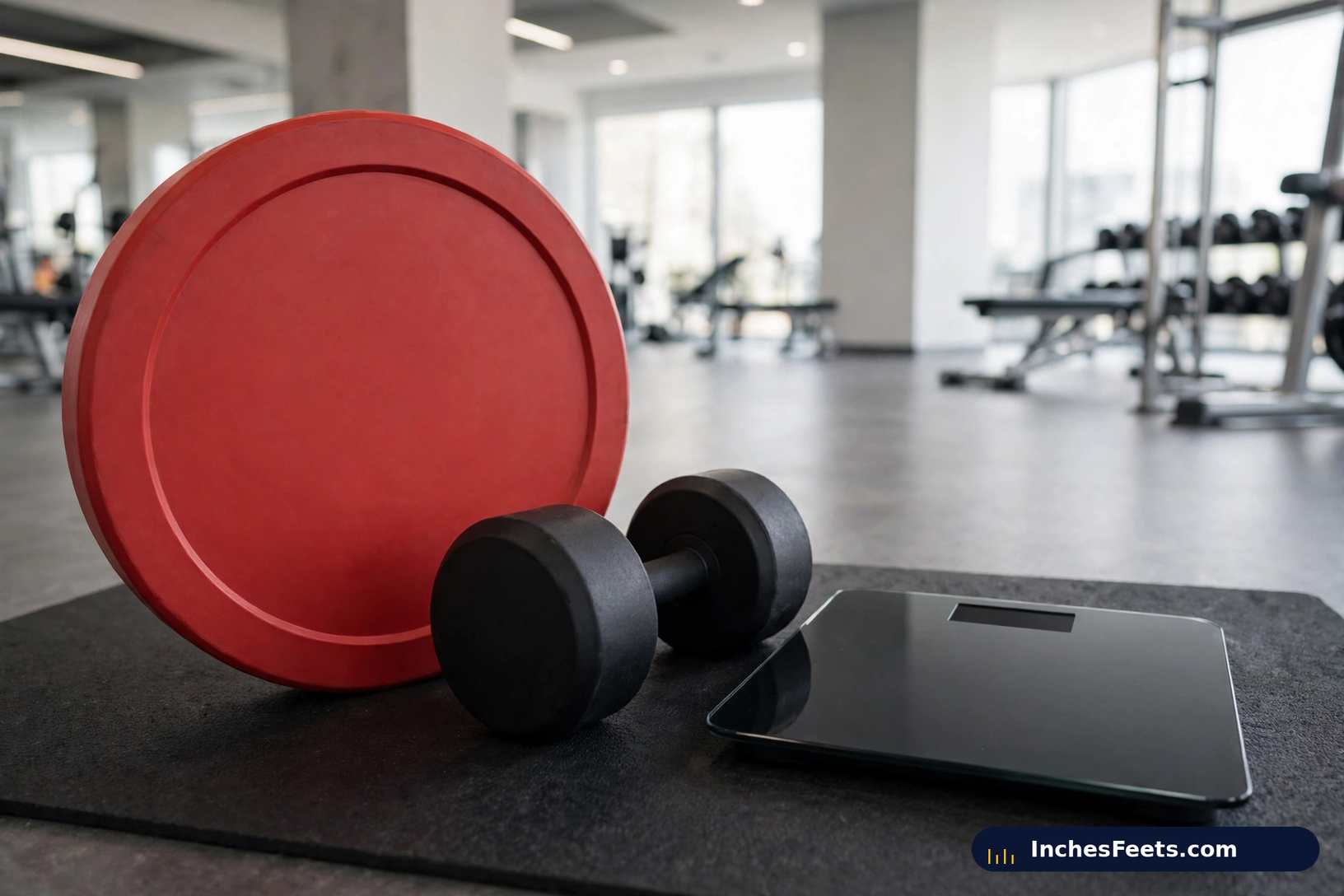
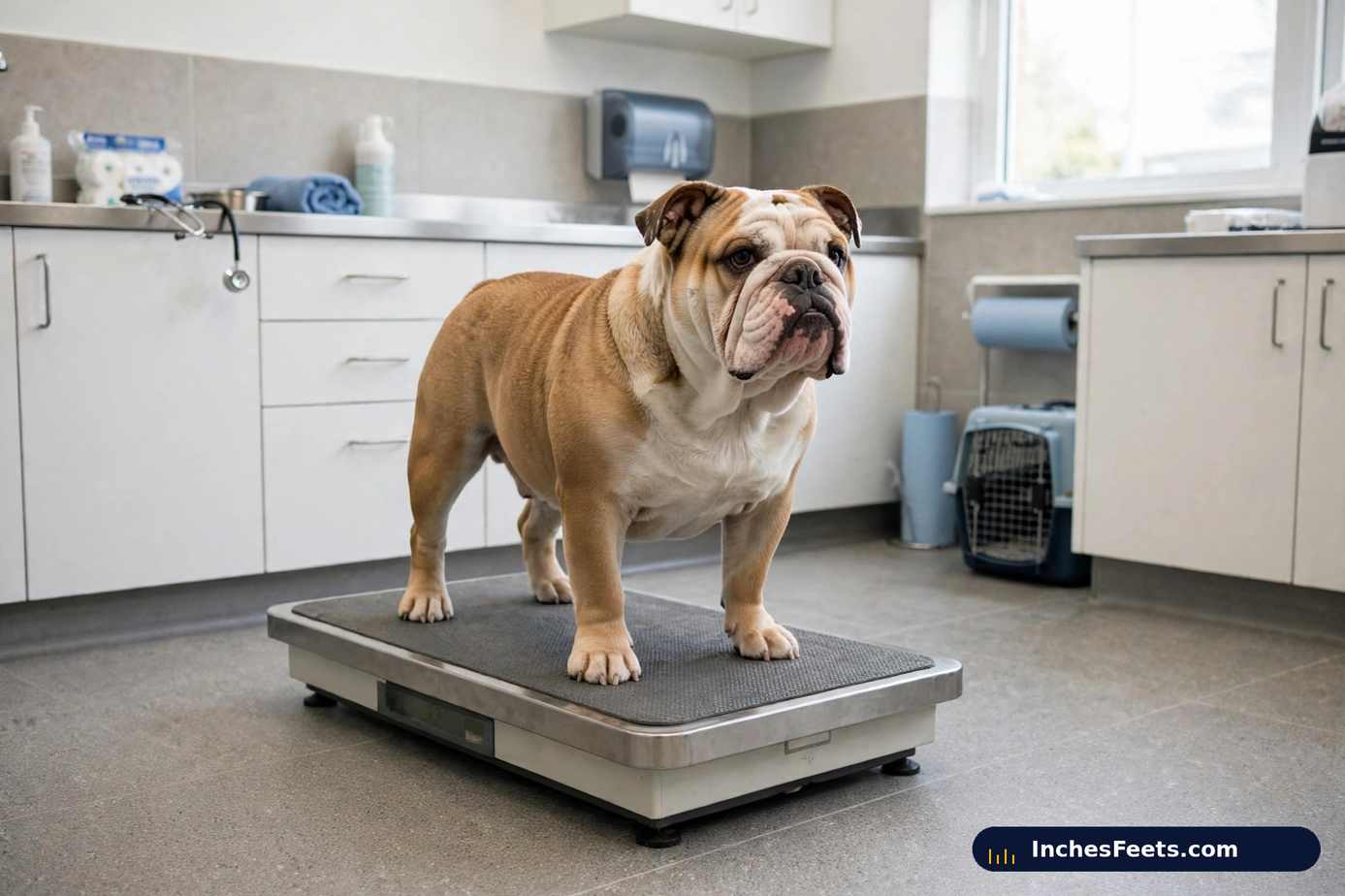
If you are wondering what 25kg looks like in everyday terms, here is the direct answer: 25 kilograms is exactly 55.1156 pounds — 881.849 ounces, or 25,000 grams. In the real world it is the red plate on the end of an Olympic barbell, a Bulldog standing on the vet’s scale, or the standard bag of cement a builder carries in from the merchant’s yard.
Twenty-five kilograms is a serious one-person lift: heavy enough to change how you walk, light enough that one person is still expected to manage it — which is exactly why so many products are packaged at this weight. It is also a weight the internet describes loosely, and several of the most repeated “25 kg” examples turn out, on checking, to be a size that does not exist or a claim that contradicts itself.
This guide gives you 14 things that genuinely weigh 25 kilograms, each checked against a maker’s specification, an official standard or reference data. Just as usefully, it keeps the popular claim that fails the check and prints its real weight beside it.
What Is 25kg?
25 kg is a unit of mass in the metric system: 25 kilograms, or 25,000 grams — one fortieth of a metric tonne, and a quarter of the 100 kg benchmark weight. Like every kilogram figure, it is anchored to water: a litre of water weighs one kilogram, so 25 kg is the mass of 25 litres of water before you count the container.
The comparisons usually attached to it are mostly fair, once they are corrected. It is a large packed suitcase, a bag of cement, or a medium-sized dog — all three survive checking below, in tightened form. One does not: it is not, as some pages put it, the weight of an average toddler. Toddlers of one to three years weigh roughly 9 to 14 kg; 25 kg is a school-age child, and the child section below shows exactly which one.
How Much Is 25 kg?
Converted exactly, 25 kilograms comes to 55.1156 pounds, 881.849 ounces or 3.93683 stone. The competitor’s own table rounds those to 55.12 pounds, 881.85 ounces and 3.94 stone; the table below prints the exact figures instead, because at this weight the rounding hides real objects — the difference between 55 lb and 55.1156 lb is the difference between a class of microwave ovens and this page, as the microwave section shows. In stone, the unit Britain still weighs people in, it is a hair under 3.94 stone; in the units of the laboratory it is 25,000 grams exactly.
| Unit | Equivalent of 25 Kilograms |
|---|---|
| Grams (g) | 25,000 g |
| Pounds (lb) | 55.1156 lb |
| Ounces (oz) | 881.849 oz |
| Milligrams (mg) | 25,000,000 mg |
| Metric tonnes (t) | 0.025 t |
| Stones (st) | 3.93683 st |
25 KG at a Glance: The Verified List
- A standard Olympic weight plate (the red 25 kg plate of the IWF colour code)
- A large bag of flour (the standard 25 kg bulk sack)
- An industrial sack of potatoes (one of the two standard sack sizes, 25 and 50 kg)
- A sack of rice (the 25 kg sack is the standard international trade unit)
- A bag of soil or compost (sold in standard 25 kg retail bags)
- A bag of dry concrete mix (counted as corrected — the standard 25 kg bag is cement)
- A medium-sized dog (a male Bulldog, whose breed standard weight is exactly 25 kg)
- A child of around six to seven years (counted as corrected — 25 kg is a big seven-year-old; the median eight-year-old)
- A single 25 kg dumbbell (Technogym’s Hexagon Dumbbell, sold individually at 25 kg)
- A blacksmith’s anvil (VEVOR’s 55 lb anvil — the maker’s manual lists its net weight as 25 kg)
- 25 litres of water (exactly 25 kg by definition)
- A standard microwave oven (counted on the over-the-range class, whose makers converge on 55 lb)
- An adult beaver (inside the Smithsonian’s documented adult range of 16–30 kg)
- A 25 kg bag of sand (the builders’ merchant’s standard small bag)
Every item on this list is checked in its own section below. The claim that did not survive checking stays in the article too, with its real weight printed beside it — knowing that the biggest dog food bag stops five kilos short is nearly as useful as the list itself.
Things That Weigh 25 Kilograms
Standard Olympic Weight Plate
The cleanest example on this page. Competition weightlifting plates follow the International Weightlifting Federation’s colour code — red means 25 kg — and every full-size competition plate shares the same 450 mm diameter, so the red plate is a standard object, not an estimate: it is manufactured, stamped and sold to be exactly this page’s weight. One red plate on the platform is 25 kg before anything else is loaded onto the bar.
Counted: exact — the IWF standard size: the red competition plate is 25 kg by specification, at the standard 450 mm diameter.
Large Bag Of Flour
Flour moves through bakeries and warehouses in standardised sacks, and the standard bulk sack is 25 kg. It is the bag a small bakery takes delivery of, the unit the packaging trade prints on its woven sacks, and — as this site’s 40 kg page notes from the other direction — the reason a pile of small retail bags is never the honest comparison: eighty half-kilo bags are arithmetic, but one 25 kg sack is an object you can point to. A sack this size is filled, sewn and palletised by machine at the mill, but it is still moved by hand at the far end — which is precisely why the standard settled where it did.
Counted: exact — the standard bulk flour sack is manufactured and sold at 25 kg.
Commercial-sized Dog Food Bag
This one fails on the products themselves — and the competitor’s own text gives it away, putting commercial dog food bags at “typically between 10 to 20 kilograms” under a heading that is supposed to be an example of 25. The largest standard bags on the market are the 20 kg breeder bags: Farmina’s Team Breeder line and Calibra’s Breeder Line both top out at 20 kg. Twenty-five kilograms of dog food is real enough, but it is a 20 kg breeder bag plus a smaller bag, not one commercial bag.
Not counted: the largest standard dog food bags are 20 kg breeder bags. Corrected figure printed above.
Industrial Sack Of Potatoes
Potatoes move in standardised sacks, and the standards are printed by the mesh-bag makers and produce-trade guides who supply them: the standard sack sizes are 25 kg and 50 kg. The smaller of the two is this page’s weight exactly — the sack a farm shop sells and a chip shop takes in, filled and weighed to the standard rather than to somebody’s guess.
Counted: exact — 25 kg is one of the two standard potato sack sizes (25 and 50 kg).
Sack Of Rice
Rice is traded internationally in woven polypropylene sacks, and the 25 kg sack is the standard unit of that trade — the size the packaging standards describe as the universally preferred unit for retail distribution, with the 50 kg sack as its bigger sibling. A sack of rice at this page’s weight is not an approximation of the trade standard; it is the trade standard.
Counted: exact — the 25 kg sack is the standard international trade unit for rice.
Bag Of Soil Or Compost
The competitor gives a bag of soil or compost a range of “25 to 30 kilograms,” and the honest version is tidier: garden soil and compost are sold in a standard 25 kg bag. UK suppliers state it plainly — topsoil retailers sell garden soil in 25 kg bags, compost suppliers list the same small 25 kg bag size, and a 40-litre compost bag works out at about 25 kg. Two qualifications belong in print: compost is also commonly sold by the litre, so the bag to check is the one weighed in kilos; and a soaked bag weighs more than a dry one, which is weather, not specification.
Counted: on the standard-bag basis — the standard retail bag of soil or compost is 25 kg; the competitor’s 25–30 kg range is re-based to that standard above, with the by-litre qualification disclosed.
Bag Of Dry Concrete Mix
This heading survives, but only after a correction that changes what is in the bag. The standard 25 kg bag in this family is a bag of cement: builders’ merchants state that standard bags typically weigh 25 kg, and Heidelberg Materials’ data sheet for its general-purpose cement says it is “supplied in 25 kg bags throughout the UK.” Ready-mixed dry concrete is a different shelf: in the United States it is sold in 60 lb and 80 lb bags — 27.2 and 36.3 kg — both heavier than this page. So the object that honestly carries this heading is the cement bag the dry-mix bag is so often confused with, and it is also the bag this article’s conclusion comes back to.
Counted: as corrected — the standard 25 kg bag is cement (merchants’ standard-bag statements; Heidelberg Materials’ data sheet). US ready-mix concrete bags at 60/80 lb are corrected above.
A Medium-sized Dog
“Medium-sized dog” only becomes a fact when the breed is named, and the breed that lands exactly here is the Bulldog. The FCI breed standard (Standard N° 149) and The Kennel Club’s standard both set the Bulldog’s weight at 25 kg for males and 23 kg for females — a male Bulldog in standard condition is this page’s weight to the kilo. The competitor reached for the AKC’s figures instead, which top out at the same place: the American standard runs lower, around 50 lb (about 22.7 kg) for males, so the governing standards for the breed are the FCI and Kennel Club ones printed here.
Counted: as corrected — on the Bulldog basis: the FCI and Kennel Club breed standards set the male’s weight at exactly 25 kg; the competitor’s AKC sourcing is corrected above.
Child (aged around six to seven years)
The heading is kept, and the claim inside it needs correcting in both directions. The competitor’s range of 18–30 kg for a six- or seven-year-old is roughly the percentile spread, not the typical child: CDC growth charts put the median seven-year-old at about 22.9–23.1 kg for boys and 22.6–22.8 kg for girls. Twenty-five kilograms at age seven is a big child — about the 75th percentile, where the boys’ figure is 25.6 kg. The honest anchor is a year older: the median eight-year-old sits at 25.6 kg for boys and about 25.4–25.6 kg for girls, almost exactly on this page’s weight. And the comparison sometimes made in introductions to this topic — an “average toddler” — is simply wrong: toddlers weigh roughly 9 to 14 kg, about half of this page.
Counted: FLAGGED — as corrected, on the CDC reference basis: 25 kg is about the 75th percentile at age seven and the median at age eight (medians and percentiles printed above). The competitor’s framing is corrected in the text.
A Single 25 KG Dumbbell
Dumbbells climb in fine steps, and 25 kg is one of them. Technogym’s Hexagon Dumbbell range runs from 2.5 to 50 kg and includes a 25 kg size which the manufacturer lists at “Weight: 25 kg” — and sells individually, so one dumbbell, in one hand if you are strong enough, is the whole of this page’s weight. Two of them — the pair a strong lifter presses — are 50 kg between them. The section is also the place to correct a claim from the competitor’s list introduction, which names “a standard kettlebell” at this weight: there is no standard 25 kg kettlebell. Competition kettlebells step from 24 kg upward in the colour-coded ladder and cast-iron ranges run in even sizes — the ladders step straight past 25. The dumbbell ladder, built in 2.5 kg steps, is where this weight actually lives in a gym.
Counted: exact — a standard single product, manufacturer-listed at 25 kg and sold individually (Technogym Hexagon Dumbbell 25 Kg).
A Blacksmith’s Anvil
Anvils are sold by weight because weight is the point — mass is what absorbs the hammer blows. The popular 55 lb size lands exactly here: VEVOR’s own manual for its single-horn cast steel anvil, model 55LBSTZ0, lists “Net weight 25kg/55 lbs.” One caution from the same research is worth printing: a marketplace listing for a similar anvil muddles the figures, giving a net weight of 24.9 kg against a gross of 25.4 kg. The maker’s manual is the document that governs, and on the manual this anvil is this page’s weight exactly. (Our 40 kg page carries the same maker’s 88 lb anvil; this is its smaller brother.)
Counted: exact — maker-stated net weight 25 kg (VEVOR 55 lb cast steel anvil, per the maker’s manual).

25 Litres of Water
Water is the anchor every other weight on this page quietly depends on, because the kilogram was built around it: one litre of water weighs one kilogram (999.97 grams at 4 °C — effectively exact). So a 25-litre container filled with water is carrying exactly 25 kg of water. Fill a standard 25-litre drum and you are holding this page’s weight in water alone. The filled can itself reads a little higher on a scale, for the plastic — the honest way to state it is that the water is exactly this page’s weight, and the container is the packaging.
Counted: exact — on the water basis (1 litre of water = 1 kg); the container’s own weight is disclosed above.

A Standard Microwave Oven
The competitor’s list introduction names “a standard microwave oven” at this weight but gives it no section, and the claim is only half right — the class matters. Countertop microwaves are nowhere near it: that class runs from about 11 to 16 kg. The class that lands here is the larger over-the-range oven mounted above a stove, and there the makers converge with unusual neatness: Bosch’s specification sheet for its 300 Series over-the-range model HMV3054C lists “Weight 55.0 lb,” Samsung’s ME18H704SFB carries a product weight of 55 lbs, GE’s 1.6 cu ft over-the-range model is listed at an assembled weight of 55.0 lb, and Whirlpool’s WMH31017HS is 55 lb. Fifty-five pounds converts to 24.95 kg — five hundredths of a kilo under this page’s figure, disclosed rather than rounded away.
Counted: FLAGGED — on the named-class basis: over-the-range microwaves from Bosch, Samsung, GE and Whirlpool are specified at 55 lb = 24.95 kg (−0.05 kg, disclosed). The countertop class, at 11–16 kg, is corrected above.

An Adult Beaver
The largest rodent in North America is a serious animal: the Smithsonian’s National Zoo and Conservation Biology Institute brackets adult North American beavers at 35 to 65 pounds — 16 to 30 kilograms — and the University of Michigan’s Animal Diversity Web gives a range mass of 13 to 32 kg. Twenty-five kilograms therefore sits comfortably inside the documented adult range, toward its upper half: a big, mature beaver, three to four feet long including its tail, weighs this page’s weight exactly. It follows the same documented-range logic as the Bulldog above: the band is printed, and the count stands on the band. For scale at the other end, the heaviest beaver on record — noted on the same Smithsonian fact sheet — weighed 110 pounds (50 kg), double this page.
Counted: on the documented-range basis — the Smithsonian’s adult range of 16–30 kg brackets 25 kg (disclosed); the Animal Diversity Web’s 13–32 kg range agrees.
A 25 KG Bag of Sand
The last of this page’s bags is the one stacked beside the cement at every builders’ merchant. Bagged sand is sold in the same standard small bag as the rest of the merchant’s range: cement, sand and aggregates are typically sold in 25 kg bags for small projects, with bulk bags of 800–1,000 kg reserved for larger jobs. A 25 kg bag of sharp sand or building sand is therefore a standard product with a printed weight, not a filled-to-order guess — and anyone who has carried one up a garden path knows exactly which end of the one-person range it sits at.
Counted: exact — on the standard-bag basis: bagged sand is sold in 25 kg bags as the merchants’ standard small bag.
How to Visualize 25 KG
Start in the gym, where the weight is honest: picture the red plate standing on the platform — the biggest standard plate, the one that goes on the bar first — or a single heavy dumbbell waiting on the rack. Or picture a Bulldog sitting on the vet’s scale with the expression Bulldogs wear everywhere, which is how most owners first learn what this weight feels like on the end of a lead.
Then use the comparisons around it. Twenty-five kilograms is 20 kilograms plus one 5 kg change plate — a weight this site has walked through object by object, with a small plate added. It is a little over 55 pounds, or just under 4 stone. Or picture the big suitcase at the check-in desk — the one that earns a “heavy” tag and a grunt from whoever lifts it into the car. One adult can lift 25 kg off the floor and carry it a short way — up a path, into a car boot — and will be glad to put it down; it is no accident that this is the size the building trade settled on for a one-person bag.
25 KG Compared With Other Weights
Against the bigger benchmarks, 25 kg is a useful fraction. It is exactly a quarter of 100 kilograms — the heavyweight benchmark this site uses for adult-sized comparisons — and it is five kilos less than 30 kilograms, the subject of the previous page in this series. Going the other way, it is fifteen kilos short of 40 kilograms, the German-Shepherd-and-punching-bag page, and it is a lot of small weights: 25 kg is 881.849 ounces, which means it takes about 88 of the 10-ounce weights from our ounce guide to balance one 25 kg object.
In the units most people meet day to day: 55.1156 pounds, 3.93683 stone, 25,000 grams, or 0.025 of a metric tonne. And in the kitchen’s own unit, it is twenty-five litre-bottles of water lined up on the counter — the definition come to life.
How to Measure 25 KG Accurately
The simplest accurate method is a bathroom scale and subtraction: weigh yourself, then weigh yourself holding the object, and take the difference. It works for anything you can safely lift — a packed suitcase, a dog that will sit still in your arms — and a decent scale is accurate to a few hundred grams, which is plenty at this size. For bags and gym gear, a hanging luggage scale rated to 50 kg is cheap and reads directly.
Two calibration tricks are worth knowing. First, water: a container filled with exactly 25 litres of water is a 25 kg reference (add the container’s own weight, weighed empty). Second, gym iron: dumbbells, plates and other cast weights are manufactured to their stated weights within a few percent, so a marked red plate is a fair check on a doubtful scale. What not to trust: marketplace listings and shipping weights — the anvil research above turned up a listing that could not decide between 24.9 and 25.4 kg for the same tool, where the maker’s manual simply prints 25 — and any figure that does not say which unit it was measured in, because pounds wearing a kilogram costume is how half the wrong examples on the internet are born.
Conclusion
Twenty-five kilograms is 55.1156 pounds of everyday reality: a red Olympic plate, a Bulldog at the top of its breed standard, a sack of rice, an anvil, and 25 litres of water. It is also a weight surrounded by confident mistakes — a dog food bag that stops five kilos short, a kettlebell size that does not exist, and a “standard microwave” that is only true of the biggest class of them.
Checked properly, the honest list is a good one, and its most useful lesson is the one the building trade learned first: 25 kg became the standard bag because it is about the most one person should be asked to carry — and the cement inside the standard bag is the same binder that has held buildings together since the Romans.
FAQs
What is 25 kilos?
25 kilos is a metric unit of mass equal to exactly 55.1156 pounds, 881.849 ounces or 25,000 grams. In everyday terms it is the weight of a red Olympic weight plate, a male Bulldog, or a standard bag of cement — a serious one-person lift.
How Heavy is 25kg?
It is 55.1156 pounds — heavy enough that most people carry it in two hands or on one shoulder, and light enough to remain a one-person job. For a picture: a big sack of rice, a single heavy dumbbell, or a large adult beaver.
How Much is 25kg to lbs?
Exactly 55.1156 pounds. The competitor’s worked answer prints 55.1155, which is the same calculation carried out with the rounded 2.20462 factor; the exact figure, from the unrounded conversion, is 55.1156 lb — both round to 55.12.