
How Heavy Is 20 kg? 16 Things That Weigh 20 Kilograms
A six-year-old child, a Bulldog, and an empty Olympic barbell all land in the same place: right around 20kg. It sounds like a gym number, but it is really an everyday one — 20 kg is exactly 44.09 pounds, and it turns up in kitchens, airports, and pet-food aisles as often as it does on a lifting platform.
Picture a full water-cooler bottle, a large sack of rice, or a checked suitcase packed to the airline limit and you are holding the idea. One famous example does not belong here, whatever other lists say: no bowling ball weighs 20 kg, because the legal maximum for a bowling ball is 16 pounds.
Below you will find the exact conversions, sixteen things that genuinely weigh about 20 kg — every one checked against a real source — plus four popular examples corrected along the way, because the firewood bundle, the toolbox, the watermelon, and the small microwave are all usually quoted wrong.

How Much Is 20 kg?
A kilogram is the base unit of mass in the metric system, and 20 kg is twenty of them — a fiftieth of a metric tonne. It is the weight where gym equipment, luggage allowances, bulk food sacks, and medium dogs all start to overlap, which is why the number keeps coming up.
| 20 kg | Equivalent |
|---|---|
| In Grams (g) | 20,000 g |
| In Milligrams (mg) | 20,000,000 mg |
| In Metric Tons (t) | 0.02 t |
| In Pounds (lbs) | 44.09 lbs |
| In Ounces (oz) | 705.48 oz |
| In Stones (st) | 3.15 st |
One kilogram equals 2.20462 pounds, so 20 kg × 2.20462 = 44.09 pounds. Round it to 44 pounds for everyday talk, but keep the exact figure for baggage allowances, shipping, and gym maths, where the odd fraction quietly decides whether you pay an excess fee. Stack five of these units together and you reach 100 kg — a useful ladder to remember, because it lets you estimate big weights from this one.
Everyday Things That Weigh Exactly 20 kg
Short on time? These are the sixteen verified anchors used in this guide. Each one is explained, with its source, in the detailed list below it.
- A medium-sized dog (a Bulldog, on the breed standard)
- A large bag of rice (sold as a labelled 20 kg sack)
- A large premium office chair (Herman Miller Aeron Size C: 43 lb)
- A full 20-liter water bottle
- A men’s Olympic barbell (the empty bar itself)
- A 20 kg bag of dog food
- A blue 20 kg barbell plate
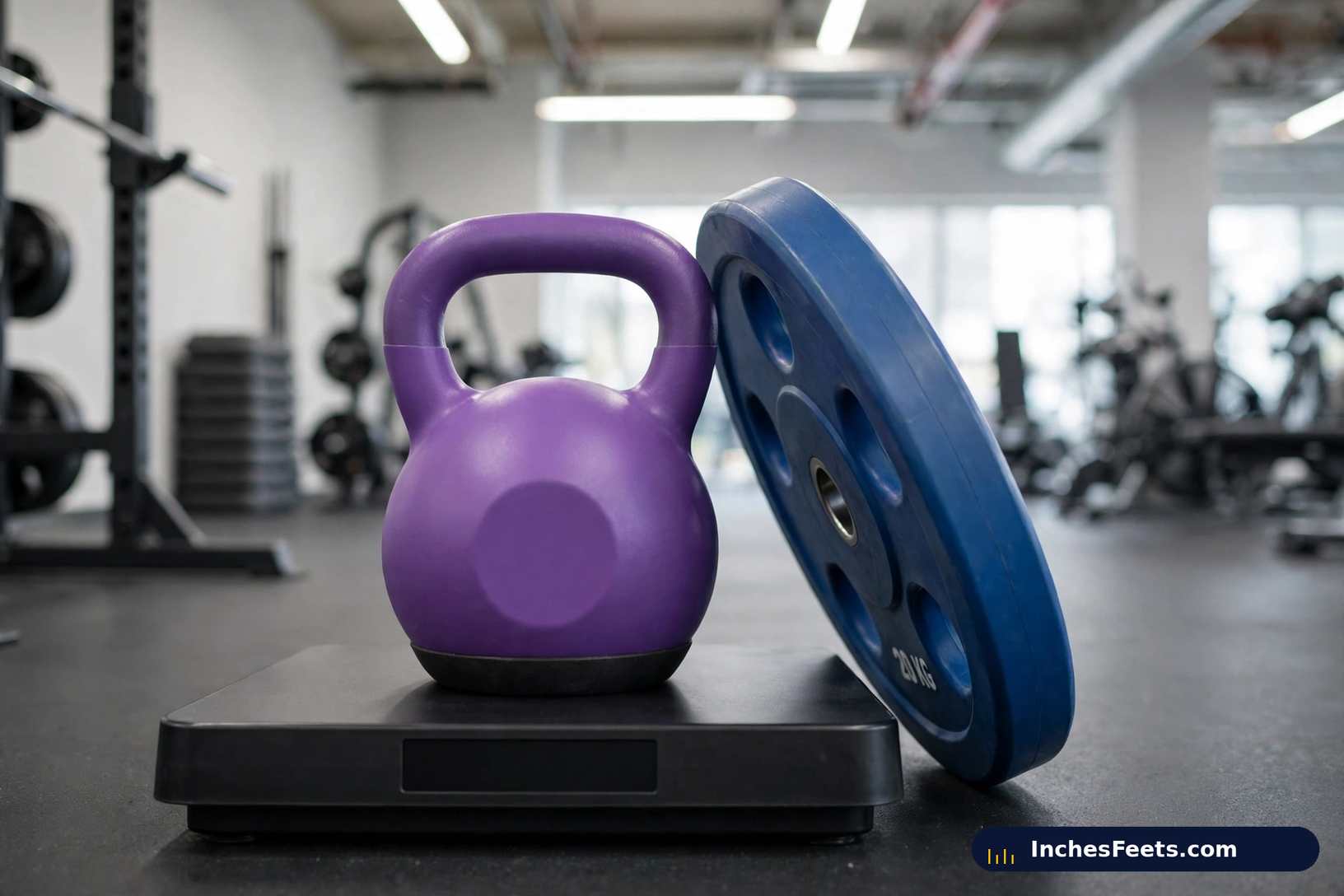
- A purple 20 kg competition kettlebell
- A 20 kg dumbbell
- Twenty 1-litre bottles of water
- A checked suitcase packed to the 20 kg airline limit
- A 20 kg catering sack of potatoes
- An 8,000 BTU window air conditioner (44 lb)
- A 20 kg calibration test weight
- An adult beaver (the typical adult weight)
- A six-year-old child (the CDC median)
Common Things That Weigh 20 Kilograms
Many everyday items can give you a sense of how heavy 20 kilograms is — but one item on the usual lists cannot. A full-size bowling ball does not fall into this weight category: USBC rules cap a legal bowling ball at 16.00 pounds (7.26 kg), barely a third of 20 kg. The honest examples are these.
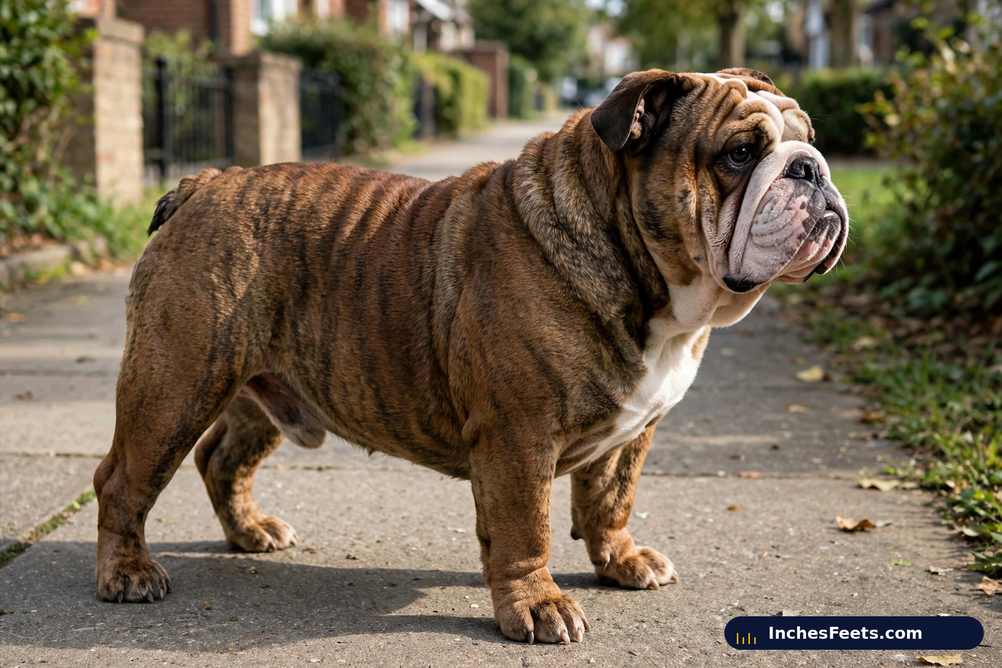
Medium-sized Dog
This one checks out — on one of the three breeds usually named. The American Kennel Club breed standard puts a mature male Bulldog at about 50 pounds and a female at about 40 pounds, and typical US males run 45 to 55 pounds (20 to 25 kg) with females around 45 pounds — so a Bulldog stands right on 20 kg, which is why it is the medium dog in every photograph of this weight.
The other two breeds named in most lists miss. Beagles weigh about 20 to 25 pounds (9 to 11 kg) and Cocker Spaniels roughly 25 to 30 pounds for males — both are half-a-20-kg dogs. Keep the heading, keep the Bulldog, and let the smaller breeds go.
Large Bag Of Rice
Exact, because it is printed on the sack. Bulk rice is sold in labelled catering sizes, and 20 kg is one of the standard ones: Mai Thai’s AAA Jasmine Rice, packed by Surya Foods, is sold as a 20KG bag with an item weight of exactly 20 kilograms, and exporters pack Thai jasmine rice in 20 kg bags as a matter of routine.
So the big sack by the pantry door — the one two hands and a bent knee are made for — is a true 20 kg, no rounding involved. Smaller household bags (5 kg and 10 kg) are exactly a quarter and a half of it, which makes the rice aisle a handy mental scale.
Office Chair
Counted, but only at the top of the range — most office chairs are lighter than this heading suggests. Ordinary task chairs run roughly 10 to 15 kg. The chair that genuinely reaches our number is a large premium one: Herman Miller’s own store data lists the Aeron Chair in Size C (the large size) at 43 pounds, which is 19.5 kg — effectively 20 kg once it is out of the box and on the floor.
So picture not any office chair, but the biggest mesh chair in the office, with its aluminium base and full adjustment hardware. That is the 20 kg chair; the standard-issue one under most desks is about two-thirds of it.
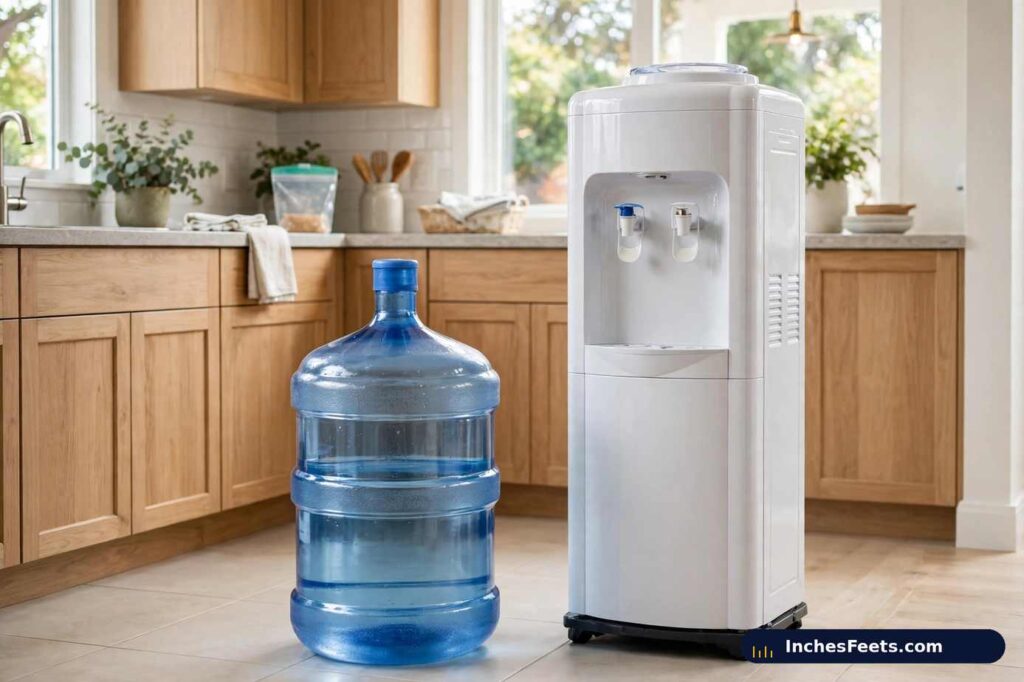
20-liter Water Bottle
The friendliest exact anchor on this list. The metric system was built around water: one litre of water weighs almost exactly one kilogram (0.998 kg at room temperature), so the water inside a full 20-litre cooler bottle is 20 kg almost to the gram. The thick plastic bottle itself adds a little more on top, which is why a full one feels like such a committed lift.
That is also why these bottles live on dollies and why delivery drivers carry one per shoulder at most. If you have ever swapped the bottle on a water cooler, you have already lifted 20 kg — the wobble at the top is the water shifting, not your arms giving out.
Bundle Of Firewood
This example fails its fact-check, and the reason is built into how firewood is sold. Firewood is sold by volume, not weight — the US standard measure is the cord, 128 cubic feet of stacked wood under NIST Handbook 130 — and the standard retail bundle is 0.75 cubic feet of kiln-dried splits. That bundle typically weighs about 20 pounds (roughly 9 kg), not 20 kilograms.
Somewhere along the way, “20” migrated from pounds to kilos and doubled the bundle. To actually hold 20 kg of firewood you would need a little over two standard bundles — a stack you can barely close both arms around. Keep the heading as a warning: a single store bundle is about half this weight.
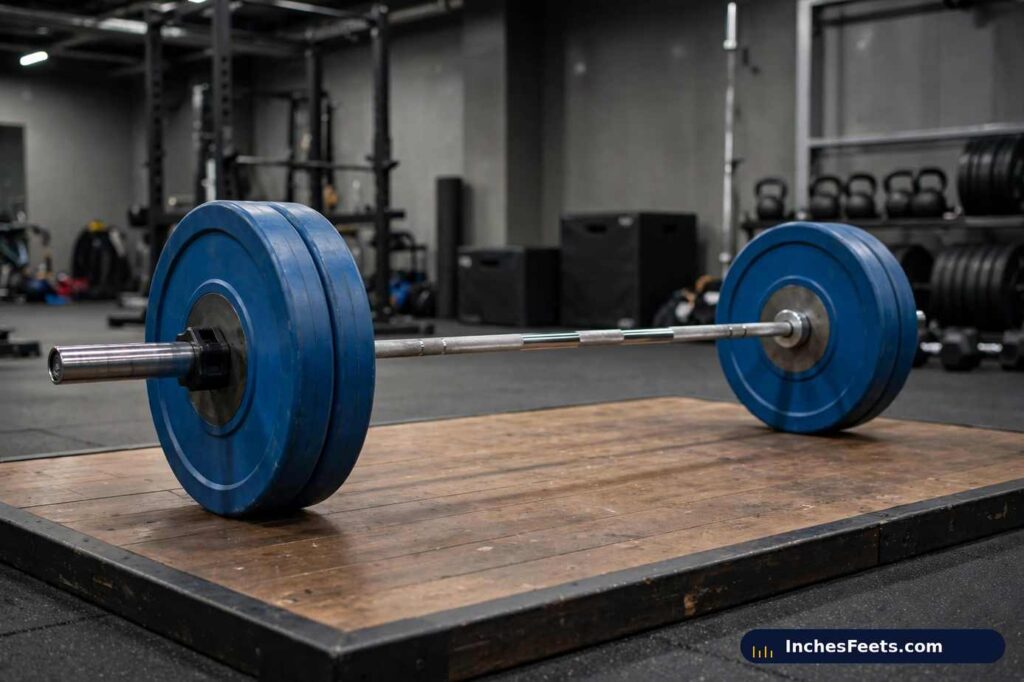
Barbell With Weights
The heading is right for a subtler reason than most lists give. Under International Weightlifting Federation rules, the men’s Olympic bar itself weighs exactly 20 kg — 2.2 metres long, with blue identification markings to match the 20 kg discs. The women’s bar is 15 kg, which is why the two are colour-coded and never mixed up in a serious gym.
So the empty men’s bar, before a single plate is loaded, is already a 20 kg lift — which is why beginners are often surprised by the “empty” bar. Once plates go on, of course, the total climbs past 20 kg immediately; the 20 kg here is the bar alone.
Heavy-duty Toolbox
Another correction. There is no such thing as a standard 20 kg toolbox, because a toolbox’s weight is whatever tools are inside it. Even the box alone falls well short: Milwaukee’s PACKOUT Rolling Tool Box — about as heavy-duty as a portable box gets — is listed at 23.4 to 24 pounds assembled (about 10.7 kg) empty.
Fill it with a full cordless kit, batteries, and hand tools and the total can pass 20 kg, but that says something about your tool collection, not about toolboxes. A heading that can mean anything from 11 kg to 40 kg depending on the owner is not an anchor, so this one is not counted.
Commercial Watermelon
This one fails by a factor of two. According to the Watermelon Board, an average large watermelon weighs about 20 to 25 pounds — 9 to 11 kg — and that is the commercial fruit stacked in every supermarket bin. A 20 kg watermelon would be a 44-pound giant: competition growers produce them, and the record fruit weighed 350.5 pounds, but no ordinary commercial melon comes close.
It is the same pounds-to-kilos slip as the firewood bundle, in the opposite piece of produce. Picture two large watermelons, one in each hand, and you are holding roughly 20 kg — that is the honest version of this example.
A Bag of Dog Food
Exact, and printed on the bag. Large dry dog food is sold in labelled bulk sizes, and 20 kg is a standard one: Black Hawk, for example, sells its Working Dog and Original ranges in 20 kg bags, and most big pet brands run a 20 kg size for medium and large dogs.
It is one of the most useful anchors on this list because so many households have dragged one in from the car: a month’s food for a medium dog, in a sack that needs two hands and a knee. If you can picture that lift, you can picture 20 kg.
A Barbell Plate
The second exact gym anchor. Competition plates follow the IWF colour code so a loaded bar can be read at a glance: red is 25 kg, blue is 20 kg, yellow is 15 kg, green is 10 kg. One blue plate, 450 mm across, is exactly 20 kg by international standard.
That makes the plate rack the most honest scale in any gym: a blue plate in one hand is 20 kg, a red is 5 kg more, and the men’s bar they slide onto is another 20 kg of its own. No estimates, no rounding — the standard does the counting for you.
A Small Microwave
This one fails too, and it is not close. Panasonic’s own specifications put its compact microwaves at 20.9 pounds for the smallest 0.7 cu ft model, 28.2 pounds (12.79 kg) for the 0.9 cu ft NN-SB438S, and 35.3 pounds for its largest compact — and even a 1.3 cu ft family model comes in at 36.4 pounds (16.5 kg). Every one of those is well short of 20 kg.
To reach 20 kg in a microwave you have to leave the “small” category entirely and shop for large combination ovens. So if a dorm-room microwave is your mental picture, halve it: a small microwave is a 10-to-13 kg appliance, not a 20 kg one.
A 20 kg Kettlebell
Kettlebell sport runs on an international colour standard, and in that standard purple means 20 kg — the same fixed colour ladder (pink 8, blue 12, yellow 16, purple 20, green 24, red 32) recognised by the sport’s governing bodies, with competition bells held to a tolerance of about 200 grams. Manufacturers list the size plainly: Sidea’s competition kettlebell code 2194 is “Colour violet — kg 20”.
Competition bells are also the same outside size at every weight, so the purple bell looks identical to the yellow 16 kg beside it. The colour is the scale — which is exactly why lifters can call the weight from across the room.
A 20 kg Dumbbell
Dumbbells are manufactured in fixed standard sizes, and 20 kg is one of them. Technogym’s own product listing sells a “Dumbbell 20 kg” — a single solid dumbbell weighing exactly 20 kg — and every major maker runs the same size in hex and round ranges.
One dumbbell, one hand, 20 kg: it is the simplest anchor in the gym after the barbell plate, and the reason a pair of them on the rack represents 40 kg before you have lifted anything at all.
Twenty 1-Litre Bottles of Water
The arithmetic anchor. One litre of water weighs almost exactly one kilogram, so twenty standard 1-litre bottles hold 20 kg of water between them — a full crate’s worth, which is why crates of bottled water are moved on trolleys and why a single case feels heavier than it looks.
It is also the easiest anchor to build at home: count out twenty litre bottles from the recycling or the store shelf and you have assembled 20 kg from twenty 1 kg parts, no scale required.
A Checked Suitcase at the 20 kg Limit
Twenty kilograms is written into air travel. Ryanair’s Help Centre sells a product literally called the “20kg Check-in Bag” — a checked bag allowed to weigh up to 20 kg — and 20 kg is the standard economy checked allowance across much of the industry, with excess charged per kilo over the limit.
So a suitcase packed exactly to its allowance is a 20 kg object: the one you lift with a grunt onto the check-in scale and watch with held breath. If you have ever repacked shoes into a carry-on at the counter, you were negotiating with this number.

A 20 kg Sack of Potatoes
Catering potatoes come in labelled sacks, and 20 kg is a real pack size: UK foodservice wholesaler Pioneer Foodservice lists its fresh red-skin potatoes at “Pack Size: 20KG SACK”, and chipping and catering trades buy spuds in sacks of exactly this weight.
One honest footnote: the classic farm-gate sack in Britain is more often 25 kg, so the 20 kg sack is the foodservice size rather than the farm one. Either way, a sack of potatoes you need both arms and a straight back for is the right picture — bulk produce is weighed, labelled, and sold at exactly this number.
A Window Air Conditioner
A small window unit lands on this weight almost to the gram. LG’s specifications for its LW8024R — an 8,000 BTU window air conditioner, the standard size for a medium room — list the item weight at 44 pounds, which is 19.96 kg.
That near-exact match is why installing one is a two-handed, brace-your-knees job despite its modest size: you are sliding a 20 kg machine into a window frame at arm’s height. (Larger and dual-inverter models run heavier, up into the high 50s of pounds, so it is specifically the 8,000 BTU class that sits on 20 kg.)
A 20 kg Calibration Test Weight
The most exact example on this list, because being exact is its entire job. Scale makers sell cast-iron test weights in standard denominations for calibrating weighing equipment: Rice Lake’s catalogue lists a 20 kg grip-handle test weight in both OIML Class M1 and NIST Class F, and Mettler Toledo sells 20 kg calibration weights in laboratory grades above that.
A test weight is manufactured and certified to be 20 kg within a tight tolerance, then used to prove that other scales are telling the truth. If you ever need to know what 20 kg really is, it is the iron block the scale inspector carries.
An Adult Beaver
The animal kingdom’s turn, and a genuinely typical one. North American beavers usually weigh from 11 to 32 kg as adults, with 20 kg being the typical adult weight (Jenkins & Busher’s figures, carried by the Animal Diversity Web); adults in Canada’s Northwest Territories weighed a median of 20.5 kg.
So the largest rodent in North America, mid-dam-building, is a 20 kg animal almost by default — roughly a Bulldog’s weight in a wetsuit, which is a reasonable way to picture both of them.
A Six-Year-Old Child
The competitor’s own opening comparison — a small child — survives its fact-check, with an age attached. The CDC’s growth charts put the median (50th percentile) weight at age six at 20.7 kg for boys and 20.2 kg for girls: the statistically average six-year-old is a 20 kg child.
Children vary widely, of course, and the chart describes a population median rather than any individual kid. But as a visualisation it is hard to beat: if you have ever carried a tired six-year-old home, you have carried 20 kg.
How to Visualize 20 kg Without a Scale
No scale, no problem. Build the number from things you can count: one blue barbell plate, twenty litre bottles of water, one big sack of rice from the supermarket, or a suitcase packed to the airline limit. In groceries it is about 136 full Pringles cans at 147 g of crisps each — our Pringles can dimensions guide has the can’s full measurements — which is another way of saying it is far more snack than anyone should lift at once.
Movement gives you a second test. Twenty kilograms is a proper one-person lift with two hands and bent knees — comfortable to pick up, awkward to carry far. If you can hold it out at arm’s length without thinking about it, it is not 20 kg; if you need a second person, it is probably more.
20 kg vs 20 Pounds: What’s the Difference?
More than double. Twenty pounds is 9.07 kg, while 20 kg is 44.09 lb, so confusing the two quietly multiplies a load by 2.2 — and this page’s corrections show how often it happens: the “20 kg” firewood bundle and the “20 kg” watermelon are both really 20-pound objects wearing the wrong unit.
The mix-up survives because both numbers are round and both are common: American gyms plate-load in pounds and sell 45 lb bars, the rest of the world loads in kilos and lifts 20 kg bars, and a “20” on a sack, a scale, or a baggage tag means two very different lifts depending on which unit printed it. When the load matters, check the unit before you check anything else.
When an Exact 20 kg Matters
Most days, “about twenty kilos” is close enough. Sometimes it is not. Airline baggage is the sharpest example: a checked bag at 19.8 kg flies at the allowance price, and the same bag at 20.6 kg collects a per-kilo excess fee — Ryanair and most carriers charge for every kilo over the purchased allowance, and no individual checked item may exceed 32 kg at all.
Precision matters in the gym too, where competition barbells, plates, and kettlebells are certified to tolerances of grams because a lifted total has to be exactly what the scoreboard says. And it matters at the vet and the feed store, where medicine and feed are dosed and sold by the kilogram. Exact is exact for a reason.
Conclusion
Twenty kilograms is 44.09 pounds, a fiftieth of a tonne, and — once you anchor it to real things — an easy weight to feel: a Bulldog, a blue barbell plate, a full water-cooler bottle, a suitcase at its limit. The bowling ball never belonged on the list, and the firewood bundle, toolbox, watermelon, and microwave only make it once their pounds are corrected back out of kilos, which is exactly why every example here was checked instead of copied.
Keep the anchors that fit your life and the unit discipline that keeps them honest: check whether a number is kilos or pounds before you trust it, and when you train, respect the purple kettlebell — a certified 20 kg on a handle is the same load as a packed suitcase, swung.
FAQs
What is 20kg?
20kg is twenty kilograms — a metric measure of mass. One kilogram is 1,000 grams, so 20 kg is 20,000 grams, or 44.09 pounds.
How Heavy is 20 kg?
About 44 pounds: a Bulldog, a full 20-litre water bottle, or a checked suitcase at the airline limit. Most adults can lift it two-handed, but it gets heavy quickly on a long carry.
How Much is 20 kg in lbs?
Multiply by 2.20462: 20 kg × 2.20462 = 44.09 pounds. For everyday talk, call it 44 pounds.