What Are Standard Garage Door Dimensions? Complete U.S. Size Guide for Homeowners
Standard Garage Door Sizes Dimensions describe the common measurements used for garage doors. These sizes include the usual width and height that fit most home garages. Builders and manufacturers use these standard sizes to make installation easier and more affordable.
Many homeowners choose the wrong garage door size without knowing it. A door that is too small or too large can create parking problems. Learning the correct Standard Garage Door Sizes Dimensions helps you avoid costly mistakes.
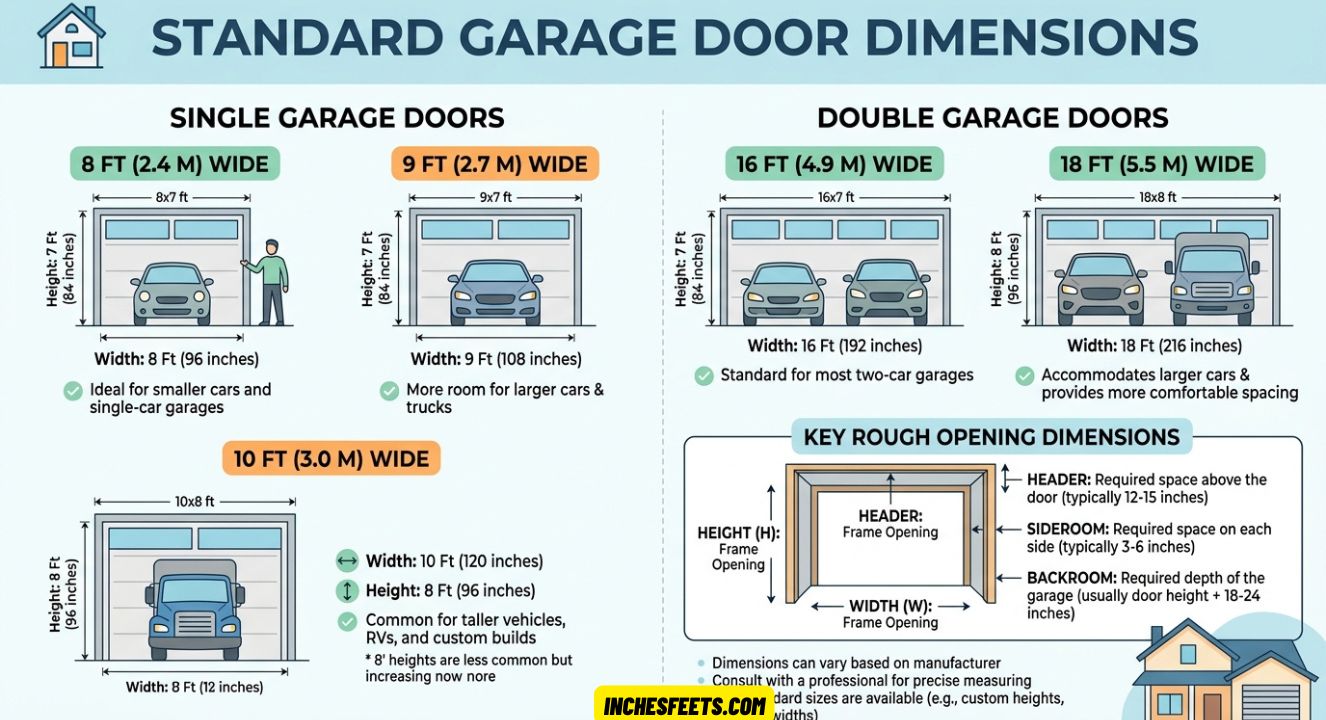
Most homes in the United States follow common garage door measurements. Single garages often use 8×7 or 9×7 doors, while double garages use 16×7 doors. These Standard Garage Door Sizes Dimensions fit most cars, SUVs, and small trucks.
Standard Garage Door Dimensions
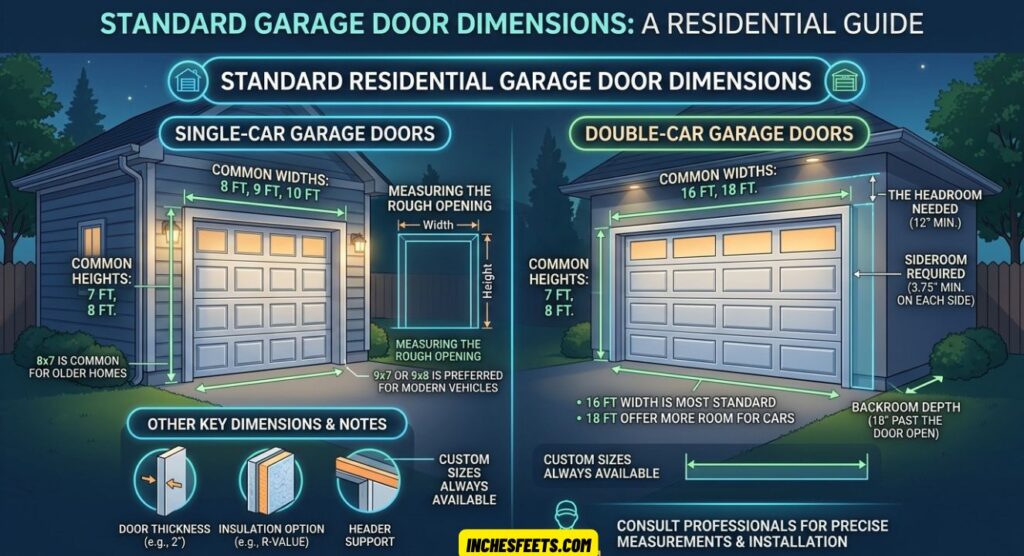
When people ask about standard garage door size, they usually refer to the most common residential doors used across the United States. Builders prefer standardized dimensions because they are widely available and cost much less than custom-built doors.
Most homes use doors with a garage door width and height that fall into a few widely accepted ranges. These measurements allow manufacturers to produce doors in large quantities, which reduces prices and speeds up installation.
The most widely used common garage door sizes in U.S. homes are shown below.
| Garage Type | Width (Feet) | Height (Feet) | Metric Conversion |
| Single garage | 8 ft | 7 ft | 244 cm × 213 cm |
| Single garage (modern) | 9 ft | 7 ft | 274 cm × 213 cm |
| Large single garage | 10 ft | 7 ft | 305 cm × 213 cm |
| Double garage | 16 ft | 7 ft | 487 cm × 213 cm |
| Double garage (tall) | 16 ft | 8 ft | 487 cm × 244 cm |
These values represent the most common garage door size in feet, which is the standard measurement system used in American construction. However, many manufacturers also list garage door dimensions in meters and garage door dimensions in centimeters for international buyers.
Homeowners often choose standard sizes because they are compatible with most openers and hardware systems. A contractor explained this clearly in a building guide:
“Standard garage doors install faster and usually cost 30–50 percent less than custom doors.”
Another important factor is replacement. If your door breaks in the future, replacing a standard size is much easier because suppliers always keep them in stock.
The following sections explain how these dimensions differ depending on whether the garage is designed for one vehicle, two vehicles, or larger specialty uses.
Single-Car Garage Door Dimensions
The most common single car garage door size in American homes is 8 feet wide and 7 feet tall. These single car garage door dimensions are ideal for compact vehicles and small sedans, providing enough clearance for entry and exit.
Builders commonly install an 8×7 garage door in older homes. This size works well for standard cars, but many modern homeowners prefer slightly wider options because vehicles have become larger.
A popular upgrade is the 9×7 garage door, which offers an additional foot of width. This extra space makes parking easier, especially for SUVs and trucks with large mirrors.
Some garages also use a 10×7 garage door when homeowners want maximum maneuvering room. This option is considered the largest typical single car garage door dimensions available without switching to a double door.
The table below shows typical single garage door options.
| Door Type | Width | Height | Vehicle Compatibility |
| Small single garage | 8 ft | 7 ft | Compact cars |
| Modern single garage | 9 ft | 7 ft | Sedans and SUVs |
| Wide single garage | 10 ft | 7 ft | Trucks and large SUVs |
Choosing the correct garage door size for SUV or garage door size for truck is important because larger vehicles require extra space for mirrors and turning angles. Many homeowners upgrading to pickup trucks later regret installing narrow doors.
Another factor is garage door clearance height. While 7 feet is considered the garage door height standard, some garages install 8-foot doors for taller vehicles, roof racks, or lifted trucks.
A wider door also allows easier parking for drivers with limited maneuvering space. When choosing garage door size, homeowners should consider the width of their vehicle plus at least two feet of clearance on both sides.
Two-Car Garage Door Dimensions
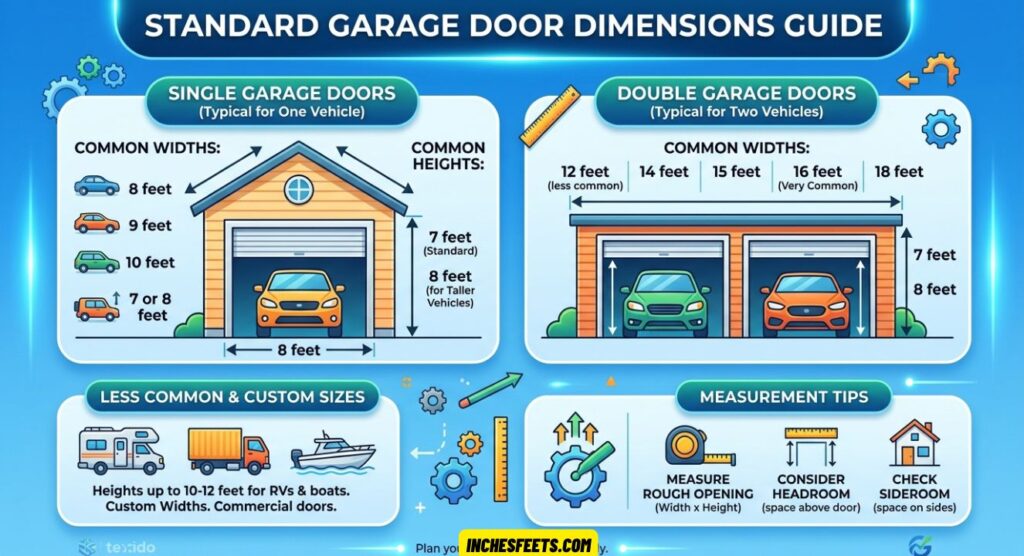
Most suburban homes include garages designed for two vehicles. The standard double garage door size in the United States is 16 feet wide and 7 feet tall.
This measurement is often called the 16×7 garage door, and it is the most common two car garage door dimensions used in residential construction. It allows two cars to park side by side while sharing a single large door opening.
The double car garage door size may vary slightly depending on home design. Some garages use taller versions such as a 16×8 garage door to allow extra clearance.
The table below shows typical double garage sizes.
| Door Type | Width | Height | Typical Use |
| Standard double | 16 ft | 7 ft | Two cars |
| Tall double | 16 ft | 8 ft | SUVs and trucks |
| Compact double | 14 ft | 7 ft | Small garages |
These measurements represent the most common garage door opening dimensions for a two-car garage. Inside the garage, the total interior width is usually between 18 and 20 feet, allowing room for framing and storage.
Some homes also use a 1.5 car garage door size, typically between 12 and 14 feet wide. This size is useful for homeowners who want space for one car plus storage or a workshop.
Larger doors require stronger openers. Many installers recommend choosing the right garage door opener horsepower depending on the door weight and width. A heavier insulated garage door size usually needs a stronger motor to operate smoothly.
Specialty Garage Door Sizes
Not all garages are designed for standard vehicles. Some require custom doors for larger equipment, recreational vehicles, or commercial uses.
One common example is RV garage door dimensions. Recreational vehicles are significantly taller than standard cars, so the doors must provide more vertical clearance.
Typical RV door sizes include the following.
| Garage Type | Width | Height |
| Small RV garage | 12 ft | 12 ft |
| Medium RV garage | 14 ft | 12 ft |
| Large RV garage | 16 ft | 14 ft |
These larger openings ensure enough garage door size for RV vehicles, which can reach heights above 11 feet.
Businesses also use much larger doors. Commercial garage door sizes are common in warehouses, fire stations, and service bays. These doors may range from 10 × 10 feet to 20 feet wide depending on the building’s purpose.
Boat owners sometimes install custom doors that measure around 14 feet wide and 10 feet tall. These designs allow safe entry for trailers and large equipment.
Another specialized design is a small garage used for golf carts or utility vehicles. These smaller doors save money while still providing adequate access.
See Also : Aluminum Can Dimensions: Sizes, Height & Diameter Chart
How to Measure Your Garage Door Opening
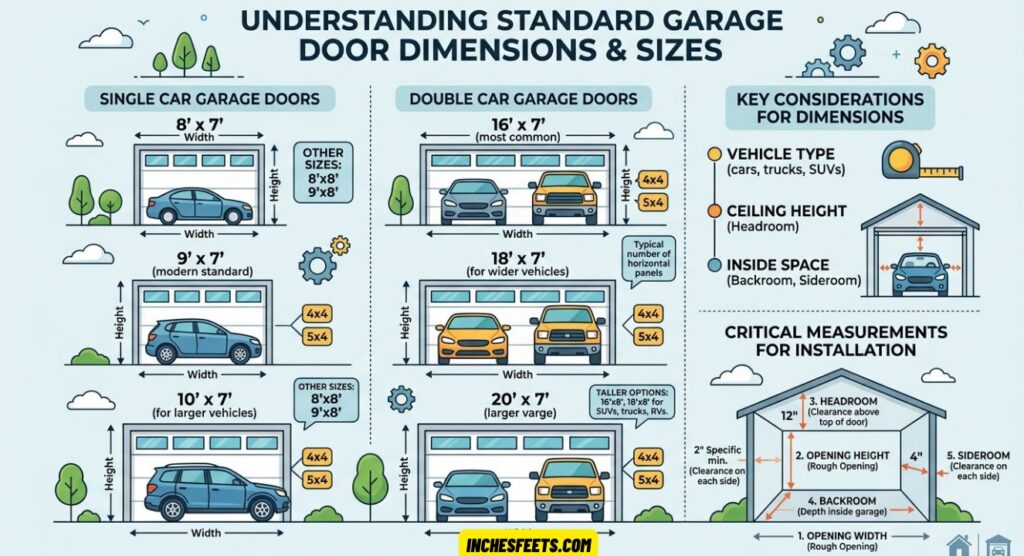
Accurate measurements are critical when replacing or installing a garage door. Even small mistakes can lead to ordering the wrong size. Learning how to measure garage door opening properly helps avoid expensive installation problems.
Start by measuring the width of the opening from one side of the frame to the other. This value determines the correct garage door rough opening size and ensures the door fits perfectly inside the frame.
Next, measure the height from the floor to the top of the opening. This dimension determines the correct garage door frame dimensions and ensures the door panels have enough space to move.
Installers also check the garage door headroom requirements, which refer to the space between the top of the door opening and the ceiling. Most standard systems require at least 12 inches of space for tracks and springs.
Another important measurement is garage door side clearance, which refers to the space on each side of the opening. Typically, at least four inches are needed on both sides for track installation.
The following table shows common garage door installation measurements used by contractors.
| Measurement Type | Required Space |
| Headroom | 12 inches minimum |
| Side clearance | 3.75–4 inches each side |
| Backroom depth | Door height + 18 inches |
These measurements ensure the door opens smoothly and allows enough space for the track system and opener.
Professional installers often say that accurate measuring is the most important step in garage door replacement. Even the best door will not function correctly if the opening dimensions are incorrect.
Garage Door Size Chart for Quick Reference
| Garage Door Type | Standard Size |
| Single garage | 8 × 7 ft |
| Modern single garage | 9 × 7 ft |
| Large single garage | 10 × 7 ft |
| Double garage | 16 × 7 ft |
| Tall double garage | 16 × 8 ft |
| RV garage | 12–16 ft wide |
This garage door size chart provides a quick overview of the most widely used sizes in American homes.
Factors That Influence Standard Garage Door Dimensions
Garage size is one of the biggest factors that determines the standard garage door size used in residential homes. Builders design garages based on vehicle space, storage needs, and driveway layout. As a result, the garage door width and height must match the structure to ensure smooth vehicle entry and safe clearance.
Another factor affecting typical garage door dimensions is the type of vehicles homeowners own. Larger SUVs and trucks require wider doors and higher garage door clearance height. Modern construction trends increasingly use wider doors because vehicle sizes have grown over the last two decades.
Understanding Garage Door Width and Height Standards
The standard garage door width varies depending on whether the garage holds one or two vehicles. Most single garages measure between 8 and 10 feet wide, while double garages typically use doors around 16 feet wide. These measurements represent the most common residential garage door sizes across the United States.
The garage door height standard is usually 7 feet for residential garages. However, many modern homes install 8-foot doors to accommodate taller vehicles and storage racks. The correct garage door size in feet ensures that vehicles enter safely without hitting the top frame or door panels.
See Also : Can Koozie Size Dimensions: Height and Length (Complete Size Guide)
Comparing Garage Door Dimensions in Feet, Meters, and Centimeters
Most American builders use feet and inches when discussing garage door measurements. A typical single door measures 8 by 7 feet, while a double door measures 16 by 7 feet. These measurements make it easier for contractors and suppliers to communicate standard sizes during construction.
However, many manufacturers also provide garage door dimensions in meters and garage door dimensions in centimeters for international buyers. For example, a 16-foot door equals approximately 4.88 meters or 487 centimeters wide, making it easier to compare specifications globally.
Choosing the Right Garage Door Size for Your Vehicle
Selecting the correct garage door size for SUV or garage door size for truck ensures comfortable parking and reduces the risk of accidental damage. Larger vehicles need more side space for mirrors and wider turning angles, especially when entering the garage at an angle.
Homeowners with taller vehicles must also consider garage door clearance height. Trucks with roof racks or lifted suspensions may require taller doors than the normal garage door height standard. Planning for future vehicle upgrades can prevent costly garage modifications later.
Differences Between Single, 1.5, and Double Garage Doors
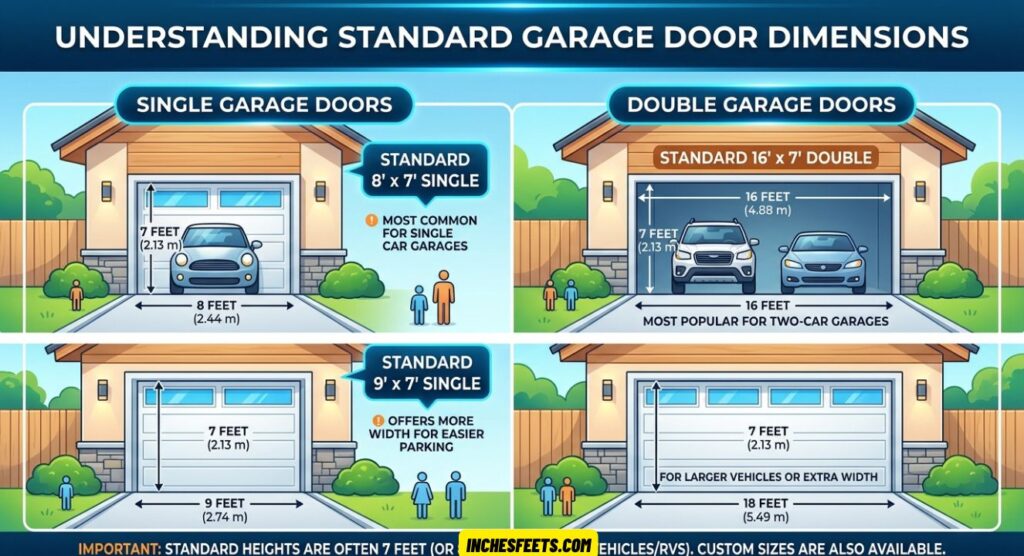
A typical single car garage door dimensions setup measures 8 to 10 feet wide. This size works well for most cars but provides limited space for storage or additional equipment inside the garage.
Some homeowners prefer a 1.5 car garage door size, usually between 12 and 14 feet wide. This design allows room for one vehicle plus workspace or storage shelves while remaining smaller than a full double car garage door size.
Benefits of Installing Standard Garage Door Sizes
Choosing common garage door sizes offers several advantages for homeowners. Standard doors are mass-produced, which lowers their price and ensures they are available from most suppliers across the United States.
Another benefit of using residential garage door sizes is compatibility with hardware systems. Standard doors easily fit existing tracks, springs, and openers, reducing installation complexity and avoiding costly structural modifications.
Importance of Garage Door Installation Measurements
Accurate garage door installation measurements ensure the door fits properly within the frame. Installers measure the opening width, height, and internal clearance to confirm the correct garage door opening dimensions before ordering the door.
Contractors also examine garage door headroom requirements and garage door side clearance. These measurements determine whether the door tracks and springs will fit correctly without interfering with walls, ceilings, or storage equipment.
See Also : Dollar Bill Dimensions: Size, Height, and Length
Garage Door Opener Power and Door Size
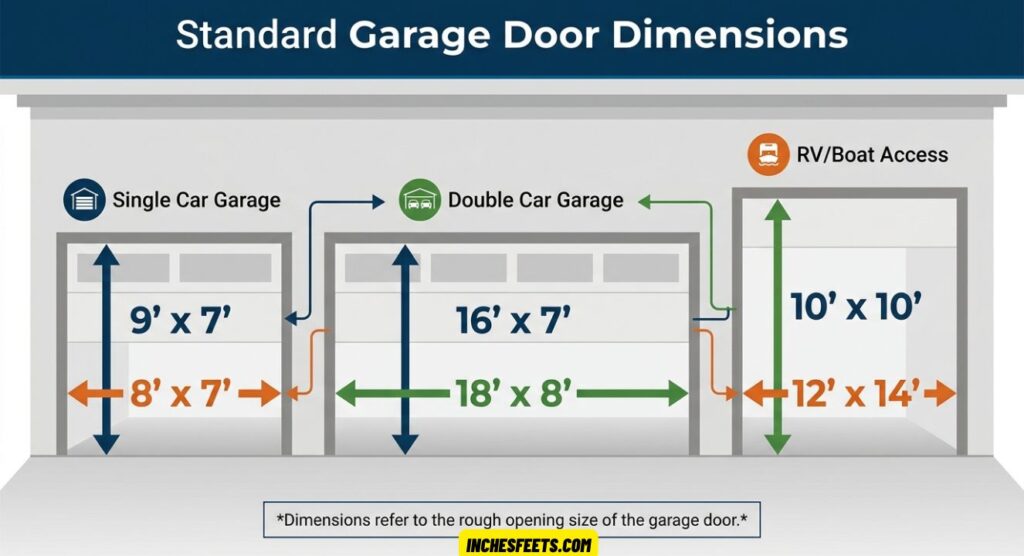
The weight and size of the door influence the required garage door opener horsepower. Smaller single doors often work well with moderate power motors because they weigh less and require less lifting force.
Larger doors, such as insulated double doors, require stronger motors. A heavy insulated garage door size combined with wider dimensions increases the load on the opener, making higher horsepower necessary for smooth and reliable operation.
FAQs
What are standard garage door sizes?
Standard residential garage doors are typically 8×7, 9×7, or 10×7 feet for single garages, and 16×7 feet for double garages. These sizes fit most homes and common vehicle types in the U.S.
What is a 7ft garage door?
A 7-foot garage door refers to the standard height used for most residential garage doors. It provides enough vertical clearance for cars, SUVs, and many pickup trucks.
Is 10×10 a standard garage door size?
A 10×10 garage door is not considered a typical residential size. It is more commonly used for commercial garages, storage buildings, or workshops.
Are there 12 foot garage doors?
Yes, 12-foot garage doors are available and are usually used for RV garages, large trucks, or commercial buildings that need extra space.
Conclusion
Choosing the right Standard Garage Door Sizes Dimensions helps homeowners create a safe and practical garage space. Common sizes such as 8×7 feet for single garages and 16×7 feet for double garages fit most vehicles and homes in the United States. These sizes are easy to install and widely available.
Careful measurement also helps when selecting Standard Garage Door Sizes Dimensions. Proper width, height, and clearance allow smooth door operation and safe parking. With the correct size, homeowners improve convenience, reduce costs, and maintain a well-organized garage.