How Much Is 30 KG? 15 Things That Weigh 30 Kilograms
If you are asking how much 30kg is in everyday terms, here is the direct answer: 30 kilograms is exactly 66.1387 pounds — 1,058.22 ounces, or 30,000 grams. In the real world it is the weight of a healthy adult Labrador standing on the scale, a full trade sack of rice, or three 10 kg dumbbells in a row.
Thirty kilograms is an awkward in-between weight: far too heavy to carry any distance in one hand, yet light enough that one adult can lift it off the ground for a short effort. It is also a weight the internet describes very loosely — several of the most repeated “30 kg” examples turn out, on checking, to be a shipping weight, a units mix-up, or simply the wrong object.
This guide gives you 15 things that genuinely weigh 30 kilograms, each checked against a maker’s specification, an official standard or reference data. Just as usefully, it keeps the popular claims that fail the check — the water bottles, the suitcase, the beagle — and prints their real weights beside them.
How Much Is 30 kg?
Thirty kilograms is a mass, not a mystery: it is 30,000 grams, and converted exactly it comes to 66.1387 pounds, 1,058.22 ounces or 4.7242 stone. Two claims often attached to it need correcting straight away. It is not the weight of a 4-year-old child — the World Health Organization’s median for a four-year-old is about 16.3 kg, barely half (the child who does weigh about 30 kg is nine or ten, and has his own section below). And it is not “the standard limit for checked baggage on international flights”: IATA guidance puts the standard checked bag at 23 kg, with 32 kg the absolute maximum for any single bag — so 30 kg is near the ceiling, not the standard.
The full conversion table sits below, printed exactly. For the things themselves — the dogs, dumbbells, appliances and gym iron that honestly land on this weight — read on.
| Unit | Equivalent of 30 Kilograms |
|---|---|
| Grams (g) | 30,000 g |
| Pounds (lb) | 66.1387 lb |
| Ounces (oz) | 1,058.22 oz |
| Milligrams (mg) | 30,000,000 mg |
| Metric tonnes (t) | 0.03 t |
| Stones (st) | 4.7242 st |
30 KG at a Glance: The Verified List
- A medium-sized adult dog (a Labrador — the AKC breed standard brackets 30 kg for both sexes)
- Three 10 kg dumbbells (exactly 30 kg by specification)
- A small refrigerator (Danby’s 4.4 cu ft DAR044A1WDD — 29.80 kg on the maker’s own spec sheet)
- A window air conditioner unit (GE’s 12,000 BTU AHP12LZ — net weight 66.33 lb, which is 30.08 kg)
- A large sack of rice (the standard 30 kg trade sack)
- A 30 kg kettlebell (a standard heavy size, sold singly)
- A single 30 kg dumbbell (Technogym’s Hexagon Dumbbell, sold individually at 30 kg)
- A pair of 15 kg bumper plates (the IWF-standard plate size, sold in pairs)
- A 30 kg weighted vest (Mirafit’s version loads thirty 1 kg cast-iron blocks)
- A blacksmith’s anvil (VEVOR’s 66 lb cast steel anvil — maker’s net weight 30 kg)
- A fire-resistant home safe (Amazon Basics’ 1.24 cu ft model — 30.38 kg in its manual)
- 30 litres of water (exactly 30 kg by definition)
- A folding electric bike (Lectric’s XP 3.0 — 64 lb with battery, which is 29.03 kg)
- A Fender Twin Reverb amplifier (Fender’s own spec: 64 lb, printed by Fender as 29 kg)
- A nine-to-ten-year-old child (WHO reference medians cross 30 kg between those birthdays)
Every item on this list is checked in its own section below. The claims that did not survive checking stay in the article too, with their real weights printed beside them — knowing that two water-cooler bottles overshoot by ten kilos is nearly as useful as the list itself.
Things That Weigh 30 Kilograms
A Medium-sized Adult Dog
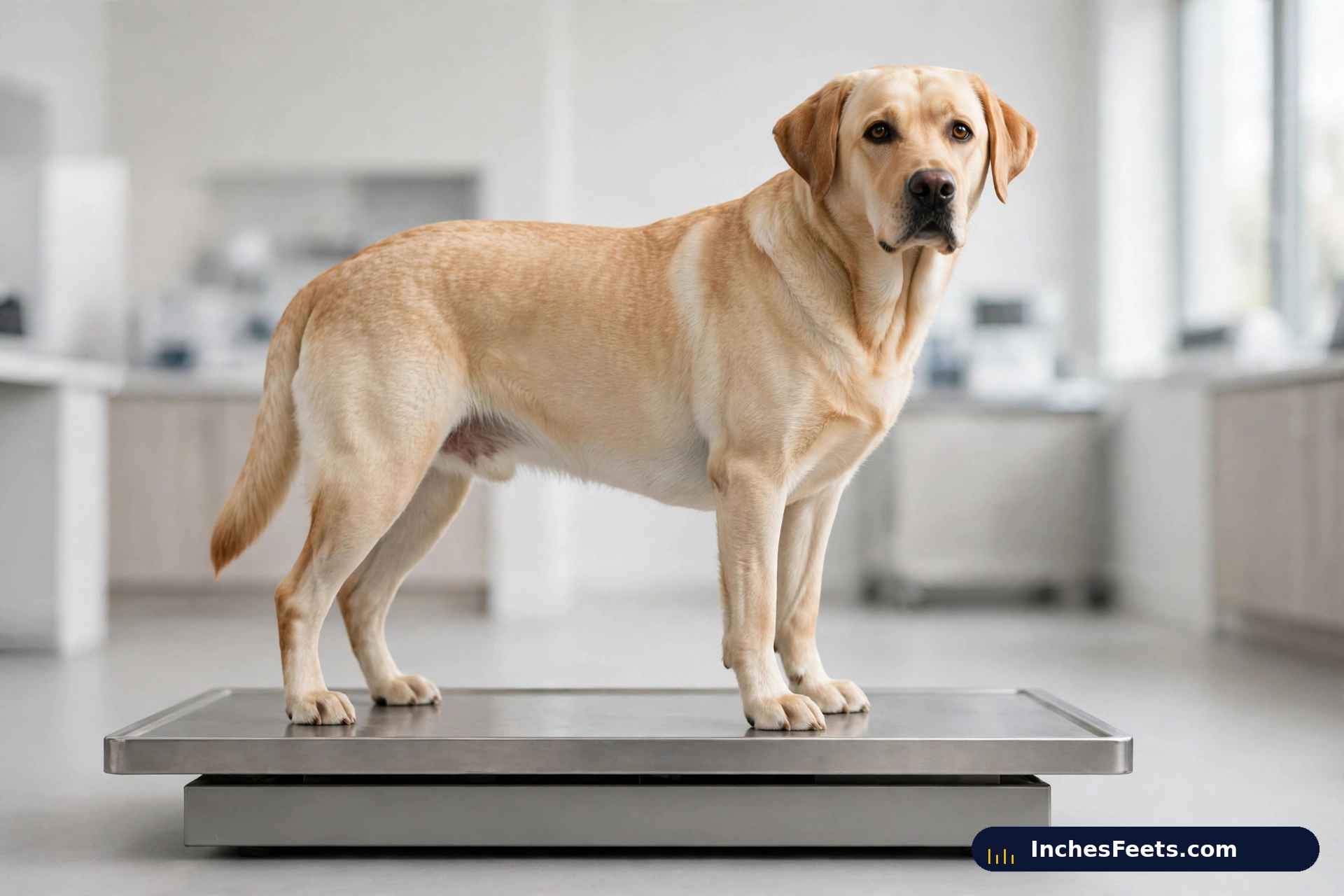
Dogs are the friendliest way to picture this weight, but the breed matters. The example that genuinely works is the Labrador retriever: the American Kennel Club’s breed standard puts males at 65–80 pounds (29–36 kg) and females at 55–70 pounds (25–32 kg), so a typical adult Labrador in standard condition stands right on this page’s weight. The Border Collie, often named alongside it, does not belong here: the AKC puts Border Collies at 30–55 pounds — 13.6 to 25 kg — so even the heaviest collie falls five kilos short.
Counted: as corrected — on the Labrador basis. The AKC standard bands bracket 30 kg for both sexes; the Border Collie half of the usual claim is wrong and is corrected above.
Two Full Water Cooler Bottles
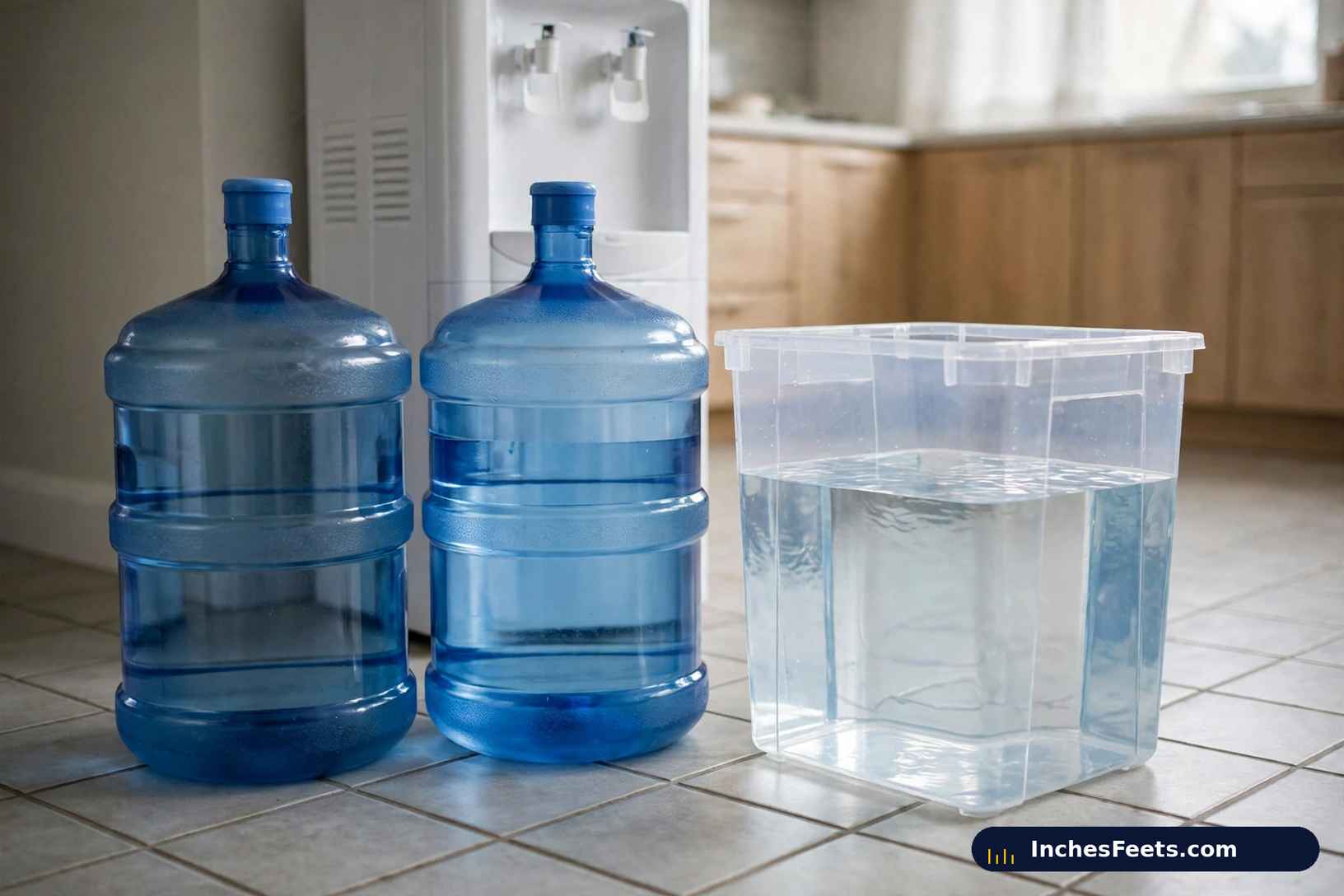
This one fails on simple arithmetic. A standard water-cooler bottle holds 5 gallons — 18.9 litres — and water weighs a kilogram a litre, so the water alone is about 18.9 kg; with the empty polycarbonate bottle, a full one weighs roughly 19.5 to 20 kg (42–44 lb), which matches what bottlers like Culligan publish. Two full bottles therefore come to about 39–40 kg — a full third heavier than this page’s weight. One bottle is the honest comparison, and it belongs on a 20 kg page.
Not counted: two full bottles overshoot 30 kg by roughly ten kilos. Corrected figure printed above.
Full Travel Suitcase
A suitcase has no fixed weight — it weighs whatever you pack into it — so the honest anchors are the airline rules. IATA guidance recommends that an individual checked bag not exceed 23 kg, and the maximum permitted weight for a single checked bag is 32 kg. A case deliberately packed to exactly 30 kg is possible, but it sits seven kilos over the standard allowance (expect overweight fees) and only two kilos under the absolute ceiling. The popular claim that 30 kg is “the standard limit for checked baggage on international flights” mixes the two numbers up: 23 kg is the standard; 32 kg is the limit.
Not counted: there is no standard 30 kg suitcase to verify. Kept as a corrected section with the real airline figures (23 kg standard, 32 kg maximum).
Three 10 kg Dumbbells
The cleanest count on this page. Dumbbells are manufactured to a stated nominal weight, and the 10 kg dumbbell is one of the most standard gym sizes in the world. Put three of them in a row and the arithmetic is the whole story: 10 + 10 + 10 = 30 kg. Cast-iron gym weights carry a small manufacturing tolerance, but the nominal product — the thing you actually buy and lift — is exactly this page’s weight, three times over.
Counted: exact — three standard 10 kg dumbbells, by specification.
Small Refrigerator
“Small refrigerator” covers a wide spread of weights, and most compact fridges fall short: Danby’s best-known 4.4 cu ft Designer model, for example, weighs 24.50 kg. But the top of the compact class does land here. Danby’s own specification sheet for its 4.4 cu ft compact refrigerator, model DAR044A1WDD, lists the weight at 29.80 kg (65.70 lb) — close enough to this page’s figure, on a named model with the exact number disclosed, to count honestly.
Counted: FLAGGED — on the named-model basis: Danby DAR044A1WDD, maker specification 29.80 kg (−0.20 kg, disclosed). The generic claim only holds at the top of the compact class.
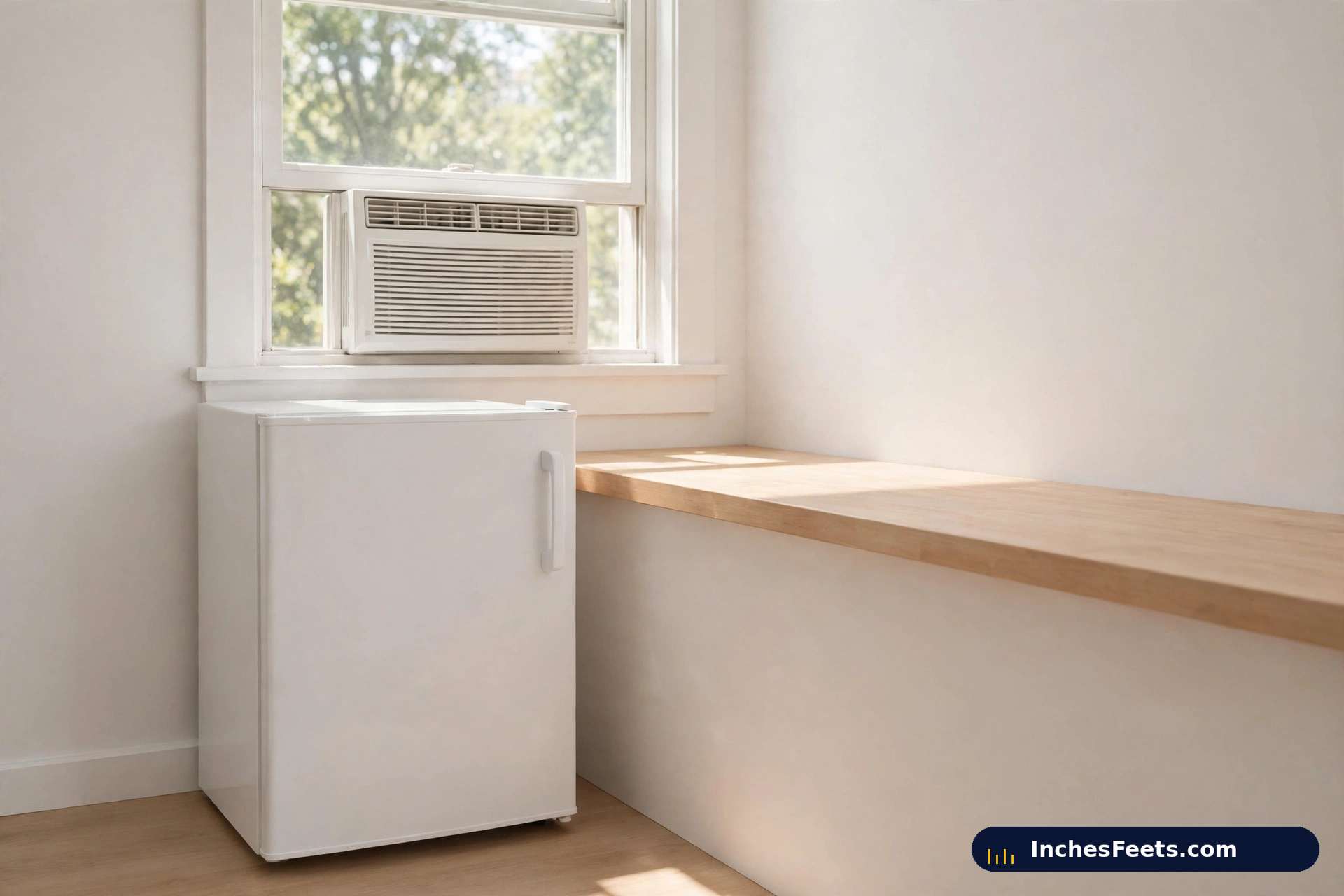
Window Air Conditioner Unit
With window air conditioners, capacity decides the weight. A 10,000 BTU unit — Frigidaire’s FFRE1033S1 is typical — weighs about 61 pounds, roughly 27.7 kg, and falls short. The 12,000 BTU class is the one that lands on this page: GE Appliances’ own page for its 12,000 BTU AHP12LZ lists a net weight of 66.33 lb, which converts to 30.08 kg, and Midea’s 12,000 BTU window unit is listed at 29.98 kg. So a mid-size window unit genuinely is a 30 kg lift — which is exactly why fitting one is a two-person job.
Counted: FLAGGED — on the named-model basis: GE AHP12LZ, manufacturer net weight 66.33 lb = 30.08 kg (+0.08 kg, disclosed).
Small Kitchen Countertop Dishwasher
Here the check turns up a telling slip. The claim is that countertop dishwashers weigh “exactly 30 kg” — and 30 kg does appear on the spec sheet of the best-known model, Danby’s DDW621WDB. But it appears as the shipping weight: 30.25 kg boxed. The dishwasher itself — the unit weight on the same Danby specification — is 21.00 kg (46.3 lb). The appliance you lift onto the counter is nine kilos short of this page; the 30 kg figure includes its cardboard box and packaging.
Not counted: the unit weighs 21 kg. The 30 kg claim is its shipping weight, corrected above.
Large Sack Of Rice
Rice is traded in standard sack sizes, and 30 kg is genuinely one of them. Indian basmati is sold in 30 kg bags (Fortune’s Biryani Basmati comes in a 30 kg bag), Japanese retail rice is sold in 30 kg units, and Japanese rice-sack standards list 30 kg among the standard capacities alongside 5, 10 and 50 kg. A full standard sack therefore holds 30 kg of rice by specification — no estimation involved. (The bulk sacks most Western shoppers picture are usually 25 kg, which is why the claim is worth checking rather than assuming.)
Counted: exact — the standard 30 kg trade sack, by specification.
Two Car Batteries
A typical 12-volt lead-acid car battery weighs between 30 and 50 pounds — 13.6 to 22.7 kg — with most averaging around 40 pounds, or 18 kg. Two average batteries therefore come to roughly 36 kg, and two large ones can approach 45 kg. The claim that two batteries make 30 kg only works with two of the smallest batteries made, at about 15 kg each — the very bottom of the range, presented as if it were the average. As a picture of “two car batteries,” it undershoots the real pair by six kilos or more.
Not counted: two typical car batteries overshoot 30 kg (≈36 kg for average units). Corrected figures printed above.
Average Adult Male Beagle
This example rests on a units mix-up. The AKC’s beagle standard gives weights in pounds: the larger, 15-inch variety weighs 20–30 pounds, and the smaller 13-inch variety under 20 pounds. Read those pound figures as kilograms and you get a “25 to 30 kg” beagle — a dog that does not exist. In kilograms, a full-grown beagle weighs about 9 to 13.6 kg, so an average adult male beagle is roughly a 10 kg dog: about one third of this page’s weight, and a good reminder to check which unit a number was born in.
Not counted: the claim confuses pounds with kilograms. A real beagle is ≈10 kg; corrected above.
A 30 KG Kettlebell
Kettlebells are cast and sold by nominal weight, in standard steps — and 30 kg is a standard heavy size. Gorilla Sports sells a single 30 kg cast-iron kettlebell, and several makers’ ranges climb in 2 kg steps straight through 30 kg on their way to 32 and 40. Pick one up and there is no estimation to argue about: the product is manufactured to be this page’s weight. It is an advanced lifter’s bell — most people meet 30 kg first as a deadlift, not a swing.
Counted: exact — a standard manufactured size, sold singly at 30 kg.
A Single 30 KG Dumbbell
Different from the three-dumbbell count above: this is one single heavy dumbbell. Premium dumbbells are sold individually at the heavy end, and Technogym’s Hexagon Dumbbell range — sold one at a time — includes a 30 kg size, listed by the manufacturer at exactly 30 kg. One dumbbell, one hand (if you are strong enough), the whole of this page’s weight.
Counted: exact — a standard single product, manufacturer-listed at 30 kg.
A Pair of 15 KG Bumper Plates
Olympic bumper plates follow the IWF size ladder, in which 15 kg — the yellow plate — is a core standard size. Plates are sold in matched pairs: Bulldog Gear lists a 15 kg pair in its Hybrid bumper range, and Cortex’s 15 kg two-pack states it plainly — 15 kg per plate, 30 kg total. A pair of fifteens is how most lifters actually load this weight onto a bar.
Counted: exact — 2 × 15 kg, an IWF-standard plate size sold as a pair.
A 30 KG Weighted Vest
Weighted vests are sold by their loaded weight, and 30 kg is a standard top size. Mirafit’s adjustable weighted vest comes in a 30 kg version, loaded with thirty removable 1 kg cast-iron blocks; Gravity Fitness sells a 30 kg vest in the same class. Fully loaded, the vest is this page’s weight worn on your shoulders — which is why a 30 kg vest is serious training equipment, not a walking accessory.
Counted: exact — a standard product size at full load (Mirafit 30 kg version).
A Blacksmith’s Anvil
Anvils are sold by weight because weight is the point — mass is what absorbs the hammer blows. The popular beginner size lands exactly here: VEVOR’s single-horn cast steel anvil, model GZL66, is sold as a 66 lb anvil, and the maker’s specification lists its net weight as 66.14 lb / 30 kg. It is one of the oldest tool designs in the world, still specified the same way it always was: by how much iron you get.
Counted: exact — maker-stated net weight 30 kg (VEVOR GZL66).

A Fire-Resistant Home Safe
A small fire safe is mostly steel and fireboard, and the weight adds up quickly. Amazon Basics’ fire-resistant security safe (model YB-50YLA-F, 1.24 cubic feet) is listed in its own manual at 66.8 lb — 30.38 kg — heavy enough that the manual advises getting help to move it. Plain non-fireproof safes of the same size are far lighter (the standard 1.2 cu ft steel model is about 12 kg), so it is specifically the fire-resistant construction that carries a home safe onto this page.
Counted: FLAGGED — on the named-model basis: Amazon Basics YB-50YLA-F, manual figure 30.38 kg (+0.38 kg, disclosed).
30 Litres of Water
Water is the anchor every other weight on this page quietly depends on, because the kilogram was built around it: one litre of water weighs one kilogram (999.97 grams at 4 °C — effectively exact). So a 30-litre container filled with water is carrying exactly 30 kg of water, plus a kilo or so for the container itself. It is also the most practical check on this page: if you can fill it with 30 measured litres, you know its weight to the gram.
Counted: exact — by definition (1 litre of water = 1 kg).
A Folding Electric Bike
E-bikes carry their weight in the motor, frame and battery, and the best-selling folding model in the United States lands just under this page’s figure. Lectric’s XP 3.0 is specified by its maker at a total weight of 64 lb with the 7 lb battery installed — 64 pounds converts to 29.03 kg. That is close enough to picture 30 kg honestly, with the exact figure disclosed: imagine folding this bike and carrying it up a flight of stairs, and you have a very physical sense of the weight.
Counted: FLAGGED — on the named-model basis: Lectric XP 3.0, maker-stated 64 lb = 29.03 kg (−0.97 kg, disclosed).
A Fender Twin Reverb Amplifier
Guitarists have complained about the weight of the Twin Reverb for sixty years, and Fender’s own numbers explain why. Fender’s product page for the ’65 Twin Reverb reissue lists its product weight as 64 lb — and prints the metric figure itself as 29 kg. An 85-watt all-tube combo with two 12-inch speakers is, in other words, a 30 kg class lift with a handle on top, which is why so many of them live on casters or a trolley.
Counted: FLAGGED — on the maker’s own basis: Fender ’65 Twin Reverb, 64 lb, printed by Fender as 29 kg (−1 kg, disclosed).
A Nine-to-Ten-Year-Old Child
This is the corrected version of the most repeated claim about 30 kg. A four-year-old does not weigh 30 kg — the WHO median at age four is about 16.3 kg. Follow the reference medians upward and a nine-year-old sits just under 29 kg, while WHO-based tables put the median ten-year-old at about 31–32 kg (31.2 kg for girls, 31.9 kg for boys). So the average child crosses 30 kg somewhere between the ninth and tenth birthdays — roughly twice the age of the child usually pictured with this weight.
Counted: FLAGGED — on the reference-median basis: 30 kg sits inside the WHO median band between ages nine and ten; exact medians disclosed above.
How to Visualize 30 KG
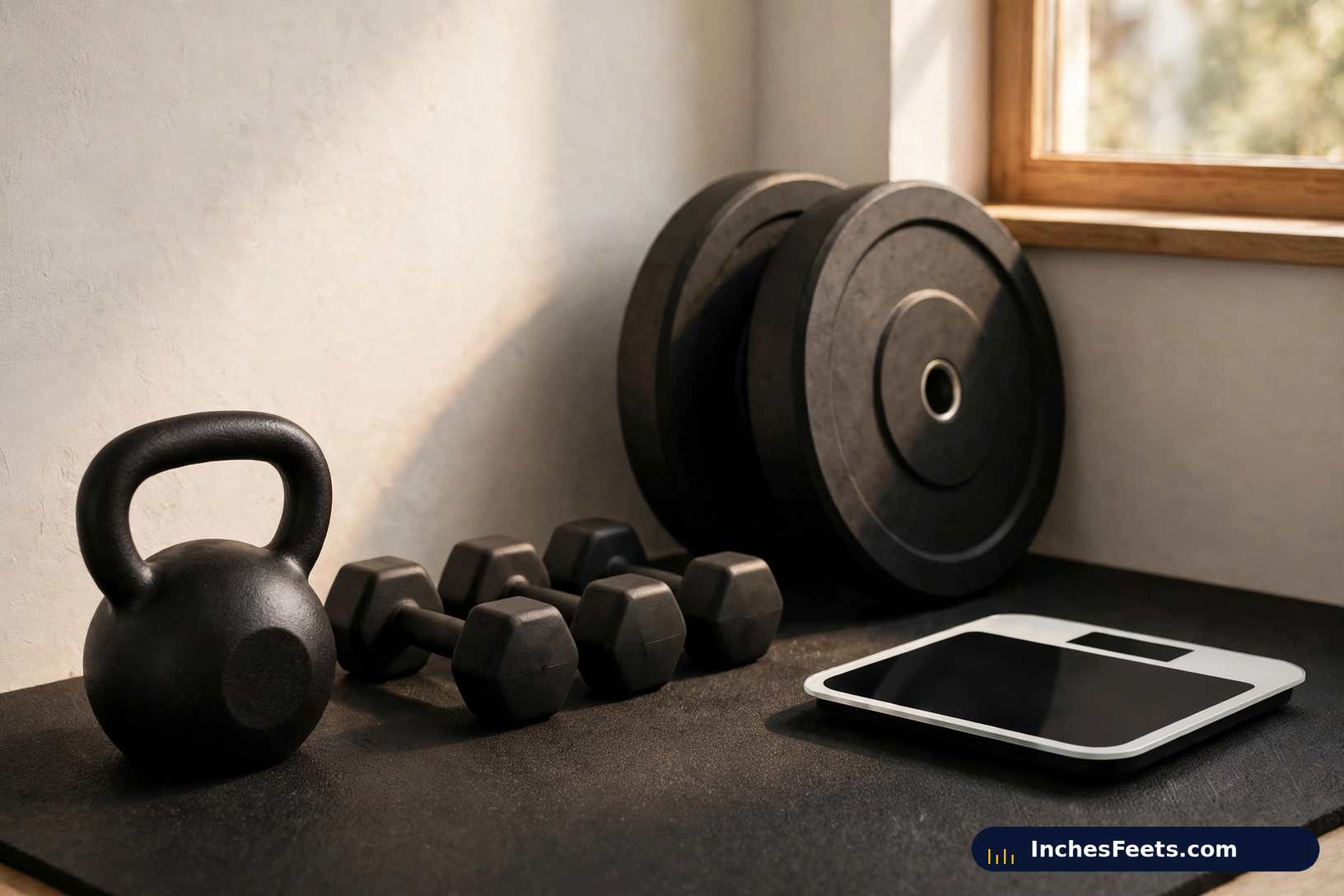
Start in the gym, where the weight is honest: picture three 10 kg dumbbells in a row, or a single 30 kg kettlebell sitting on the mat — a ball of iron about the size of a large melon, with a handle. Or picture a fully grown Labrador standing patiently on the vet’s scale, which is how most people who own one first learn what 30 kg feels like on the end of a lead.
Then use the comparisons around it. Thirty kilograms is half as much again as 20 kilograms — a weight this site has walked through object by object — and it is a little over 66 pounds, or just under 4¾ stone. One adult in reasonable shape can lift 30 kg off the floor and carry it a few steps; almost nobody carries it far. If you can picture moving house with a full 30 kg rice sack on one shoulder, you have the weight exactly right.
30 KG Compared With Other Weights
Against the bigger benchmarks, 30 kg is a useful fraction. It is 30 percent of 100 kilograms — the heavyweight benchmark this site uses for adult-sized comparisons — so three of everything on this page, plus a little more, make that mark. Going the other way, it is a lot of small weights: 30 kg is 1,058.22 ounces, which means it takes almost 106 of the 10-ounce weights from our ounce guide to balance one 30 kg object.
In the units most people meet day to day: 66.1387 pounds, 4.7242 stone, 30,000 grams, or 0.03 of a metric tonne. And in the kitchen’s own unit, it is thirty litre-bottles of water lined up on the counter — the definition come to life.
How to Measure 30 KG Accurately
The simplest accurate method is a bathroom scale and subtraction: weigh yourself, then weigh yourself holding the object, and take the difference. It works for anything you can safely lift — a packed suitcase, a dog that will sit still in your arms — and a decent scale is accurate to a few hundred grams, which is plenty at this size. For bags and luggage, a hanging luggage scale rated to 50 kg is cheap and reads directly.
Two calibration tricks are worth knowing. First, water: a container filled with exactly 30 litres of water is a 30 kg reference (add the container’s own weight, weighed empty). Second, gym iron: dumbbells, kettlebells and plates are manufactured to their stated weights within a few percent, so a marked 10 kg dumbbell is a fair check on a doubtful scale. What not to trust: shipping weights on spec sheets (they include the box, as the dishwasher section above shows), and any figure that does not say which unit it was measured in — pounds wearing a kilogram costume is how a 10 kg beagle became a “30 kg” one.
Conclusion
Thirty kilograms is 66.1387 pounds of everyday reality: a Labrador, a sack of rice, three dumbbells, a window air conditioner in its 12,000 BTU class, and a shelf of gym iron that is manufactured to the exact figure. It is also a weight surrounded by confident mistakes — bottles that overshoot, a dishwasher that only reaches it inside its cardboard box, and a beagle that was weighed in pounds and reported in kilograms.
Checked properly, the honest list is a good one, and it ends with the oldest object on it: a blacksmith’s anvil, thirty kilograms of cast steel that has done the same job, at the same weight, for a very long time.
FAQs
What is 30kg?
30 kg is a metric unit of mass equal to exactly 66.1387 pounds, 1,058.22 ounces or 30,000 grams. In everyday terms it is the weight of an adult Labrador retriever, a full 30 kg sack of rice, or three standard 10 kg dumbbells — heavy to carry, but liftable by one adult for a short effort.
How Heavy is 30kg?
Thirty kilograms feels like a full large suitcase near the airline maximum, or a big dog standing on your feet: one adult can lift it, few would carry it far. A common comparison says it is “like a large bag of dog food” — the biggest standard retail dog-food bags actually run about 15 kg, so picture two of them side by side.
How Many Pounds is 30kg?
Exactly 66.1387 pounds (often rounded to 66.14 lb). For reference, 75 pounds would be just over 34 kg — noticeably more than 30 kg — and 30 kg is also 4.7242 stone.