How Big Is 2 Cm? 15 Things That Are 2 Cm Long
Two centimetres is exactly 20 millimetres — 0.787402 inches, or a fiftieth of a metre. If you are asking how big is 2 cm in everyday terms, the honest answers are the coin cell battery in a key fob, the bore of a standard ball bearing, and a jacket button sized in lignes.
It is a thumbnail-scale length, and that is exactly why the internet describes it so loosely. The best-known list of examples for this measurement names ten everyday objects — a penny, a paperclip, a SIM card, a postage stamp — and on checking, nine of the ten fail as printed, and the tenth survives only once it is corrected to a different button than the one described.
This guide gives you 15 things that genuinely measure 2 centimetres, each checked against a maker’s specification, an official standard or reference data. Just as usefully, it keeps the nine popular claims that fail the check and prints their real sizes beside them.
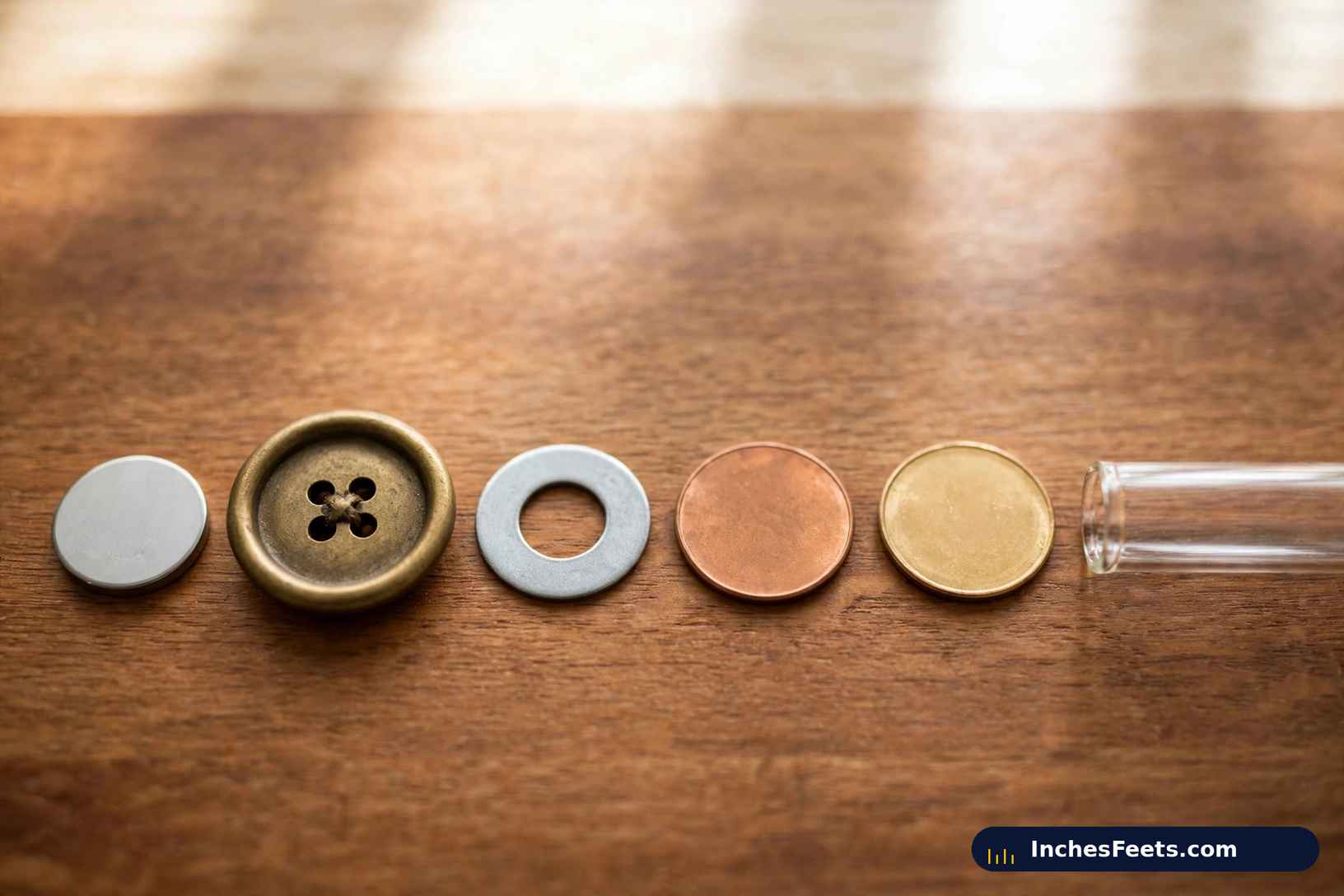
2 Cm at a Glance: The Verified List
- A jacket button — the 32-ligne size measures 20.32 mm across
- A CR2032 coin cell battery — exactly 20.0 mm in diameter
- A Euro 10-cent coin — 19.75 mm across
- A British one penny coin — 20.3 mm across
- A 6204 ball bearing’s bore — exactly 20 mm
- An M10 flat washer — exactly 20 mm outside diameter
- A 5×20 mm cartridge fuse — exactly 20 mm long
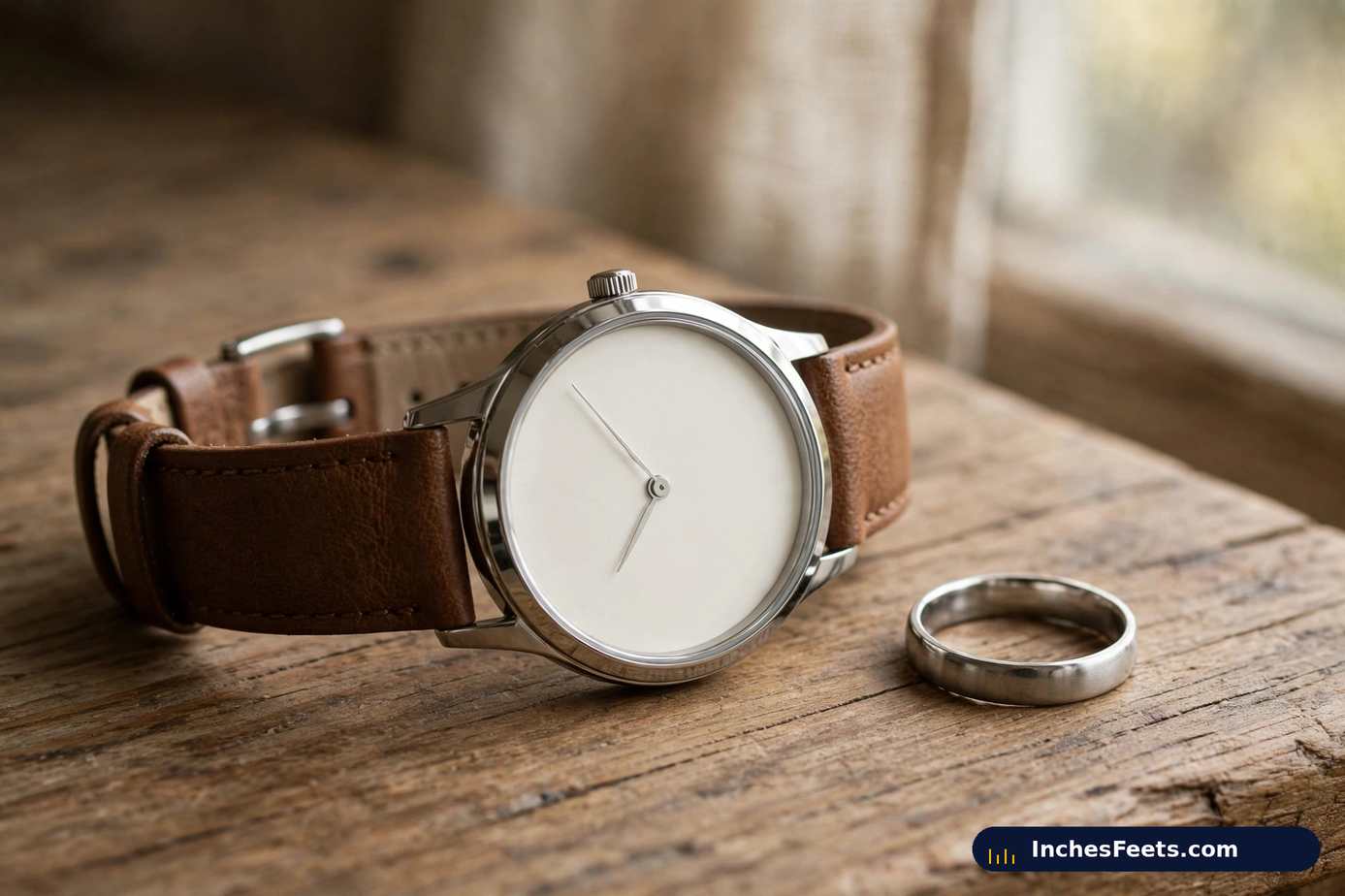
- A watch strap — 20 mm is the standard lug width
- A 20×150 mm test tube — exactly 20 mm across
- A 20×20 mm microscope coverslip — a standard square size
- VELCRO Brand hook-and-loop tape — made at a 20 mm width
- A US ring size 10 — 19.8 mm inside diameter
- A 20 mm hole saw — cuts a hole exactly 20 mm wide
- A twenty-sided die (d20) — the standard 20 mm size class
- An M3×20 machine screw — the 20 in its name is its length
Every item on this list is checked in its own section below. The claims that did not survive checking stay in the article too, with their real sizes printed beside them — knowing that a U.S. penny is 19.05 millimetres, not 20, is nearly as useful as the list itself.
Common Things That Are 2 Cm Long
The competitor’s list below is kept in his order, headings and all. His opening comparison does not survive checking: the tomato and pepper seeds he offers at “around 2 cm” measure about 3 to 4.3 millimetres long in seed studies — roughly five times smaller than claimed. Of his ten examples, one is counted below as corrected and nine fail verification, each printed openly in its section rather than quietly dropped. The list is then completed with fourteen added objects that do measure two centimetres.
Shirt Button
Buttons are measured in lignes, and the ligne settles this heading — though not the way the competitor prints it. His text puts shirt buttons at 1.5 to 3.5 cm, with “the most common size for standard shirts” at around 2.5 cm; the trade’s own size charts say otherwise. A standard shirt button is 16 to 18 lignes — about 10 to 11.4 millimetres, roughly half his “most common” figure. The button that genuinely lands on this page is the next class up: the 32-ligne button, the standard front button of suit jackets and blazers. Lignes convert exactly — 40 lignes make one inch, so one ligne is 0.635 mm and 32 lignes are 20.32 mm — a third of a millimetre over this page’s length, disclosed here rather than rounded away. The heading survives, corrected: not the shirt button, but its bigger jacket sibling.
Counted: Yes — FLAGGED, counted as corrected: the 32-ligne (32L) jacket button measures 20.32 mm by the ligne standard (32 × 0.635 mm), +1.6% and disclosed above; standard shirt buttons are 16–18L ≈ 10–11.4 mm and are not the counted object.
U.S. Penny
The competitor’s own figure gives this one away: he prints the penny at 1.9 cm and calls it “closely related” to two. The U.S. Mint’s specification is exact — the penny’s diameter is 19.05 millimetres (0.75 inches), which is 1.905 cm: just under a millimetre short of this page, a miss of 4.75 percent. That is outside the small tolerance this list allows its flagged counts, and a near miss is still a miss. The penny is a fine near-gauge for two centimetres, as the measuring section below explains, but it is not a 2 cm object.
Not counted: a U.S. penny is 19.05 mm in diameter per the U.S. Mint’s specifications — 1.905 cm, about 4.75% short of 2 cm. Corrected figure printed above.
Pinky Fingernail
There is no standard size for a fingernail, and the competitor’s own text proves it: his pinky nail “typically measures around 1.5 to 2.5 cm” — a range a full centimetre wide, spanning from a quarter under this page’s length to a quarter over it. Nail size varies with the person, the hand, age and sex, and no maker, standard or reference dataset fixes the little fingernail at 20 millimetres. Some people’s pinky nails are indeed about 2 cm long; a measurement that depends on whose hand you borrow is not an example, it is an anecdote.
Not counted: no standard pinky fingernail size exists; the competitor’s own 1.5–2.5 cm range spans ±25% around 2 cm. Corrected reasoning printed above.
Small Paperclip
The competitor prints the small paperclip at 3.5 cm — and that figure is the tell, because 3.5 cm is the length of the regular clip, not the small one. Paper clips are numbered, and the datasheet for the sizes offices actually order against (the IMPA marine-stores specification) puts the No. 3 clip at 22 millimetres and the No. 1 at 28 millimetres; the common U.S. regular clip runs about 1⅜ inches, the 35 mm his figure matches. No standard small clip measures 20 mm — the smallest numbered sizes are still over this page’s length, and the regular is three-quarters again as long.
Not counted: standard small paper clips measure 22–28 mm (IMPA datasheet: No. 3 = 22 mm, No. 1 = 28 mm); the competitor’s 3.5 cm is the regular clip’s length. Corrected figures printed above.
SIM Card
SIM cards come in standard sizes set by ETSI, and none of them has a 2 cm side. The mini SIM — the “standard” SIM of older phones — measures 25 × 15 millimetres; the micro SIM is 15 × 12 mm; the nano SIM in modern phones is 12.3 × 8.8 mm. The competitor’s text says a SIM “typically measures 8.8 cm²”, which garbles the nano SIM’s 8.8-millimetre width into an area figure that belongs to a card a hundred times bigger. Twenty millimetres appears nowhere in the family: the mini is 5 mm too long on one side and 5 mm too short on the other.
Not counted: SIM form factors are 25 × 15 mm (mini), 15 × 12 mm (micro) and 12.3 × 8.8 mm (nano) per ETSI — no side measures 20 mm. Corrected figures printed above.
AA Battery Diameter
This heading’s figure is a borrowed number. The competitor states the AA’s diameter as 2.54 centimetres — but 2.54 cm is not a battery measurement at all; it is the definition of one inch, and it has wandered into the wrong sentence. The AA size is an international standard (IEC LR6): its diameter is at most 14.5 millimetres and its length is 50.5 mm. So the AA misses this page on both axes — its diameter is 1.45 cm, more than a quarter short, and its length is two and a half times the page’s figure.
Not counted: an AA battery’s diameter is 14.5 mm maximum (IEC LR6) — 1.45 cm, not 2.54 cm; 2.54 cm is one inch. Corrected figures printed above.
Postage Stamp
There is no standard postage stamp size for this heading to stand on, and the commonest real stamp misses anyway. The standard U.S. definitive Forever stamp measures about 0.87 × 0.99 inches — roughly 22 × 25 millimetres — and commemorative issues run to other sizes again; stamp dimensions are set issue by issue, country by country. The competitor’s “2.5 cm by 3.5 cm” matches neither side of the standard stamp: one side is a fifth too long and the other three-quarters too long. A stamp is a 2-and-a-bit centimetre object on its short side, which is not the same as a 2 cm object.
Not counted: the standard U.S. Forever stamp measures ≈22 × 25 mm and stamp sizes vary by issue; neither side is 20 mm, and the competitor’s 2.5 × 3.5 cm is wrong on both sides. Corrected figures printed above.
Pencil Eraser
A range is not a size, and this heading is only a range: the competitor gives pencil erasers at “around 2 to 5 cm”, a spread so wide it claims everything and verifies nothing. Named products show why no single figure exists. Pentel’s Hi-Polymer block erasers — the standard school and office blocks — measure about 17.5 × 42.9 × 11.2 millimetres in the small size and about 25.4 × 65 × 23.6 mm in the large: the sizes straddle two centimetres on every axis without landing on it, and cap and pencil-end erasers are smaller still and vary by maker. No standard eraser is standardised at 20 mm.
Not counted: block erasers are sold in sizes whose axes straddle 2 cm without landing on it (Pentel Hi-Polymer small ≈17.5 × 42.9 × 11.2 mm; large ≈25.4 × 65 × 23.6 mm); a 2–5 cm range is not a size. Corrected figures printed above.
USB Plug Width
The competitor’s own text concedes this one — he puts the USB-A plug at “approximately 1.3 cm” under a 2 cm heading. The standards are exact: the USB-A plug’s contact opening is 12.0 × 4.5 millimetres, about 12.5 mm across its metal shell, and the USB-C plug is 8.4 × 2.6 mm. The plastic housing moulded around a real cable’s plug is wider, but housings are styling, not standard — they vary by brand and are specified by nobody. On every standardised axis, a USB plug is a 1.2 cm object at its widest, a full 8 millimetres short of this page.
Not counted: a USB-A plug is 12.0 mm wide at the standardised opening (≈12.5 mm across the shell) and USB-C is 8.4 mm — no USB plug is 2 cm wide. Corrected figures printed above.
Key Head
The key head — the bow you grip while turning the key — is the second heading on this list that is only a range: the competitor gives it at “around 2 to 5 cm”. Key bows are a styling dimension: each blank maker shapes its own, and house keys, car keys and padlock keys all differ; no standard fixes a key head at 20 millimetres. A key’s standardised dimensions live at the other end, in the blank’s length and the blade’s cuts. A range that runs from this page’s length to two and a half times it is not an example of anything except how loosely keys are described.
Not counted: key head (bow) size is a manufacturer styling dimension with no standard 2 cm size; the competitor’s own range is 2–5 cm. Corrected reasoning printed above.
A CR2032 Coin Cell Battery
The cleanest count on this page is hiding in the battery’s name. Coin cells carry an IEC designation that encodes their size: in CR2032, the 20 is the diameter in millimetres and the 32 is the height in tenths of a millimetre. Panasonic’s datasheet for its CR2032 states it outright — Diameter (Max.) 20.0 mm, height 3.2 mm. It is the battery in key fobs, watches, kitchen scales and computer clocks, manufactured by the hundred million to exactly this page’s length across. Hold one between finger and thumb and you are holding the reference object for this whole article.
Counted: Yes — exact: Panasonic’s CR2032 datasheet gives Diameter (Max.) 20.0 mm; the IEC designation itself encodes a 20 mm diameter.

A Euro 10-Cent Coin
Europe’s small change puts a coin within a quarter of a millimetre of this page. The 10-cent coin’s technical specifications are set in EU law — Council Regulation (EU) No 729/2014, the specifications the European Central Bank publishes — and they fix its diameter at 19.75 millimetres. That is 1.25 percent under two centimetres: close enough that the coin works as a pocket gauge for this length, with the exact figure printed here rather than rounded up to the heading.
Counted: Yes — FLAGGED: the Euro 10-cent coin’s diameter is 19.75 mm per its EU technical specification (−1.25%, disclosed).
A British One Penny Coin
Britain’s penny lands the same distance past the figure as the euro coin lands short of it. The Royal Mint strikes the 1p coin to a diameter of 20.3 millimetres — its specification is written as 2.032 cm — which makes the current penny a 2 cm coin with three-tenths of a millimetre to spare. Between this coin and the 10-cent piece above, European pockets bracket this page’s length from both sides.
Counted: Yes — FLAGGED: the British 1p coin’s diameter is 20.3 mm per the Royal Mint’s specification (+1.5%, disclosed).
A 6204 Ball Bearing’s Bore
Bearings are designated by their bore, and the commonest deep-groove bearing in the world is a 2 cm object on the inside. SKF’s specification for the 6204 — the bearing inside electric motors, pumps and machinery everywhere — gives its bore diameter d as exactly 20 mm, with an outside diameter of 47 mm and a width of 14 mm under the ISO dimension series. The 20 mm hole in the middle is the dimension the bearing is bought by: any standard 20 mm shaft fits it, which is what a standard is for.
Counted: Yes — exact, on the bore basis: SKF’s 6204 specification gives bore d = 20 mm (outside diameter 47 mm, width 14 mm).
An M10 Flat Washer
Washers are sized by the bolt they serve, and the M10 washer’s outside is this page’s length. Under ISO 7089 — the DIN 125 normal series — the flat washer for an M10 bolt is specified at a 10.5 mm hole, an outside diameter of exactly 20 mm and a thickness of 2 mm; Würth’s ISO 7089 datasheet prints the same figures. It is the washer in every hardware store’s metric drawer, and its outside edge is the counted figure: a 20 mm steel ring, made to a standard, by the million.
Counted: Yes — exact, on the outside-diameter basis: the ISO 7089 / DIN 125 M10 washer is specified at 20 mm outside diameter (10.5 mm hole, 2 mm thick).
A 5×20 mm Cartridge Fuse
The small glass fuse inside a plug, a power supply or a circuit board is sold by a size that states this page’s length outright. The 5×20 mm cartridge is the standard miniature fuse format under IEC 60127-2 — 5 mm across and 20 mm long — and makers’ datasheets, Littelfuse’s among them, dimension the cartridge length at 20 mm. Like the battery above, the object carries its measurement in its name: ask for a 5×20 fuse anywhere on earth and you are handed two centimetres of glass and wire.
Counted: Yes — exact, on the designated-length basis: the IEC 60127-2 standard miniature fuse size is 5 × 20 mm; the second figure is its 20 mm length.
A Watch Strap (20 mm Lug Width)
Watch straps are bought by the width between the watch’s lugs, and one width dominates the trade. Timex’s own band size guide puts lug widths at 18 to 26 mm across its range and names 20 mm as the most common size for men’s watches; straps are manufactured and sold by that exact width, so a “20 mm strap” is a stocked standard object, not a measurement you take yourself. The counted figure is the strap’s width where it meets the case — the dimension the whole replacement-strap trade is organised around.
Counted: Yes — on the standard lug-width basis: 20 mm is the most common men’s watch lug width per Timex’s band size guide, and straps are manufactured and sold at exactly that width.
A 20×150 mm Test Tube
Laboratory glassware is sold by its dimensions, and the mid-size test tube states this page’s length first. Kimble’s KIMAX reusable test tube, listed by Fisher Scientific, is specified at Diameter (Metric) 20 mm and Length (Metric) 150 mm — borosilicate glass made to ASTM E982 — and the DWK DURAN and PYREX lines sell the same 20×150 mm format. The counted figure is the tube’s diameter: two centimetres of glass tube, standard in every school and research laboratory.
Counted: Yes — exact, on the diameter basis: the standard 20×150 mm test tube is specified at 20 mm diameter (Kimble KIMAX listing; DURAN and PYREX equivalents agree).

A 20×20 mm Microscope Coverslip
The little square of glass that goes over a microscope specimen is a manufactured standard size, and one of the standard squares is this page twice over. Cover glasses from Marienfeld and Menzel are made in a ladder of square sizes — 18×18, 20×20, 22×22, 24×24 mm — and the 20×20 is a stocked step: a square two centimetres on each side and a fraction of a millimetre thick. It is the flattest object on this list and one of the most exact.
Counted: Yes — exact: 20 × 20 mm is a standard manufactured coverslip size (Marienfeld/Menzel cover glasses).
VELCRO Brand Hook-and-Loop Tape
Hook-and-loop tape is sold by width, and 20 mm is one of the widths on the roll. VELCRO Brand’s sew-on tape is manufactured at a stated 20 mm width — its 10-metre roll, product code V60271, is listed at 10 m × 20 mm — so a strip cut from it is two centimetres wide by the maker’s own specification, the same width as the watch strap above. It is the softest object on this list and the only one sold by the metre.
Counted: Yes — exact, on the maker’s stated width: VELCRO Brand sew-on tape is manufactured and sold at 20 mm width.
A US Ring Size 10
Ring sizes are inside diameters in disguise, and size 10 sits a fifth of a millimetre under this page. Standard ring-size charts, built on the ISO 8653 sizing basis, give a US size 10 an inside diameter of 19.8 millimetres — a circumference of 62.1 mm — which is one percent under two centimetres, disclosed rather than rounded. It is the only counted object on this page that is sized to a person, and the chart, not any individual ring, is the standard being counted.
Counted: Yes — FLAGGED: standard charts give US ring size 10 an inside diameter of 19.8 mm (−1.0%, disclosed).
A 20 mm Hole Saw
A hole saw’s size is the hole it cuts, and 20 mm is a standard step in the range. Bosch’s Power Change Plus carbide hole saw data sheet lists a saw at Diameter: 20 mm, and 20 mm is the first step of the boxed sets — which run from 20 up to 76 mm — in every hardware store. As with the fuse and the battery, the figure is the product’s definition: the tool exists to make a circle exactly this wide.
Counted: Yes — exact, on the cutting-diameter basis: Bosch’s hole saw data sheet lists a diameter of 20 mm; 20 mm is a standard step in hole-saw ranges.

A Twenty-Sided Die (d20)
The twenty-sided die at the centre of tabletop gaming is made to a standard size class, and the class is this page’s length. Standard polyhedral d20s measure about 20 to 22 millimetres face to face, and the dice-craft templates and moulds the hobby is built on specify the d20 at 20 mm — the size every dice bag assumes. The flag belongs in print: this is a nominal size class rather than a metrology figure, individual makers’ dice vary by a millimetre or two around it, and the count stands on that basis, with a verified spare held in the SEO block for the gate.
Counted: Yes — FLAGGED, on the nominal size-class basis: the standard d20 size class is 20 mm face-to-face; product-level variation around the class is disclosed above.
An M3×20 Machine Screw
A machine screw’s size states its length, and the commonest electronics screw states this page’s. In the designation M3×20, the 3 is the thread diameter in millimetres and the 20 is the length: fastener datasheets print it as a dimension — Accu’s technical data sheets for its M3×20 screws (its ISO 14583, ISO 14584 and DIN 912 lines alike) give Length (L) 20 mm. It is the screw that holds laptops, disk drives and 3D printers together, stocked by every fastener supplier on earth at exactly two centimetres of thread.
Counted: Yes — exact, on the designated-length basis: an M3×20 machine screw’s stated size gives Length (L) = 20 mm on makers’ datasheets.
How to Visualize 2 Cm
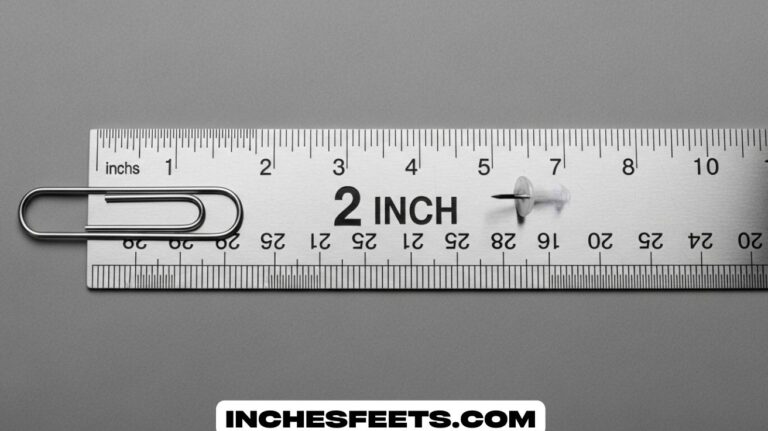
Start with the exact figures. Two centimetres is 20 millimetres, 0.02 metres, 0.787402 inches — just under four-fifths of an inch — or 0.0656168 feet, and the table below prints them together, because at this size the millimetre figure is the one most people can check against a ruler’s small edge.
| Unit | Equivalent of 2 Cm |
|---|---|
| Centimeters (cm) | 2 cm |
| Millimeters (mm) | 20 mm |
| Inches (in) | 0.787402 in |
| Feet | 0.0656168 feet |
| Yards | 0.0218723 yards |
| Meters | 0.02 meters |
| Pixels (at 96 PPI) | 75.59 pixels |
| Micrometers | 20,000 micrometers |
Then picture the battery. A CR2032 is the reference object: two centimetres is the width of the coin cell in a key fob, exactly one twentieth of 40 cm, and about a fifteenth of 12 inches — a school ruler holds fifteen of this page’s length end to end. Or use the coin gauge: a Euro 10-cent piece is this length with a quarter of a millimetre shaved off, a difference you need a caliper to see.
2 Cm Compared With Other Lengths
Two centimetres sits at the small, exact end of this site’s ruler. It is a little under four-tenths of two inches (5.08 cm), about a quarter of 3 inches, and a little under a sixth of 5 inches, the smartphone length. It is a little over an eighth of 6 inches, just under a tenth of 8 inches, the chef’s-knife span, and about a thirteenth of 10 inches. Against 18 inches it is about a twenty-third — twenty-three of this page’s length laid end to end.
The comparisons that stick are the manufactured ones: two centimetres is the diameter of the battery in the key fob, the bore of the bearing in the toolbox, and the width of the strap on a wrist — three trades, one measurement.
How to Measure 2 Cm Without a Ruler
Use the battery. A CR2032 coin cell is exactly 20 millimetres across by its IEC designation, which makes it the best ruler substitute in the house — better than any body part and better than most “close enough” objects. Keep one in the kitchen drawer and one in the toolbox. A 20×20 mm coverslip matches it exactly, and a 20 mm washer from the hardware store matches both.
Failing those, work from coins, with the gaps disclosed: a Euro 10-cent piece is 19.75 mm — a quarter of a millimetre short, invisible in practice; a British penny is 20.3 mm, a third of a millimetre over; and a U.S. penny is 19.05 mm, a full millimetre short — a near gauge for judging by eye, not an exact one. What not to trust: a paperclip (the small sizes run 22 to 28 mm and the regular about 35), a USB plug (12 mm at its standardised opening), an AA battery’s diameter (14.5 mm), and any phone app that has not been checked against a real ruler.
Conclusion
Two centimetres is 20 millimetres of everyday precision: the diameter of the battery in a key fob, the bore of a standard bearing, the width of a watch strap and the square of glass on a microscope slide. It is also a length surrounded by confident mistakes — a penny five percent small, a battery diameter borrowed from the inch itself, and a SIM card whose size was printed in a unit that does not exist.
Checked properly, the honest list is a practical one, and its members are already in your house: keep a CR2032 wherever you measure things — and the ball bearing in the toolbox turns on a bore of the same twenty millimetres, should the battery go missing.
FAQs
How Many Inches is 2 cm?
Exactly 0.787402 inches — just under four-fifths of an inch. One inch is defined as 2.54 centimetres, so 2 ÷ 2.54 = 0.787402, with no rounding until the final digit. The competitor’s 0.79 inches is the same figure rounded to two decimal places.
How Big is 2 cm?
Twenty millimetres — the diameter of a CR2032 coin cell, or of a Euro 10-cent coin at 19.75 mm. Two of the competitor’s comparisons fail: a large paperclip is a jumbo clip, 50 mm long — two inches, not two centimetres — and the typical marble is smaller than claimed, since the standard target marble measures 5/8 inch (15.9 mm), about 1.6 cm across.
What is 2 cm in mm?
Exactly 20 millimetres. One centimetre is defined as 10 millimetres, so 2 × 10 = 20 mm, with no rounding involved. The competitor’s answer to this one is correct as printed.