How Long Is 6 Inches? 14 Things That Are 6 Inches Long
Six inches is exactly 15.24 centimetres — 152.4 millimetres, or precisely half a foot. The objects that match it exactly are a small, knowable set of 6 inch items: the long side of a 4×6 index card, the blade of a 6-inch utility knife, and a standard personal check.
It is a hand-scale length — half a standard ruler — and that is exactly why the internet describes it so loosely. Pages listing “things that are 6 inches long” routinely include a pencil, a hand span, a small tablet and a screwdriver, and on checking, not one of those four objects measures six inches.
This guide gives you 14 things that genuinely measure 6 inches, each checked against a maker’s specification, an official standard or reference data. Just as usefully, it keeps the popular claims that fail the check and prints their real sizes beside them.
6 Inches at a Glance: The Verified List
- A dollar bill (U.S.) — flagged: 6.14 inches long, a disclosed 0.14 over
- A small ruler — the 6-inch size, exactly as sold
- An index card (half size) — the 4×6 format, long side exactly 6 inches
- A smartphone — counted as corrected: one named model is 5.99 inches tall
- A kitchen knife blade — a named maker’s blade specified at exactly 6.0 inches
- Sticky notes (larger size) — the 4×6 pad, long side exactly 6 inches
- A 4×6 photograph — the standard print size, long side 6 inches
- A personal check — the standard 6 × 2.75 inch wallet check
- A 60d nail — the penny system’s 6-inch nail
- A 6-inch round cake pan — the diameter is the size
- A subway tile — the classic 3×6 format, long side 6 inches
- An embroidery hoop — the standard 6-inch size
- A terracotta plant pot — flagged: the 6-inch class, named by its top diameter
- A postcard at the USPS maximum — 4.25 × 6 inches at the postcard-rate ceiling
Every item on this list is checked in its own section below. The claims that did not survive checking stay in the article too, with their real sizes printed beside them — knowing that a “6-inch” screwdriver is nearly eleven inches long overall is nearly as useful as the list itself.
14 Common Things That Are 6 Inches Long
The competitor’s list below is kept in his order, headings and all — but three of his nine examples fail verification, and each failure is printed openly in its section rather than quietly dropped. The list is then completed with eight added objects that do measure six inches. (Two further claims from his introduction get no section because they name no checkable standard: a standard pencil is not six inches — an unsharpened #2 pencil is 19 cm, about 7.5 inches — and an adult hand measured thumb to pinky is a span, not a length; even ordinary hand length, wrist to fingertip, medians 7.6 inches for men and 7.1 inches for women in ANSUR II anthropometric data, so no honest hand measure lands on six.)
Dollar Bill (U.S.)
The best-known six-inch reference in the world is a seventh of an inch too long. The Bureau of Engraving and Printing makes every current US bill to one size: 6.14 × 2.61 inches. That is 0.14 inches — about 2.3% — over this page’s length, and the overage is printed here rather than rounded away, because it is also what makes the bill useful: lay one against anything and six inches is the bill minus a sliver at one end, a gap you can see and judge.
Counted: FLAGGED — on the disclosed “about” basis: a US dollar bill is 6.14 inches long (Bureau of Engraving and Printing specification), 0.14 in over the exact figure; the disclosure is printed above and a gate fallback is held in the SEO block.
Small Ruler
This heading is the honest version of the ruler claim, and it is exact by definition: 6-inch rulers are a manufactured standard size, sold for pencil cases, sewing kits and desk drawers, and a 6-inch ruler is six inches long the way a 3×5 card is five inches long — the number is the product. The caution belongs to the word “standard”: the standard ruler, the one in every classroom, is 12 inches. The small ruler is the six-inch one — which is why the competitor’s own FAQ, corrected below, cannot call six inches “the length of a standard ruler.”
Counted: exact — a 6-inch ruler is a standard manufactured size and measures exactly 6 inches by the definition of the product.
Index Card (Half Size)
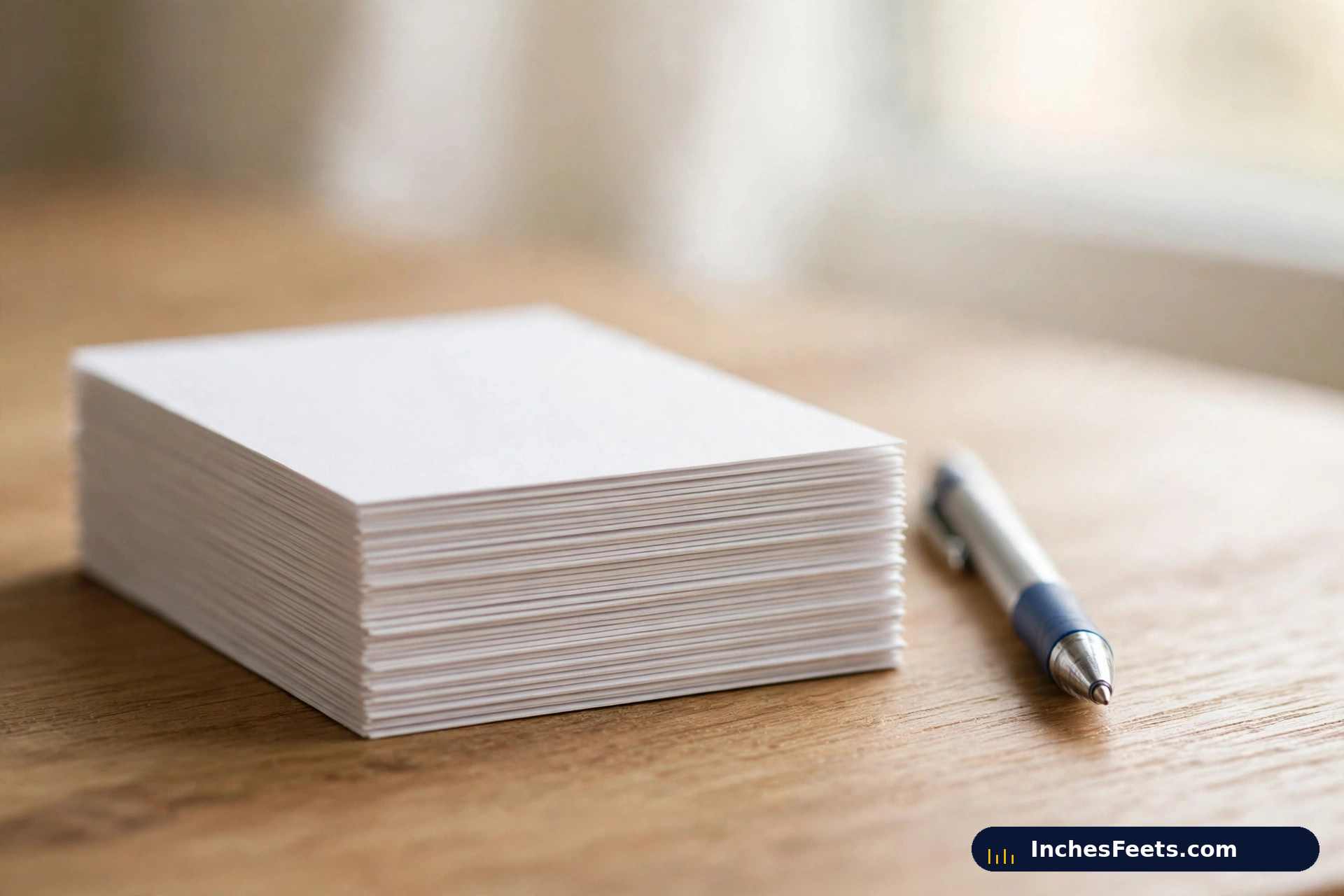
The 4×6 index card is the middle step of the index-card ladder (3×5, 4×6, 5×8), and its long side is exactly six inches. It is the card sold for speeches, flash cards and photo-sized notes — bigger than the recipe-box 3×5, smaller than the 5×8 — and it is the most reliable six-inch gauge in a desk drawer: hold one against anything and you are holding exactly this page’s length, with no overage to subtract and no diagonal to argue about.
Counted: exact — the long side of a standard 4 × 6 index card is 6 inches by the format’s definition.
6-Inch Sub Sandwich (Subway)
A sandwich cannot be verified, because a sandwich is not manufactured — it is assembled. “6-inch” on the menu is a name, not a specification: the roll is baked, and baked lengths vary from loaf to loaf and shop to shop. The point is not pedantry; it is established in court. The litigation over the chain’s Footlong (In re Subway Footlong Sandwich Marketing and Sales Practices Litigation, Seventh Circuit, 2017) proceeded on the shared understanding that the name describes a product line, not a guaranteed measurement of any individual sandwich. A given 6-inch sub may measure six inches. The next one may not, and nothing in the product’s specification promises either way.
Not counted: “6-inch” is a menu name for a hand-assembled sandwich whose baked length varies; no specification guarantees 6.00 inches. Corrected basis printed above.
Smartphone
This one survives — as corrected, on a named model, because “a smartphone” is not a size. The competitor names the iPhone 14 and the Pixel 6 as roughly six inches tall; checked against their published dimensions, neither is. The iPhone 14 stands 146.7 mm — 5.78 inches. The Pixel 6 stands 158.6 mm — 6.24 inches. The phone that does stand at this page’s length is Google’s Pixel 8a: its published body dimensions are 152.1 × 72.7 × 8.9 mm, and 152.1 mm is 5.99 inches — six inches to within a hundredth, on the maker’s own figures. The honest version of this heading is not “smartphones are six inches”; it is that one named, current phone is.
Counted: as corrected — on the body-height basis: the Google Pixel 8a’s published height is 152.1 mm = 5.99 inches; the competitor’s named models are corrected above (iPhone 14: 5.78 in; Pixel 6: 6.24 in).
Kitchen Knife Blade
A knife’s size name refers to its blade, and this blade is exact. Wüsthof’s published specification for its Classic 6″ Utility Knife states the figure plainly: Blade Length 6.0 inches, with a handle of 4.3 inches behind it. That distinction is the whole section — the knife overall is a little over ten inches long, and nobody should count it as a six-inch object end to end. But the working part, the part the product is named and sold by, is exactly this page’s length, on the maker’s own specification sheet.
Counted: exact — on the blade basis: Wüsthof’s Classic 6-inch Utility Knife carries a maker-specified blade length of 6.0 inches (handle 4.3 in; the blade basis is printed above).

Sticky Notes (Larger Size)
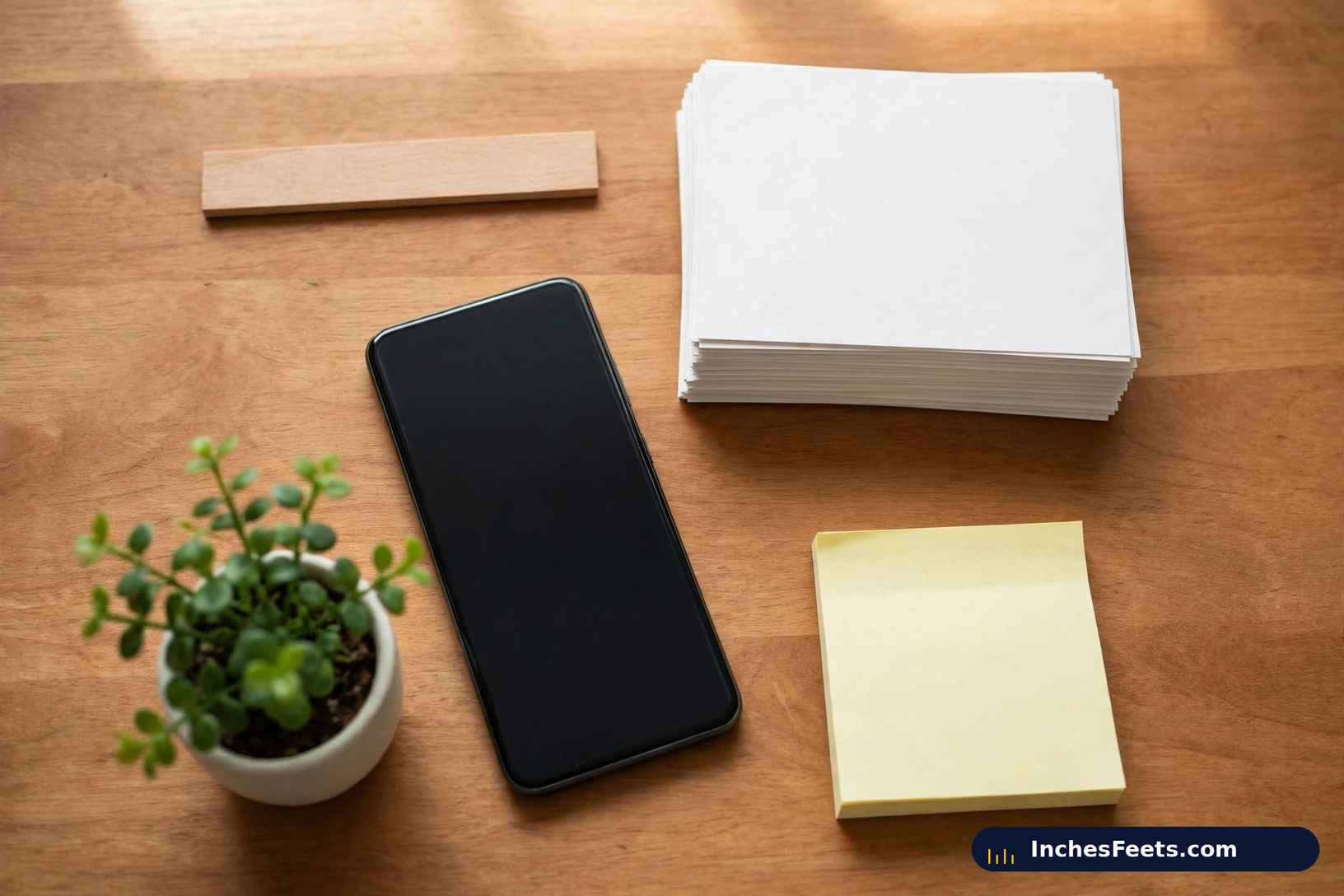
The famous sticky note is the 3×3 square, and it is not on this list. The larger size is: 3M’s Post-it Notes come in a 4 × 6 inch format — the lined pads sold as the 660 family — and manufacturer and retailer specification tables state the sheet plainly: size 4″ × 6″, Length in Inches 6, Width in Inches 4. A single sheet off the pad is six inches on its long side, and the pad itself is the same footprint, so the lined yellow stack by the phone is a six-inch reference you can peel.
Counted: exact — the standard 4 × 6 Post-it Note sheet is 6 inches on its long side (3M’s product size; specification tables list Length in Inches 6).
Small Tablet
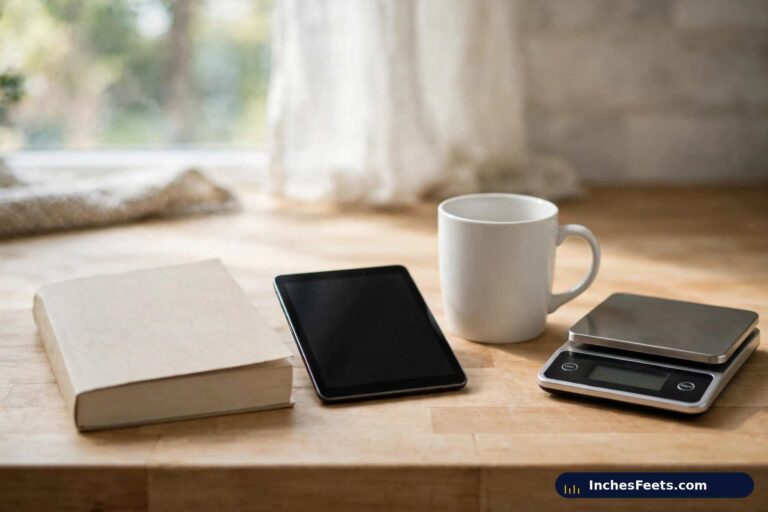
This claim fails on the manufacturer’s own size line. The small tablet the competitor has in mind is Amazon’s Fire 7 class — and the “7” is the screen diagonal, not any edge of the device. Amazon’s published size for the Fire 7 (2022) is 7.11 × 4.63 × 0.38 inches: the long edge overshoots six by more than an inch, and the short edge falls well short of it. His text claims a width of about six inches; no dimension of the device, on any axis, is six inches. Small tablets are seven-inch-class objects measured corner to corner, and six-inch ones are not among them.
Not counted: an Amazon Fire 7 (2022) measures 7.11 × 4.63 inches per the maker’s published size; no dimension is 6 inches. Corrected figures printed above.
Screwdriver (Handle + Shaft)
The competitor’s own heading gives this one away: handle plus shaft is exactly the part that is not six inches. In a screwdriver’s name, the number is the shank alone. Klein Tools’ datasheet for its 602-6 — a mainstream 6-inch screwdriver — lists Shank Length 6″ (15.2 cm) and Overall Length 10.938″ (27.8 cm). The tool in your hand is nearly eleven inches long; only the steel shaft is six. A “6-inch screwdriver” is a real product with a real six-inch part, but as an object that is six inches long, it fails by almost five inches.
Not counted: a “6-inch” screwdriver is named for its shank; Klein’s 602-6 has a 6-inch shank and a 10.938-inch overall length per the maker’s datasheet. Corrected figures printed above.
A 4×6 Photograph
The 4×6 is the default size of printed photography — Adobe’s guide to standard photo sizes calls 4 × 6 inches “perhaps the most common photo size in print,” the size that matches the 3:2 frame of the camera itself. Its long side is exactly six inches: 4 × 6 inches is 10.16 × 15.24 centimetres. One honest footnote belongs in print: the figure is the nominal standard, and some labs trim prints a hair under it — 4 × 5⅞ inches is reported — so a frame-shop print can read a fraction short. The standard the size is named for is six inches, and it is the print in every album and desk frame in the house.
Counted: on the standard print-size basis — 4 × 6 inches is a defined standard photo print size (Adobe’s standard photo sizes guide); the lab-trim variation is disclosed above.
A Personal Check
The check in a wallet checkbook is built to the bottom of an official range. The ANSI X9 check standards put a check’s length between 6.00 and 8.75 inches, and the standard personal check sits exactly at the floor: 6 inches long by 2.75 inches high, the size that check printers sell as the personal wallet format and that processing equipment is built around. Business checks are bigger (8.5 × 3.5 inches); the personal one is a six-inch object by banking standard, and there is one in most kitchen drawers.
Counted: exact — the standard personal check is 6 × 2.75 inches (the ANSI X9 check-length range begins at 6.00 in, and the personal wallet format sits at it).
A 60d Nail
Nails are sized in pennies, and the penny ladder tops out its everyday range at this page’s length: a 60d nail is 6 inches long. The correspondence is printed in every standard nail chart (Bob Vila’s, Misumi’s and Senco’s among them): 60d = 6″, a heavy spike-gauge nail used for timber, landscaping timbers and post-and-beam work. It is the rare object whose archaic name is its specification — ask a hardware store for a 60d and you are handed a nail exactly six inches long, because that is what the designation means.
Counted: exact — by the penny-size standard: a 60d nail is 6 inches long (standard nail size charts: 60d = 6 in).
A 6-Inch Round Cake Pan
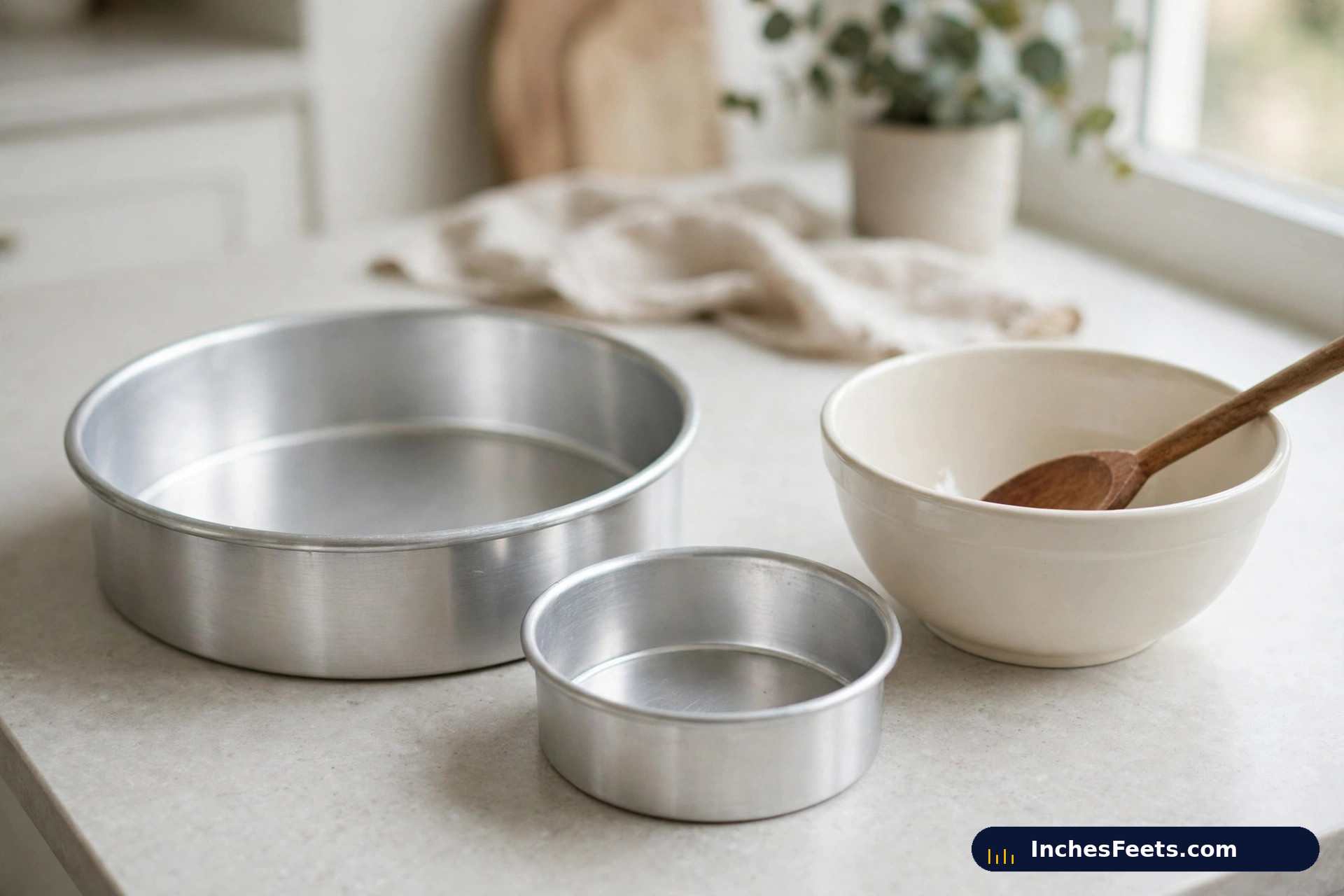
Cake pans are named by diameter, and six inches is a stocked, standard diameter. Wilton — the name on most home bakers’ pans — sells its round pans in a 6-inch size (the 6 × 2 in. and 6 × 3 in. lines), and its specification tables state Item Diameter: 6 Inches. It is the small tier of a wedding cake, the smash-cake size, the pan for a two-person layer cake — and unlike a cake, a pan is manufactured, so its six inches are the same in every kitchen that owns one.
Counted: exact — Wilton’s 6-inch round cake pan carries a maker-stated item diameter of 6 inches; 6 in is a standard pan diameter.
A Subway Tile
The classic subway tile is a defined format: 3 inches by 6 inches, the glazed ceramic rectangle first installed in New York’s subway stations in 1904 and still the traditional size tile makers and tile guides list first. Its long side is exactly six inches, and its 2:1 proportions — length exactly double the height — are the definition of the style. Modern ranges add 3×12 and 4×12 formats, but the original, the one “subway tile” means without a qualifier, is a six-inch object hanging on millions of kitchen and bathroom walls.
Counted: exact — the traditional subway tile is 3 × 6 inches by the format’s definition; its long side is 6 inches.
An Embroidery Hoop
Embroidery hoops are made in a ladder of standard sizes, and six inches is the most popular step on it — size guides call the 6-inch hoop the most commonly used size, the all-rounder for medium designs. The number is the hoop’s inner diameter, the working circle of fabric it holds: a 6-inch hoop is specified at 15.24 cm across that circle. Like the cake pan above, it is a diameter that has to be true to its fittings and patterns, and it frames a six-inch circle of work.
Counted: exact — 6 inches is a standard manufactured embroidery hoop size, specified as a 15.24 cm inner diameter in hoop size guides.
A Terracotta Plant Pot
Flower pots are named by the diameter across the top rim, and the 6-inch pot is the standard medium size on every garden-centre shelf. The class basis needs one honest disclosure: the name is a size class, not a metrology certificate — manufacturers’ own listings for 6-inch terracotta pots put the top at 6 inches (15.24 cm) across, while some marketplace listings measure 5.9 inches at the same class. The count stands on the class basis, with that spread printed here rather than rounded away: a pot sold as 6-inch is the trade’s six-inch pot, and the windowsill over your sink very likely holds one.
Counted: FLAGGED — on the standard size-class basis: 6-inch terracotta pots are specified by makers at a 6-inch top diameter (15.24 cm); individual listings measuring 5.9 in are disclosed above, and a gate fallback is held in the SEO block.

A Postcard at the USPS Maximum
Postal standards give this page an official edge. To mail at the USPS postcard rate, a card must be at least 3.5 × 5 inches and no more than 4.25 × 6 inches — the ceiling is printed in USPS’s own mailing guidance (Domestic Mail Manual standards; USPS Delivers states it as “no more than 6″ long x 4.25″”). A postcard printed to that maximum is exactly six inches long by federal specification, and the ordinary 4 × 6 card — the standard postcard size — carries the same six-inch long side a step inside the limit.
Counted: exact — at the regulatory maximum: USPS postcard standards cap a postcard at 4.25 × 6 inches, so a card at the maximum is exactly 6 inches long (the standard 4 × 6 card shares the long side).
How to Visualize 6 Inches
Start with the exact figures. Six inches is 15.24 centimetres, 152.4 millimetres, 0.1524 metres, exactly 0.5 feet or 0.1667 yards — and the table below prints them together, because at this size the centimetre figure is the one most people can check against a ruler’s other edge.
| Unit | Equivalent of 6 Inches |
|---|---|
| Inches (in) | 6 in |
| Centimeters (cm) | 15.24 cm |
| Millimeters (mm) | 152.4 mm |
| Meters (m) | 0.1524 m |
| Feet (ft) | 0.5 ft |
| Yards (yd) | 0.1667 yd |
Then picture half a ruler. Six inches is where the standard 12-inch ruler folds in half — the midpoint mark is this page’s length. It is three-fifths of 10 inches, the dinner-knife span of our ten-inch guide, and a little less than half of 13 inches, the charger-plate diameter. Or use the wallet gauge: a dollar bill is six inches plus a seventh-of-an-inch sliver, close enough to judge by eye and honest enough to say so.
6 Inches Compared With Other Lengths
Six inches sits at the useful middle of this site’s ruler. It is exactly three times two inches — the credit-card length that opens our shortest guide — and one inch more than 5 inches, the index-card length. It falls one inch short of 7 inches, the sandwich-and-smartphone length, and it is exactly three-quarters of 8 inches, the chef’s-knife span. Against 18 inches it is exactly a third. In the units of the rest of the house: it is 15.24 centimetres where 40 cm is nearly sixteen inches, and it is exactly half a foot where a foot is twelve inches.
The comparisons that stick are the manufactured ones: six inches is the long side of the card in the recipe box, the blade of the utility knife in the drawer, and the diameter of the small cake pan — three trades, one measurement.
How to Measure 6 Inches Without a Ruler
Use the index card. A 4×6 card’s long side is exactly six inches by definition, which makes it the best ruler substitute in the house — better than any body part and better than most “close enough” objects. Keep one in the kitchen drawer and one in the toolbox.
Failing that, work from known paper and plastic: a 4×6 Post-it sheet matches the card, and a personal check is six inches long by banking standard. A US dollar bill is 6.14 inches long — useful as a near gauge: six inches is the bill with a seventh of an inch held back. What not to trust: a pencil (an unsharpened #2 is about 7.5 inches), your hand span (it is a span, and a longer one than six inches), any claim that a standard ruler is six inches long (it is twelve — the small ruler is the six-inch one), and any phone app that has not been checked against a real ruler.
Conclusion
Six inches is 15.24 centimetres of everyday precision: the long side of an index card, the blade of a utility knife, a personal check, a 60d nail and the small cake pan. It is also a length surrounded by confident mistakes — a tablet with no six-inch side, a screwdriver whose name measures only its shaft, and a sandwich whose name is a trademark rather than a measurement.
Checked properly, the honest list is a practical one, and its members are already in your house: keep a 4×6 index card wherever you measure things — and a terracotta pot on the windowsill is the same length across, should the card go missing.
FAQs
What Does 6 Inches Look Like?
Half of a standard 12-inch ruler — not the length of one: a standard ruler is 12 inches, and six is its midpoint. The everyday pictures are a dollar bill (6.14 inches, a sliver longer) and the long side of a 4×6 index card, which is exact.
How Big is 6 Inches in Cm and Feet?
Exactly 15.24 centimetres and exactly 0.5 feet — half a foot. In millimetres it is 152.4 mm. One inch is defined as 2.54 centimetres, so six inches is 6 × 2.54 = 15.24 cm, with no rounding involved.
Can I Measure 6 inches Without a Ruler?
Yes — a 4×6 index card’s long side is exactly 6 inches, and a personal check matches it. A dollar bill works as a near gauge at 6.14 inches. A paperclip is a poor one: a standard clip is about 1⅜ inches long, not the one inch sometimes claimed.