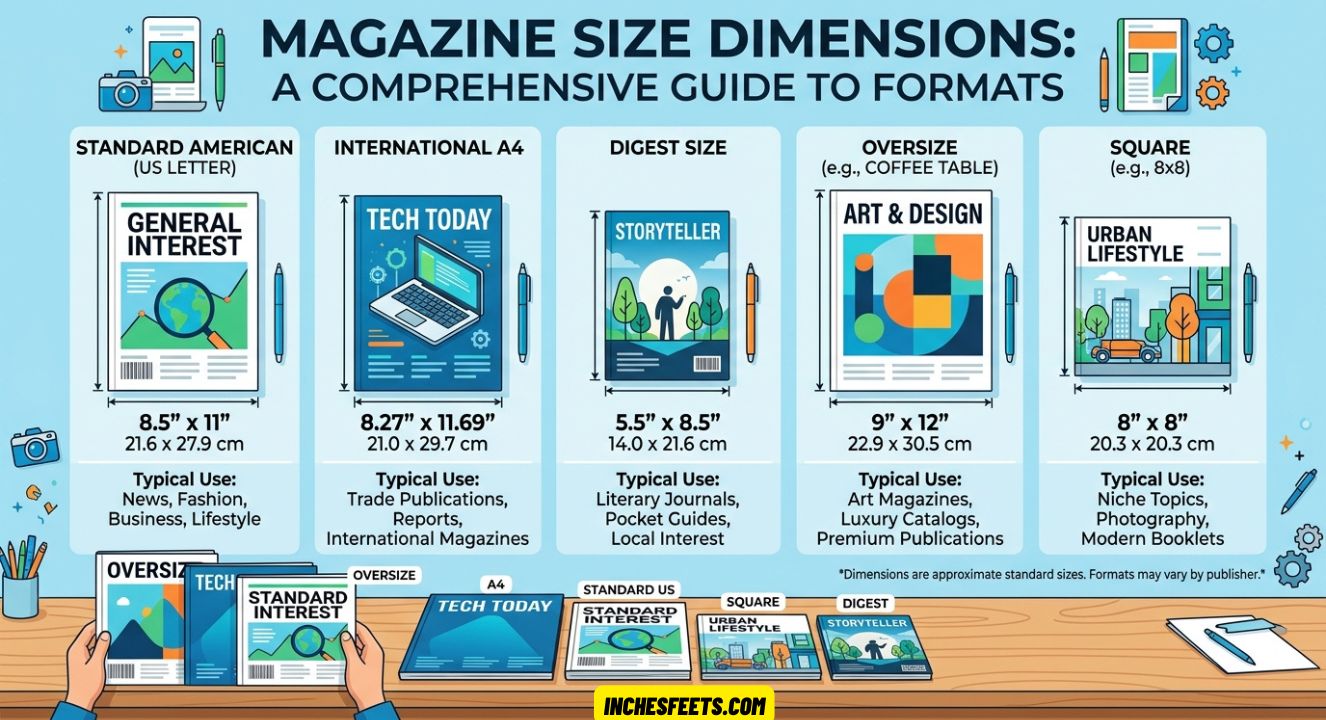
Magazine Size Dimensions: Magazine Size and Formats Guide for Print and Digital Publishing
Magazine Size Dimensions means the width and height of a magazine page. It also includes the trim size, layout space, and margins used in printing. These measurements help designers create clear and balanced magazine pages.
The size of a magazine changes how readers see and enjoy the content. A good size makes photos look better and text easier to read. The right dimensions also help magazines look professional and attractive.
Publishers choose Magazine Size Dimensions based on design, printing needs, and reader comfort. Common formats include letter size, digest size, and tabloid size. These sizes help magazines stay organized and easy to produce.
What Are Magazine Dimensions?
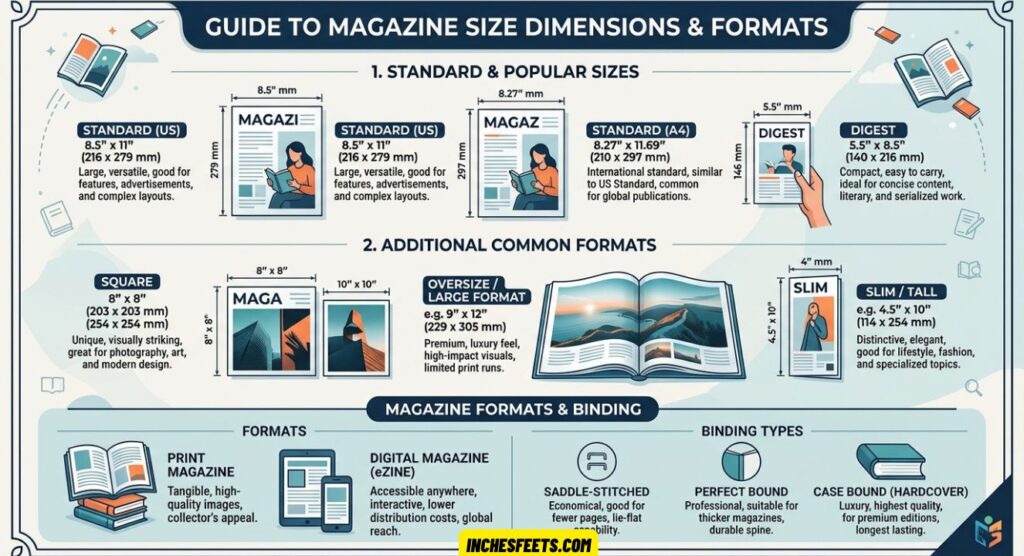
The term magazine dimensions refers to the physical width and height of a magazine page after it has been printed and trimmed. These measurements define the final magazine page dimensions that readers see when holding the magazine. Designers typically start with the intended magazine layout size, then add bleed and margin areas to prepare the document for printing.
The final size after trimming is called the magazine trim size, which represents the finished magazine cover size and interior page dimensions. During production, printers include extra space around the edges known as bleed. This ensures images or background colors extend slightly beyond the trim edge so no white borders appear after cutting.
The difference between layout size, bleed, and trim size is extremely important in publishing. Designers must consider magazine bleed and margin size carefully because improper margins can cut off text or images during trimming. In professional publishing, a safe margin of about 0.25 inches is typically maintained to protect important content.
Magazine dimensions are also closely connected to magazine page resolution and magazine print specifications. Print magazines require high resolution images and layouts prepared for commercial printing. Understanding these technical requirements ensures a smooth workflow from design to finished publication.
Standard Magazine Dimensions
Most magazines in the United States follow common magazine sizes that work well with printing machines and distribution systems. These standard formats allow publishers to produce magazines efficiently while maintaining consistent visual quality.
The following table shows the most widely used standard magazine dimensions in the publishing industry.
| Magazine Format | Dimensions (Inches) | Dimensions (Millimeters) | Typical Use |
| Letter Size | 8.5 × 11 | 216 × 279 | Consumer magazines |
| Digest Size | 5.5 × 8.5 | 140 × 216 | Portable magazines |
| Tabloid Size | 11 × 17 | 279 × 432 | Entertainment and large layouts |
| Square Format | 8 × 8 or 8.5 × 8.5 | 203 × 203 or 216 × 216 | Art and photography |
| Oversized | 9 × 12 or larger | 229 × 305 | Fashion and luxury publications |
These print magazine dimensions are considered industry standards because they balance design flexibility with printing efficiency. Publishers often select one of these formats depending on the type of content they want to showcase.
Letter Size Magazine (8.5 × 11 inches)
The 8.5 × 11 magazine size is the most widely used format in American publishing. This dimension matches standard office paper, which makes it a convenient and cost-effective option for printers. Because of its popularity, it is often considered the default standard magazine size.
Magazines using this format benefit from a balanced page that provides enough space for images, articles, and advertisements. Designers find the magazine page layout size easy to work with because it supports multiple column layouts, large photographs, and flexible typography.
A typical magazine layout dimensions structure for this size includes three or four columns per page. This layout structure improves readability and creates a professional editorial style that readers are familiar with.
Publishers prefer this format because it supports both short and long articles. It also works well for advertisements since the page area provides enough room for full-page promotional designs.
A typical specification table for this format looks like this:
| Feature | Measurement |
| Page Size | 8.5 × 11 inches |
| Bleed Area | 0.125 inches |
| Safe Margin | 0.25 inches |
| Print Resolution | 300 DPI |
This layout ensures high quality magazine design dimensions and professional print output.
Digest Size Magazine (5.5 × 8.5 inches)
The digest magazine size measures 5.5 × 8.5 inches and offers a compact reading format. Many readers prefer this smaller magazine printing size because it is lightweight and easy to carry in bags or backpacks.
Digest magazines are commonly used for educational publications, hobby magazines, and pocket reading materials. The smaller magazine page dimensions also reduce printing costs because less paper is required.
Although this format provides less space than a standard letter magazine, designers can still create engaging layouts using two-column structures. The reduced magazine layout size encourages concise writing and more focused content.
Many publishers choose this format when portability is important. A magazine designed for travel readers or commuters benefits greatly from this smaller format.
Tabloid Size Magazine (11 × 17 inches)
The tabloid magazine dimensions measure 11 × 17 inches, making this one of the largest common magazine formats. This size creates a dramatic visual effect that works especially well for magazines focused on photography, entertainment, and large editorial designs.
Because of the larger magazine page size, designers can include full-spread images, large headlines, and creative typography. This format provides much more visual space than smaller magazines.
Large magazine layout dimensions like this are frequently used by entertainment publications and art magazines because the pages provide room for bold creative layouts.
However, tabloid formats also come with higher printing costs and may feel less portable for readers. For this reason, publishers carefully balance the advantages of large visuals with practical production considerations.
See Also : 10 Inches: 16 Things with Pictures That Are 10 Inches Long
Magazine Binding Types and Their Impact on Dimensions
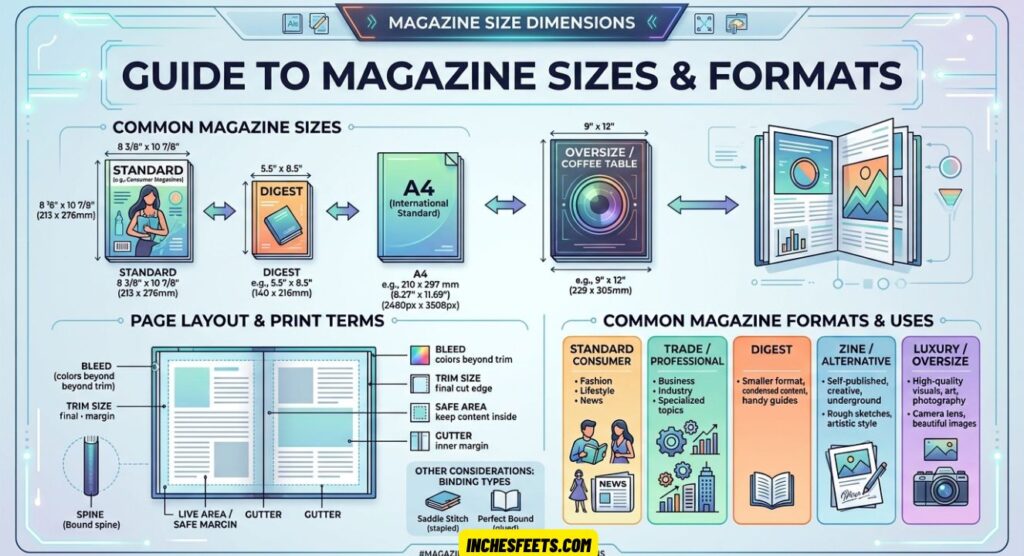
Different magazine binding types influence the final appearance, durability, and thickness of a magazine. The choice of binding also affects how pages open and how much content the magazine can include.
Binding determines whether the magazine can lay flat, how the spine appears, and how many pages it can hold. Understanding the relationship between binding and print magazine dimensions is essential for professional publishing.
Saddle Stitch Binding
Saddle stitch magazine size formats use metal staples placed along the folded spine of the magazine. This method is one of the most economical binding techniques used in magazine production.
Saddle stitching works best for magazines with smaller page counts, typically between 8 and 92 pages. The technique allows the magazine to open easily, which improves readability.
Because this method relies on folded pages, designers must carefully plan magazine trim size and page order to ensure correct alignment during printing.
Perfect Binding
Magazines with perfect bound magazine dimensions use a glue-based spine similar to paperback books. This binding creates a square edge that looks clean and professional on shelves.
Perfect binding supports larger magazines with many pages. This makes it ideal for premium publications, catalog-style magazines, and high-quality editorial projects.
Publishers often select perfect binding when they want a durable magazine with a visible spine that can display the publication title.
Wire-O Binding
Wire-O binding uses a metal wire coil to hold the pages together. This binding allows pages to rotate completely, making it ideal for reference publications.
Magazines using this binding style are often instructional guides, planners, or manuals that readers need to keep open while using them.
Although effective, this binding increases production costs and changes the magazine layout dimensions because extra margin space must be added for the wire holes.
Specialized Magazine Sizes and Formats
Not all magazines follow traditional formats. Some publishers create unique sizes to stand out in the market or match the style of their content. These specialized magazine size and format variations help brands develop a distinctive identity.
Special formats also allow designers to experiment with unique layouts and visual storytelling techniques.
Pocket Size Magazines (3.5 × 5 inches to 4 × 6 inches)
The pocket magazine size is extremely small and portable. These magazines typically measure between 3.5 × 5 inches and 4 × 6 inches.
Pocket magazines are often used for travel guides, mini magazines, or informational booklets. Because they are easy to carry, they appeal to readers who want quick access to information while traveling.
Although the magazine page size is small, creative layout design can still present information clearly.
Square Format Magazines (8 × 8 inches or 8.5 × 8.5 inches)
The square magazine format creates a balanced and visually appealing layout. Designers often choose this shape for art, photography, and design publications because it highlights images beautifully.
Square pages offer a unique magazine layout size that differs from traditional rectangular formats. The symmetry of the design allows images to dominate the page while maintaining a clean layout.
This format has become increasingly popular among independent publishers and creative studios.
See Also : What Are Standard Garage Door Dimensions? Complete U.S. Size Guide
Oversized Magazines (9 × 12 inches and larger)
The oversized magazine dimensions category includes magazines measuring 9 × 12 inches or larger. These formats create a luxurious feel that suits high-end publications.
Fashion magazines and architecture magazines often choose this size because it showcases large photographs and detailed visuals.
Although oversized magazines provide stunning visuals, they also require higher printing budgets and specialized distribution methods.
Digital vs. Print Magazine Dimensions
Modern publishing includes both physical magazines and digital editions. The difference between print vs digital magazine size lies mainly in measurement units and design requirements.
Print magazines use inches and millimeters for print magazine dimensions, while digital publications use pixels for digital magazine dimensions. Designers must adapt layouts to ensure they display correctly on screens.
Digital magazines also include interactive features such as video, hyperlinks, and animations that are impossible in printed formats.
Print Magazine Specifications
Professional printing requires strict magazine print specifications to ensure high quality results. Print magazines usually require 300 DPI resolution and CMYK color mode.
The typical production settings include proper magazine bleed and margin size to prevent cutting errors during trimming.
A typical specification table appears below.
| Specification | Standard Value |
| Resolution | 300 DPI |
| Color Mode | CMYK |
| Bleed | 0.125 inches |
| Safe Margin | 0.25 inches |
These settings guarantee high quality magazine page resolution and consistent printing results.
Digital Magazine Dimensions
Digital publications rely on screen-based digital magazine dimensions measured in pixels. Unlike print magazines, digital layouts must adapt to different screen sizes such as smartphones, tablets, and desktop monitors.
The following table shows common digital sizes used for online magazines.
| Device | Dimensions | Resolution |
| Desktop | 1024 × 1366 px | 72–150 PPI |
| Tablet | 1536 × 2048 px | 150 PPI |
| Mobile | 1080 × 1920 px | 72–150 PPI |
These measurements help designers create responsive layouts that display correctly across different devices.
History of Magazine Dimensions in Publishing
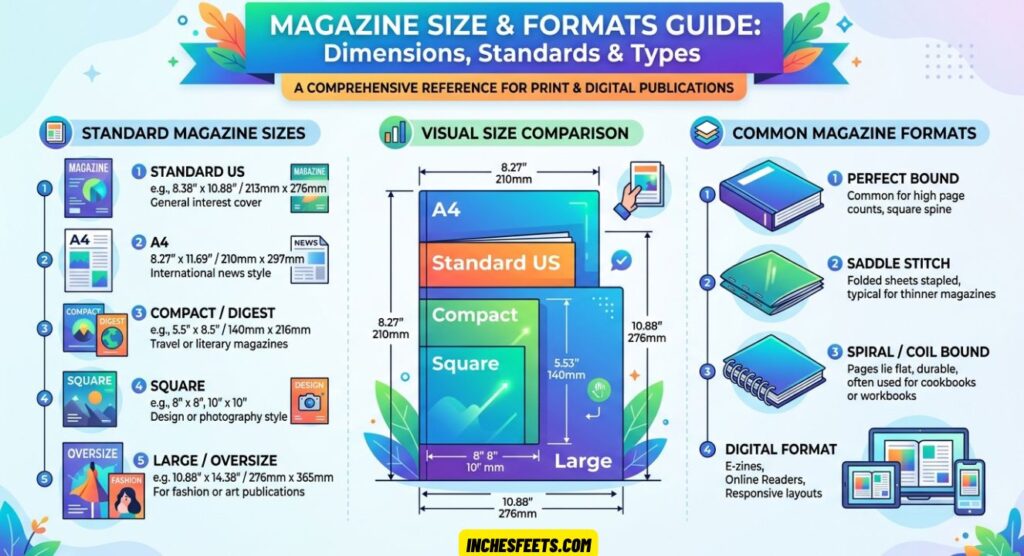
The evolution of magazine dimensions reflects the growth of the printing industry and changing reader preferences. Early magazines in the 18th and 19th centuries were printed in book-like sizes because printing presses were designed mainly for books. Over time, publishers began experimenting with different magazine size and format options to make publications more visually appealing and easier to distribute.
During the 20th century, standardized printing methods introduced widely accepted standard magazine dimensions. Publishers realized that consistent magazine page size reduced production costs and simplified advertising layouts. As printing technology improved, new common magazine sizes such as digest and tabloid formats became popular in many publishing markets.
How Magazine Dimensions Affect Reader Experience
The choice of magazine dimensions significantly affects how comfortable a magazine feels while reading. A well-balanced magazine layout size allows readers to focus on the content without feeling overwhelmed by text or images. If the magazine page dimensions are too large, readers may find the publication difficult to handle for long periods.
Smaller magazines provide better portability, while larger formats highlight photography and design elements. Publishers carefully analyze their audience before choosing the best professional magazine size. A thoughtful balance between readability, portability, and visual appeal ensures the final publication provides a pleasant and engaging reading experience.
Importance of Magazine Trim Size in Printing
In magazine production, the magazine trim size represents the final dimensions of the printed magazine after excess paper is cut during finishing. Designers must carefully plan layouts according to the exact magazine printing size so that text and images remain perfectly aligned after trimming.
Professional printers also consider magazine bleed and margin size during layout preparation. Bleed areas allow images or colors to extend beyond the trim edge, preventing unwanted white borders. Correct trimming ensures the final magazine cover size and interior pages look clean and professional.
Magazine Layout Design and Page Structure
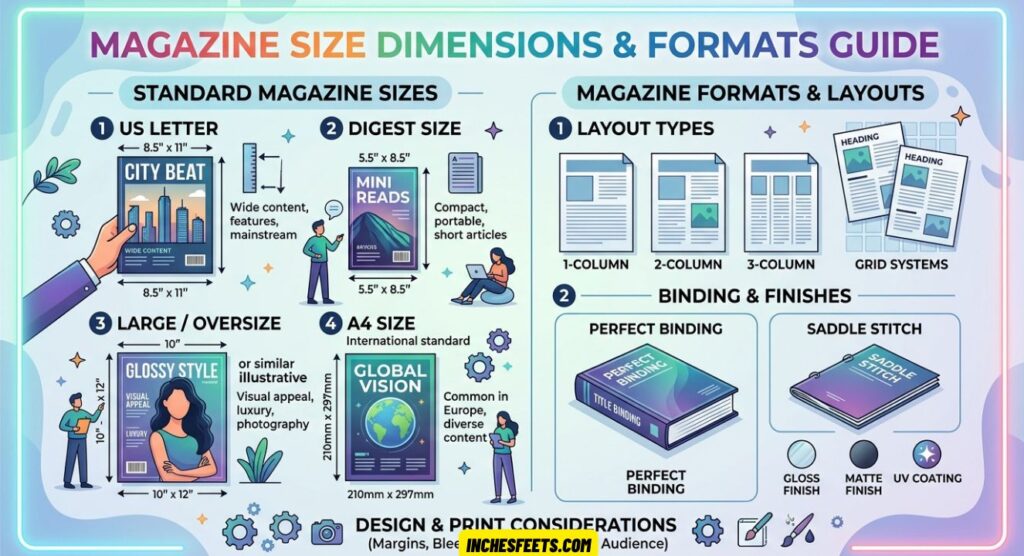
A well-designed magazine begins with the correct magazine layout dimensions and a clear grid structure. Designers often divide the magazine page layout size into columns to maintain consistent spacing between text and images. This layout approach helps create visually balanced pages that guide readers smoothly through the content.
Typography, image placement, and spacing all depend on the chosen magazine design dimensions. Larger formats provide room for bold visuals, while smaller layouts encourage concise storytelling. Designers must carefully adapt their magazine layout size to match the chosen magazine format and editorial style.
Advertising and Magazine Page Size
Advertising plays a crucial role in magazine revenue, which makes magazine page size an important factor for marketing teams. Advertisers usually purchase space based on specific magazine page dimensions, such as full-page, half-page, or double-page spreads.
Larger magazine layout dimensions allow creative advertising designs that capture reader attention. However, smaller formats may require more compact advertising layouts. By selecting appropriate standard magazine dimensions, publishers can create consistent advertising placements while maintaining a balanced editorial design.
See Also : How Long Until 3 PM? Calculate the Exact Time Left Until 3:00 PM Today
Magazine Cover Design and Dimensions
The cover of a magazine is the most important visual element because it attracts readers at first glance. Designers must consider the exact magazine cover size to ensure headlines, images, and branding elements appear clear and visually balanced.
A strong cover design also depends on accurate magazine page resolution and proper alignment with the final magazine trim size. High-quality images and bold typography help create a professional appearance that encourages readers to pick up the magazine.
Paper Quality and Magazine Printing Size
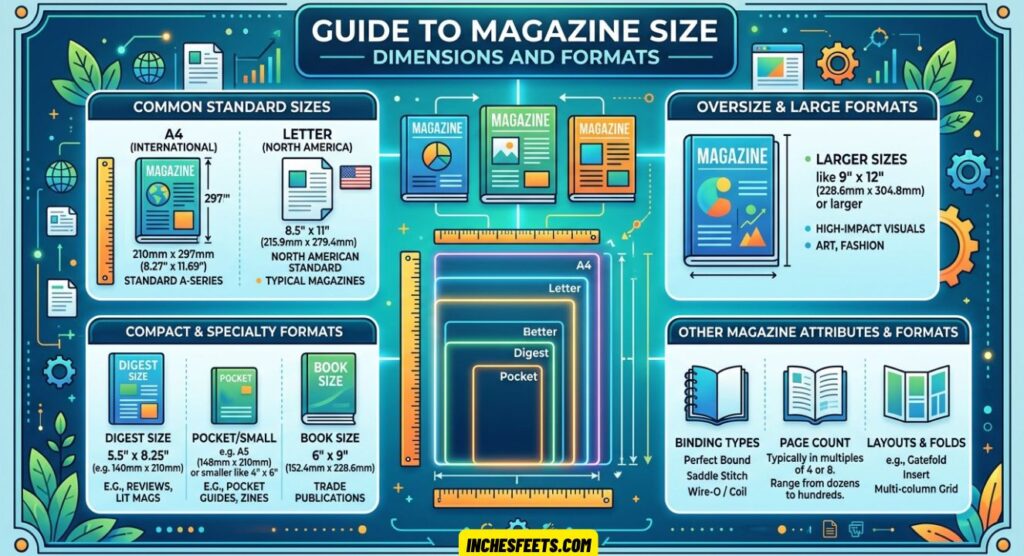
Paper selection plays a major role in determining the final thickness and feel of a magazine. Publishers often choose paper weights based on the intended magazine printing size and total page count.
Thicker paper enhances durability and improves the visual quality of photographs. At the same time, the paper must work efficiently with the selected print magazine dimensions to prevent excessive production costs. Proper paper selection ensures a durable and visually appealing publication.
Future Trends in Magazine Dimensions
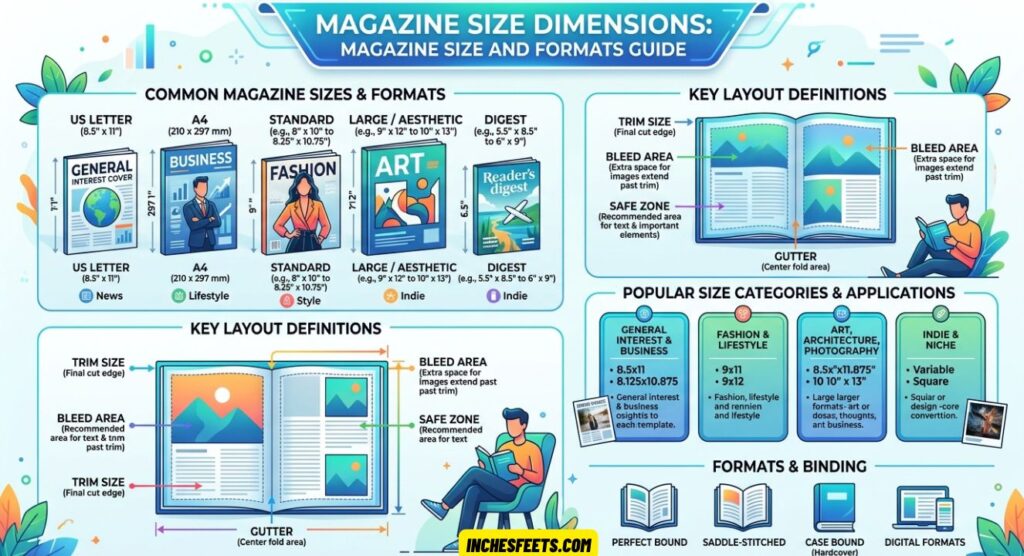
As publishing continues to evolve, designers are experimenting with new magazine size and format ideas that combine traditional printing with modern digital design. Unique magazine layout size variations are increasingly used to help publications stand out in competitive markets.
Technology also influences the development of digital magazine dimensions, allowing content to adapt to various screen sizes. While print magazines maintain their classic formats, digital publishing is creating new possibilities for flexible and interactive magazine layouts.
FAQs
What is the standard size of magazines?
The most common standard magazine size in the United States is 8.5 × 11 inches (216 × 279 mm).
This magazine printing size is popular because it provides enough space for images, text, and advertisements.
Are magazines A3 or A4?
Most magazines are not exactly A3 or A4, but many are close to A4-sized magazine dimensions.
Some large publications may use bigger formats similar to A3 for wider magazine page dimensions.
Is magazine standard A4?
In many countries, magazines are printed close to A4 magazine size (8.27 × 11.69 inches).
However, many U.S. publishers use the 8.5 × 11 inch professional magazine size instead.
What size is a digital magazine?
Common digital magazine dimensions include 1024 × 1366 pixels for desktop and 1536 × 2048 pixels for tablets.
These sizes ensure proper magazine page resolution and readability across digital devices.
Conclusion
Magazine Size Dimensions help publishers design magazines that look clear, organized, and professional. The right size allows designers to place text, images, and ads in a neat layout. Many magazines use common formats like 8.5 × 11 inches, digest size, or larger tabloid pages.
Good Magazine Size Dimensions also improve the reading experience. A well-chosen size makes the magazine easy to hold and simple to read. With the right dimensions, designers can create magazines that look attractive and work well for readers.