How Much Is 300 Grams? 15 Things That Weigh 300 Grams
If you are wondering how much is 300 g in everyday terms, here is the direct answer: 300 grams is exactly 0.661387 pounds — 10.582 ounces, or 0.3 kilograms. In the real world it is the weight of a professional tennis racket before its strings, a jar of peanut butter’s contents, or a two-week-old kitten on a charity’s ageing chart.
Three hundred grams is a hand-friendly weight: heavy enough to feel substantial in one palm, light enough to carry all day without noticing. It is also a weight the internet describes very loosely — several of the most repeated “300 gram” examples turn out, on checking, to be out by a third or more.
This guide gives you 15 things that genuinely weigh 300 grams, each checked against a maker’s specification, an official standard or reference data. Just as usefully, it keeps the popular claims that fail the check — the large apple, the cup of rice, the hamster — and prints their real weights beside them.
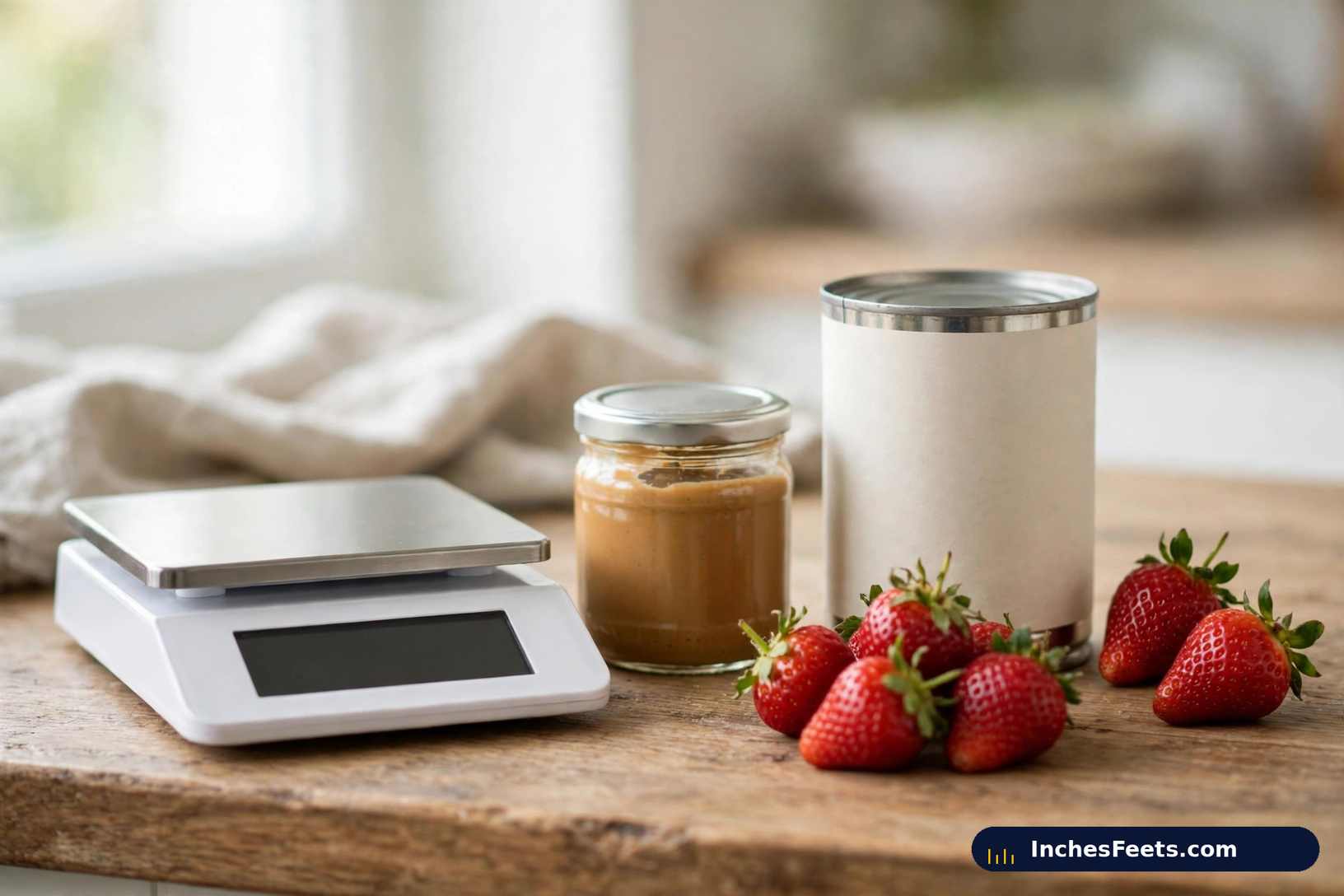
How Much Is 300 grams?
Three hundred grams is a mass, not a mystery: it is 0.3 kilograms, and converted exactly it comes to 0.661387 pounds, 10.582 ounces or 4,629.71 grains. Two claims often attached to it need correcting straight away. It is not, as the competitor’s intro puts it, the weight of “a large apple” — the USDA’s large apple is 223 grams, more than a quarter lighter (it has its own corrected section below). And it is not a cup of uncooked rice either: a US cup of uncooked long-grain rice is 185 grams on the USDA’s own database, so 300 grams of rice is nearer one and two-thirds cups.
The full conversion table sits below, printed exactly. For the things themselves — the racket, the microphone, the kitten and the punnet of strawberries that honestly land on this weight — read on.
| Unit | Equivalent of 300 Grams |
|---|---|
| Kilograms (kg) | 0.3 kg |
| Pounds (lb) | 0.661387 lb |
| Ounces (oz) | 10.582 oz |
| Grains | 4,629.71 grains |
| Milligrams (mg) | 300,000 mg |
| Metric tonnes (t) | 0.0003 t |
| Stones (st) | 0.04724 st |
300 Grams at a Glance: The Verified List
- A can of soup (Campbell’s condensed cans are labelled 305 g net)
- A block of cheese (Cathedral City sells named 300 g blocks)
- A paperback book (publisher-listed paperbacks at exactly 300 g)
- A jar of peanut butter, small size (Sun-Pat’s 300 g jar, net contents)
- 300 millilitres of water (exactly 300 g by definition)
- A Babolat Pure Drive tennis racket (300 g unstrung, maker’s spec)
- A 300 g punnet of strawberries (Tesco Finest, labelled 300 g)
- A Nintendo Switch console (about 297 g, Nintendo’s own figure)
- A Shure SM58 microphone (298 g net, Shure’s specification)
- A Sony RX100 VII camera (about 302 g with battery and card)
- A box of Honey Nut Cheerios, 10.8 oz (306 g net contents)
- An adult human heart (300 g sits inside the published anatomy bands)
- Six medium eggs (297.7 g on the USDA egg-class minimums)
- A men’s running shoe (Nike Pegasus 41, about 297 g in a US 10)
- A two-week-old kitten (exactly 300 g on the Cats Protection chart)
Every item on this list is checked in its own section below. The claims that did not survive checking stay in the article too, with their real weights printed beside them — knowing that a cup of rice is 185 grams, not 300, is nearly as useful as the list itself.
Things That Weigh 300 grams
A Can Of Soup
The competitor gives a standard can of soup “400 to 500 grams” — that is a gross figure well above this page, and it is not how soup is actually sold. The honest basis is the labelled net contents: Campbell’s condensed soups, the standard small can of the category, are labelled NET WT 10.75 OZ (305 g) — the soup itself, which is what the shopper is buying, sits almost exactly on this page’s weight. The filled can on a kitchen scale reads higher, around 350 g once the steel is counted, and that difference is printed here rather than smoothed over.
Counted: FLAGGED — on the labelled net-contents basis: Campbell’s condensed can, 10.75 oz = 305 g net (+1.7%, disclosed); the filled can’s gross weight including the can itself is higher, as printed above.
A Large Apple
This one fails on the official data. The USDA’s FoodData Central puts a large apple at 223 grams, and the FDA’s reference amount for a large apple is 242 grams — both a long way under 300. Even the packing trade’s count sizes do not rescue the claim: in the US apple count system, a very large 56-count apple runs about 324 grams and a 64-count about 284 grams, so “a large apple” as shoppers meet it is a 220–240 gram fruit. A 300 gram apple exists only as an unusually big individual specimen, not as the standard the heading describes.
Not counted: a standard large apple weighs 223 g (USDA) to 242 g (FDA reference). Corrected figures printed above.
A Block Of Cheese
The competitor’s range — “200 to 500 grams” — is not a size, but this heading can be rescued by named products, because 300 g is a real retail block size. ASDA lists Cathedral City cheddar blocks at exactly 300 g, including its High Protein Half Fat Mature Cheddar 300g and its Naturally Smoked Cheddar Cheese 300g, and Tesco’s Finest vintage cheddar is likewise sold as a 300 g block. A named 300 g block of cheddar is, in other words, a standard supermarket object — the claim survives only once it is pinned to the products that actually carry the weight.
Counted: exact — on the labelled retail basis: named 300 g cheddar blocks (Cathedral City lines at ASDA; Tesco Finest vintage cheddar 300 g).
A Paperback Book
Here too the competitor prints a range — “200 to 400 grams” — and here too named editions land exactly on the figure. Publisher listings record paperbacks at an item weight of exactly 300 grams again and again: Penguin’s paperback of Women Without Men (128 pages) is listed at 300 grams, and Seagull Books’ Green-Eyed Thieves (266 pages) is listed at 300 grams, among many others. A mid-length paperback is therefore a genuine 300 gram object — but it is the named editions that prove it, not the vague claim that paperbacks in general weigh this much.
Counted: exact — on the publisher-listed basis: named paperback editions listed by their publishers at an item weight of exactly 300 g.
A Cup Of Uncooked Rice
This is the competitor’s clearest numerical error. The USDA’s FoodData Central gives one US cup of uncooked long-grain white rice as 185 grams — a little over three-fifths of this page’s weight. Three hundred grams of uncooked rice is about 1.6 cups, a family-sized portion, not the single cup the heading describes. The confusion is understandable — a cup of cooked rice is mostly water and weighs more — but as printed, the claim is wrong by 115 grams.
Not counted: one cup of uncooked long-grain rice weighs 185 g (USDA FoodData Central). Corrected figure printed above.
A Hamster
No pet hamster reaches this page’s weight. The Merck Veterinary Manual puts an adult Syrian hamster — the largest common pet species — at 110 to 140 grams, and even the most generous pet-care sources cap Syrians around 200–225 grams; dwarf species run 20 to 50 grams. The competitor’s own text concedes the point, giving hamsters at “100 to 250 grams” and Syrians at up to 180 grams — every figure in his own section falls short of the heading it sits under. A 300 gram hamster would be, quite literally, off the charts for the animal’s health.
Not counted: adult Syrian hamsters weigh 110–140 g (Merck Veterinary Manual); no pet hamster species reaches 300 g. Corrected figures printed above.
A Jar Of Peanut Butter (Small Size)
The competitor says a small jar “typically weighs around 340 grams,” which misses a standard product that sits exactly here. Sun-Pat sells its smooth and crunchy peanut butter in a 300 g jar — ASDA’s listing states the net content plainly: 300 grams. The count is for the peanut butter itself: the glass jar adds well over 100 grams more on a scale, so a full jar in the hand is a 400-plus-gram object whose contents are exactly this page’s weight. That is the same net-contents basis as the soup can above, and it is disclosed the same way.
Counted: exact — on the labelled net-contents basis: Sun-Pat peanut butter, sold in a jar with net contents of exactly 300 g; the glass jar’s own weight is additional and is disclosed above.
A Bottle Of Shampoo (Medium Size)
“Medium size” is not a standard, and shampoo proves it. The competitor’s own range runs 300 to 500 grams gross — a 200-gram spread that can be made to fit almost any bottle by choosing the fill and the plastic. No named, standard medium bottle could be verified at 300 grams gross: fill volumes in the class run from about 250 to 400 ml, the liquid alone therefore spans this page’s weight and well past it, and the bottle adds more. A range that wide is not an example; it is a guess with a heading.
Not counted: no standard medium shampoo bottle verifies at 300 g; the competitor’s own 300–500 g gross range is not a size. Corrected reasoning printed above.
A Bunch Of Bananas (2–3 Medium Bananas)
Bananas fail both ways the claim can be read. The USDA’s peeled weights are 101 grams for a small banana, 118 grams for a medium and 136 grams for a large, and the USDA puts the peel at about 36 percent of the whole fruit — so a whole medium banana in its skin is about 184 grams, and two of them are about 368 grams, well over this page. Peeled, two mediums are 236 grams and three are 354 grams; the only combination that touches 300 is three small bananas peeled (303 g) — and no bunch is sold or weighed peeled. There is no standard bunch of two to three medium bananas that lands on 300 grams.
Not counted: two medium bananas weigh about 368 g in their skins (about 236 g peeled); no standard bunch lands on 300 g. Corrected figures printed above.
A Coffee Mug Filled With Liquid
This heading refutes itself with its own arithmetic. The competitor states that a standard mug holds about 240 millilitres of liquid — 240 grams of water — and a typical ceramic mug weighs 250 to 350 grams empty. Filled, the object in your hand is therefore about 490 to 590 grams, roughly double this page’s weight. His printed range of “300 to 500 grams” only reaches its bottom end if the mug is a featherweight and barely filled. A small espresso cup filled to the brim can approach 300 grams; a coffee mug cannot.
Not counted: a filled standard mug totals about 490–590 g (240 g of liquid plus a 250–350 g ceramic mug, on the competitor’s own figures). Corrected arithmetic printed above.
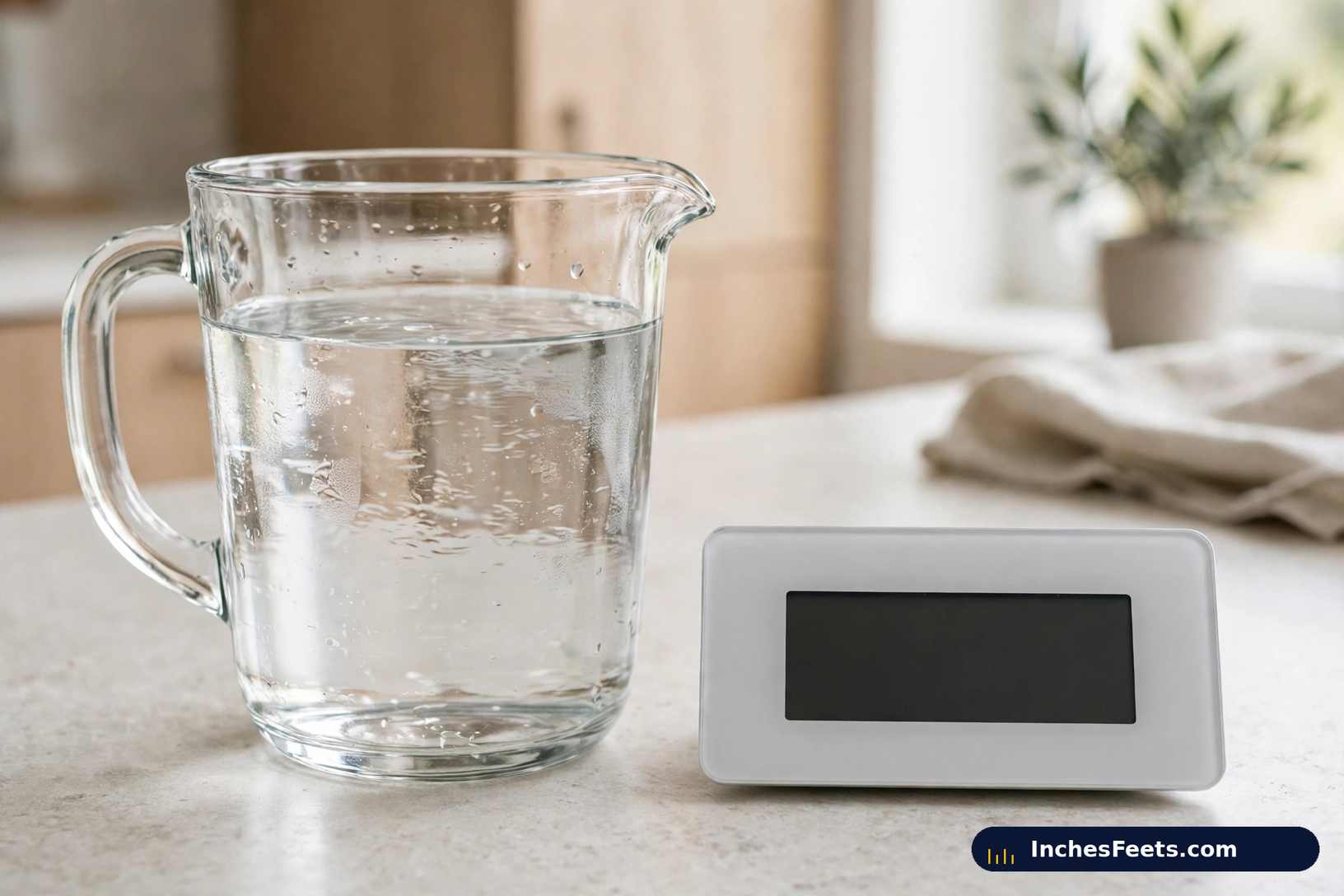
300 Millilitres of Water
Water is the anchor every other weight on this page quietly depends on, because the gram was built around it: one millilitre of water weighs one gram. So 300 millilitres of water — a tall glass, filled — is exactly 300 grams of water, no estimation involved. The glass itself adds its own weight on top, and the honest way to state it is the same as on our kilogram pages: the water is exactly this page’s weight, and the vessel is the packaging.
Counted: exact — by definition (1 millilitre of water = 1 g); the glass’s own weight is disclosed above.
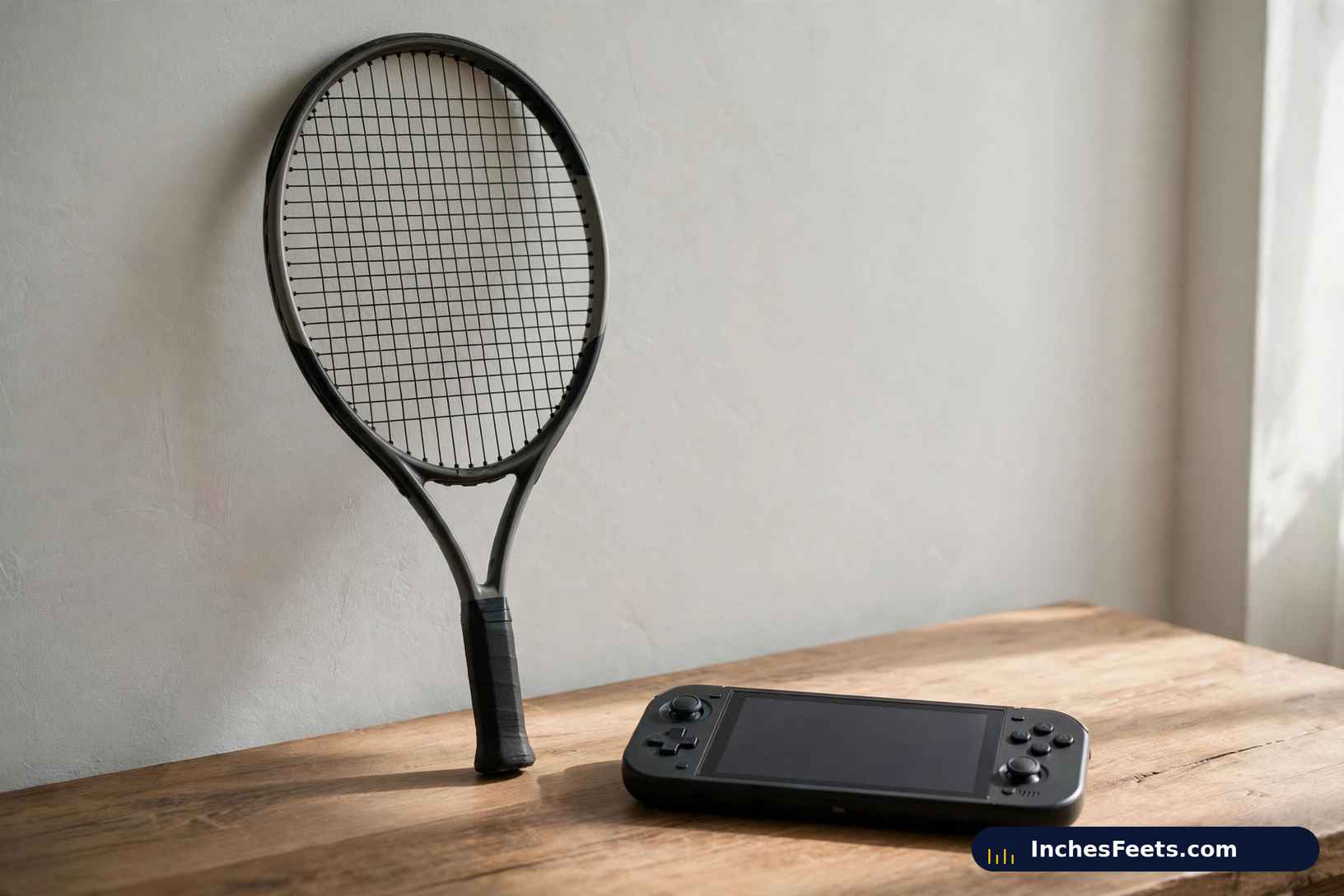
A Babolat Pure Drive Tennis Racket
Performance tennis rackets are sold by their unstrung weight, and 300 grams is the classic player’s-frame figure. Babolat’s own specification for the Pure Drive — one of the best-selling rackets in the world — lists its weight (unstrung) at 300 g ± 7 g. Strung, with about 18 grams of string in the frame, it plays at roughly 318 grams, and that difference is printed here rather than hidden: the manufacturer’s 300 gram figure is the unstrung spec, and it is exact.
Counted: exact — on the maker’s unstrung specification: Babolat Pure Drive, weight (unstrung) 300 g ± 7 g per Babolat; strung weight about 318 g, disclosed above.
A 300 g Punnet of Strawberries
Soft fruit is sold by labelled pack weight, and 300 g is a standard premium punnet size. Tesco’s Finest strawberries are listed at tesco.com with net contents of “300g ℮” — the ℮ mark is the standard e-mark guaranteeing the pack’s contents average the labelled weight. A punnet of strawberries is therefore exactly this page’s weight on the same labelled basis as the soup and the peanut butter: the fruit is 300 grams; the thin plastic punnet adds a few grams more.
Counted: exact — on the labelled pack basis: Tesco Finest Strawberries 300G, net contents 300 g per the retailer’s own listing (disclosed).
A Nintendo Switch Console
Nintendo’s own specifications put the original Switch console at approximately 297 grams — the tablet-like console on its own, without controllers. That is within a gram-weight of this page for practical purposes, and the exact figure is printed rather than rounded up: 297 grams, one percent under. The disclosure matters, because the same spec sheet lists the console at about 398 grams with the two Joy-Con controllers attached — pick it up as a handheld and it is a 400-gram object; the 300 gram figure belongs to the bare console.
Counted: FLAGGED — on the maker’s console-only specification: Nintendo Switch, approximately 297 g console only (−1.0%, disclosed); about 398 g with Joy-Con attached, also disclosed above.
A Shure SM58 Microphone
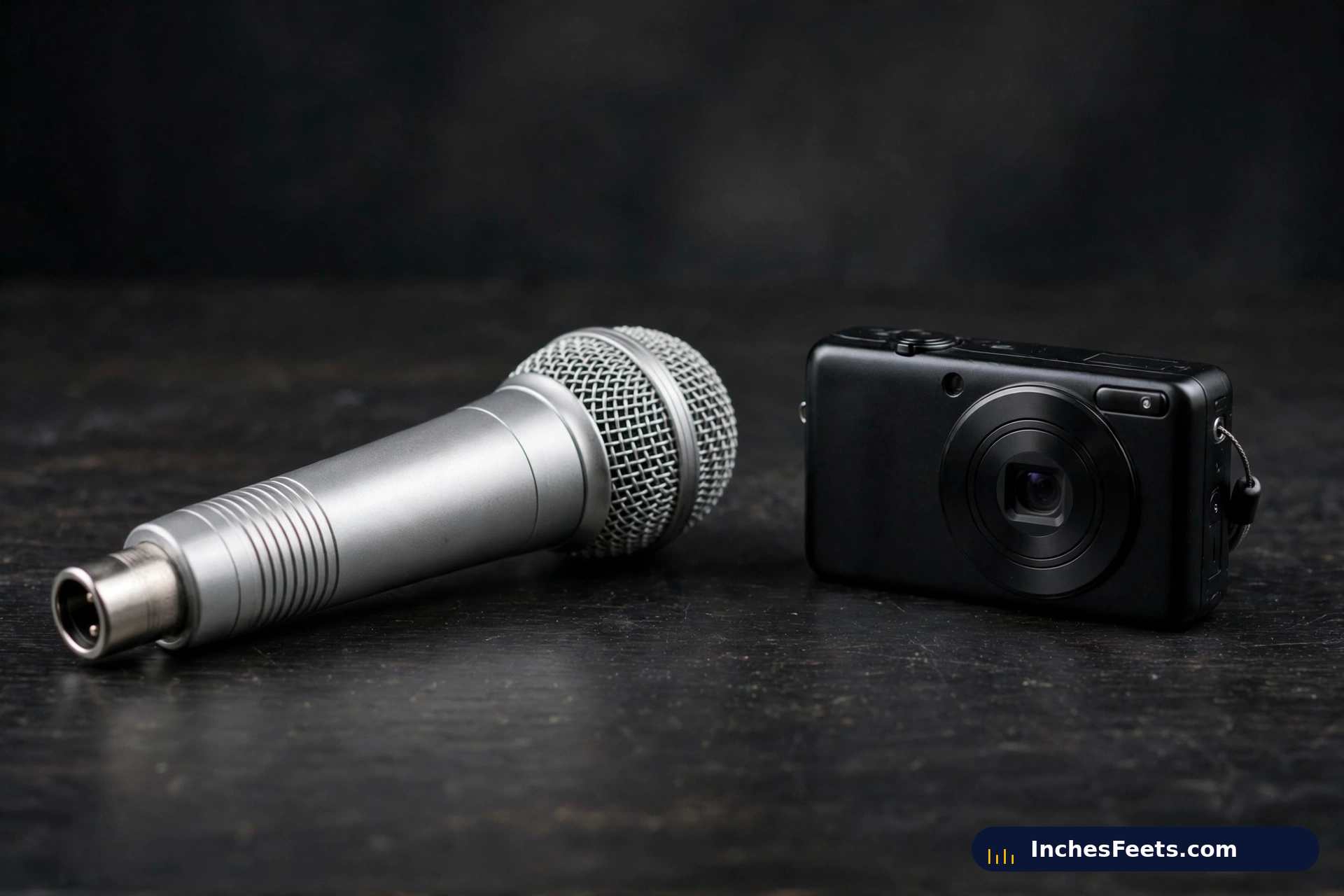
The world’s most common vocal microphone is also one of this page’s cleanest counts. Shure’s specification for the SM58 lists its net weight at 298 grams — two grams under the figure, on the manufacturer’s own sheet. It is the microphone in almost every live venue and rehearsal room on earth, and holding one is the easiest way to feel this weight: a dense metal cylinder that sits in the hand like a small torch.
Counted: FLAGGED — on the maker’s specification: Shure SM58, net weight 298 g (−0.7%, disclosed).
A Sony RX100 VII Camera
Premium compact cameras cluster right on this weight. Sony’s specification for the RX100 VII lists it at approximately 302 grams including its battery and memory card — the working weight, as you would actually carry it — and 275 grams for the body alone. The ready-to-shoot figure is the honest one, and it sits two grams over this page’s weight, disclosed rather than rounded away.
Counted: FLAGGED — on the maker’s working-weight specification: Sony RX100 VII, approximately 302 g including battery and memory card (+0.7%, disclosed); body only 275 g.
A Box of Honey Nut Cheerios (10.8 oz)
American cereal boxes are labelled in ounces, and one standard size converts almost exactly here. General Mills’ Honey Nut Cheerios comes in a 10.8 oz box — confirmed across major grocery listings — and 10.8 ounces of net contents converts to 306.2 grams. The count stands on the labelled contents, like the soup above: the box of cardboard adds a little more on a scale, and the six-gram overshoot is printed rather than trimmed.
Counted: FLAGGED — on the labelled net-contents basis: Honey Nut Cheerios 10.8 oz box = 306.2 g of cereal (+2.0%, disclosed).
An Adult Human Heart
Anatomy references bracket the adult heart rather than fixing it, and 300 grams sits inside the published bands. Gray’s Anatomy gives the adult male heart at 280–340 grams and the female heart at 230–280 grams, and anatomy and pathology references commonly summarise the average adult male heart at about 300 grams. So the organ that runs your circulation is, in a typical adult man, this page’s weight in your chest — the band is printed here, and the count stands on the band, exactly as the dog and cheetah counts stood on theirs on our kilogram pages.
Counted: as corrected — on the documented-range basis: published anatomy bands (male 280–340 g, female 230–280 g) with about 300 g the commonly cited adult male average (disclosed).
Six Medium Eggs
Eggs are graded by weight class, which makes them countable. The USDA’s egg weight classes set the minimum for Medium eggs at 21 ounces per dozen — 49.6 grams per egg in its shell — and for Large at 24 ounces per dozen. Six medium eggs at the class minimum therefore weigh 297.7 grams, within a percent of this page, on the standard’s own arithmetic. Real eggs run a little over their class minimums, so a real half-dozen mediums is typically a touch over 300 grams; the class basis is the verifiable one, and it is the one printed.
Counted: FLAGGED — on the class-minimum basis: six Medium eggs at the USDA AMS class minimum of 49.6 g per egg = 297.7 g (−0.8%, disclosed).
A Men’s Running Shoe
A single daily-training running shoe in a typical men’s size lands within a few grams of this page. Nike’s published approximate weight for the Pegasus 41 — its flagship everyday trainer — is 297 grams for a men’s US 10, one percent under the figure and printed as Nike prints it: approximate, and size-dependent. A half-size either way moves a few grams, which is exactly why the size is named in the count.
Counted: FLAGGED — on the maker’s size-specific specification: Nike Pegasus 41, approximately 297 g for a men’s US 10 (−1.0%, disclosed).
A Two-Week-Old Kitten
The youngest count on this page is also one of the most exact. Cats Protection, the UK cat charity, publishes an ageing chart that tracks a kitten at 100 grams at birth, 200 grams at one week — and exactly 300 grams at two weeks, when its eyes and ears are open and it is beginning to walk. Individual kittens vary around any chart, as the charity itself notes, but the reference weight for a healthy two-week-old kitten is this page’s figure to the gram.
Counted: exact — on the published reference-chart basis: Cats Protection kitten ageing chart lists the two-week-old kitten at 300 g (individual variation disclosed above).
How to Visualize 300 Grams
Start in the kitchen, where this weight lives: picture a full glass of water — 300 millilitres — or a jar of peanut butter’s contents tipped onto the scale. Or picture a two-week-old kitten sitting in your palm, all 300 grams of it, which is how foster carers first learn this weight, because they weigh their kittens daily.
Then use the comparisons around it. Three hundred grams is three-tenths of a kilogram, a little under two-thirds of a pound, and exactly one hundredth of 30 kilograms — the Labrador-and-rice-sack weight this site has walked through object by object. It is a weight you can hold between finger and thumb at arm’s length without effort, and toss from hand to hand: if you can picture catching a tennis racket by its throat, you have the weight exactly right.
300 Grams Compared With Other Weights
Against the benchmarks this site uses, 300 grams is a small, exact fraction. It is 1.5 percent of 20 kilograms and three-tenths of one percent of 100 kilograms — the heavyweight benchmark of our kilogram series. Within that same series it is one hundredth of the 30 kg page’s weight and a hundred and thirty-third of the 40 kilograms a big kettlebell carries. Going the other way, it is a lot of small weights: 300 grams is 10.582 ounces, which means it takes just over one of the 10-ounce weights from our ounce guide to balance it — 300 grams is a 10-ounce weight with a small handful of change.
In the units most people meet day to day: 0.661387 pounds, 10.582 ounces, 4,629.71 grains, 300,000 milligrams, or 0.0003 of a metric tonne. And in the kitchen’s own unit, it is a single tall glass of water — the definition come to life.
How to Measure 300 Grams Accurately
At this size, a kitchen scale is the whole answer: any modern digital kitchen scale reads to the gram and costs less than a bag of groceries. Put a bowl on it, press tare, and add your ingredient until the display reads 300 — the tare step is the one people forget, and it is how a “300 gram” portion quietly becomes 300 grams plus a bowl.
Two calibration tricks are worth knowing. First, water: 300 millilitres of water, measured in a jug, is a 300 gram reference to the gram — pour it into a container on the scale and check the reading. Second, coins and gym iron are too coarse at this size, but a new bag of anything labelled 300 g — the strawberries and peanut butter on this page — is a fair spot check. What not to trust: any figure that does not say whether it is net or gross, because the soup can on this page is 305 grams of soup in a roughly 350 gram filled can, and that gap is how most wrong “300 gram” claims are born.
Conclusion
Three hundred grams is 0.661387 pounds of everyday reality: a glass of water, a Pure Drive off the stringer’s shelf, a jar of peanut butter’s contents, the microphone in every venue, and a kitten at two weeks old. It is also a weight surrounded by confident mistakes — an apple a quarter too light, a cup of rice barely three-fifths of the claim, and a hamster that would need to double to qualify.
Checked properly, the honest list is a good one, and its most useful lesson is the labelled one: at this size, the difference between net and gross is the whole story, whether the object is a can of soup or a tennis racket weighed before its strings go in.
FAQs
What is 300 Grams?
300 g is a unit of mass in the metric system equal to exactly 0.3 kilograms, 0.661387 pounds or 10.582 ounces. In everyday terms it is the weight of a professional tennis racket unstrung, a 300 g punnet of strawberries, or a two-week-old kitten.
How to Convert 300 grams to Oz?
Divide grams by 28.349523125. For this page’s weight: 300 ÷ 28.349523125 = 10.582 ounces. The competitor’s answer uses the rounded 28.35 divisor and lands on the same 10.58 oz to two decimal places; the exact figure is 10.582 oz.
How Much is 300 Grams in Pounds?
Exactly 0.661387 pounds — a little under two-thirds of a pound. One pound is 453.59237 grams, and 300 ÷ 453.59237 = 0.661387; the competitor’s rounded 453.6 divisor gives the same answer at two decimal places, 0.66 lb.